Myanmar
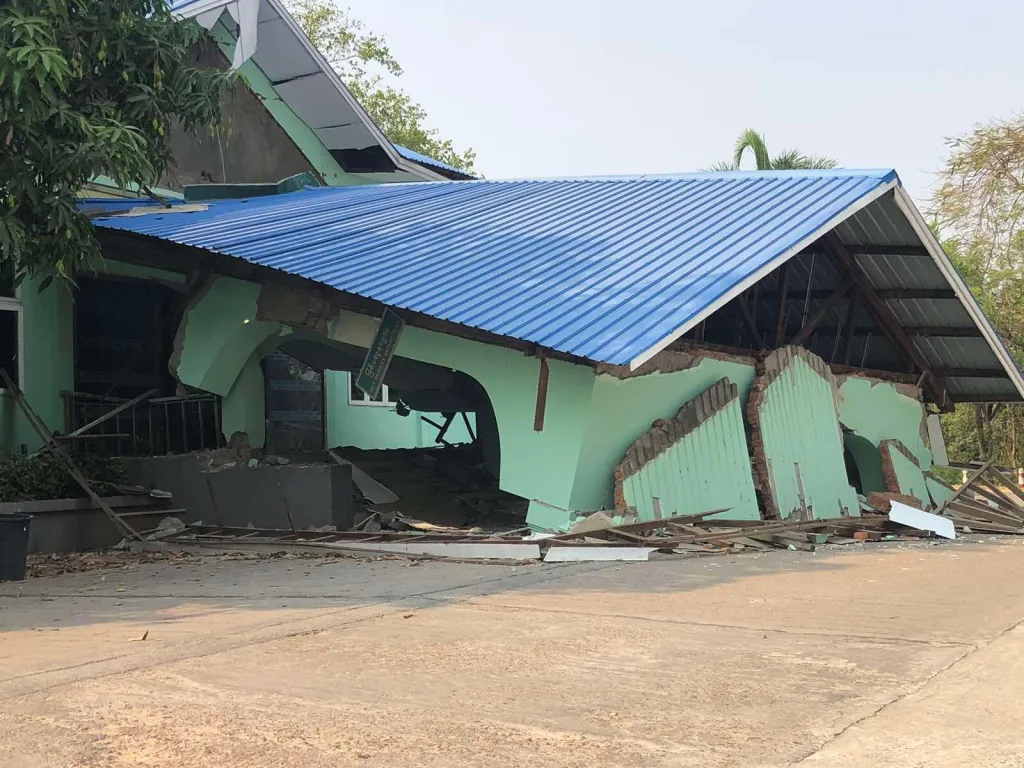
The major earthquake that struck central Myanmar in 2025 created a crisis within a crisis. It comes amid a prolonged armed conflict and political crisis that has eroded the health system, making access to care more difficult.
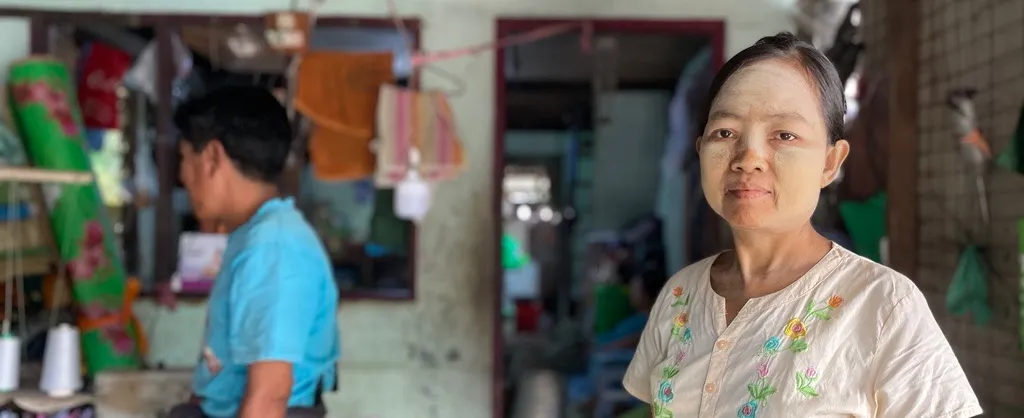
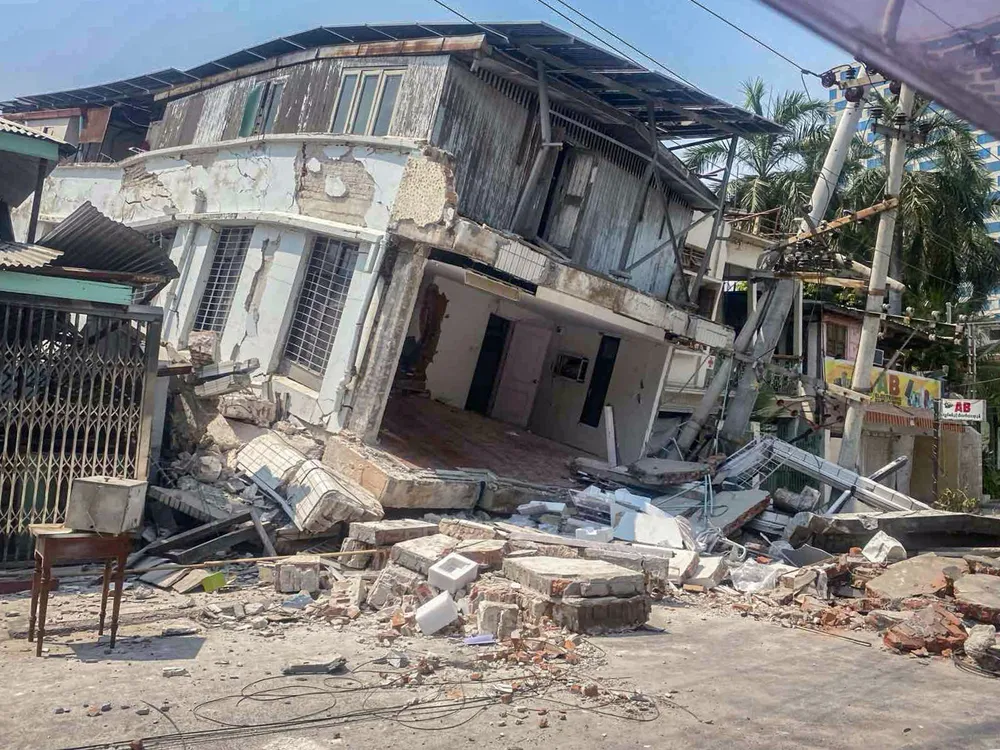
The major earthquake that struck central Myanmar in 2025 created a crisis within a crisis. It comes as a prolonged armed conflict and political crisis has eroded the health system, making access to care more difficult.
Médecins Sans Frontières/Doctors Without Borders (MSF) has worked in Myanmar since 1992. Our focus: providing HIV and tuberculosis care, basic healthcare and reproductive and sexual healthcare services, support for vulnerable people, including the persecuted Rohingya in Rakhine, and emergency responses to national disasters and conflict.
Escalating conflict and prohibited delivery of medical humanitarian assistance has, since 2023, forced us to indefinitely suspend clinics in Kachin, Rakhine and in the north of Shan.
Our medical humanitarian care is now fragmented across the country and focused on where we can still get people and supplies to our clinics. As the frontlines shift, so does our ability to access patients and provide care. We remain flexible and responsive, providing emergency responses wherever possible.
Our activities
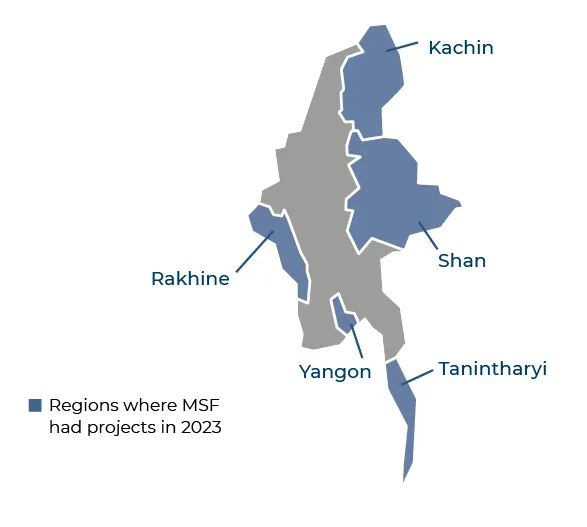
Our activities in 2023
Data and information from the International Activity Report 2023.
Staff
1,330—Staff (full-time equivalent)
Expenditure
€17.7 M—Expenditure
Healthcare
181,600—Outpatient consultations
1,600—People receiving HIV antiretroviral treatment
190—People started on treatment for tuberculosis
Summary
Violence escalated at the end of October in Kachin, Rakhine and Shan states, forcing 660,000 people from their homes and exacerbating the already severe healthcare needs. People struggled to access care, as hospitals ceased to function following attacks or evacuations, and as the warring parties imposed travel restrictions on people and humanitarian organisations.
In response, our teams in Kachin and Shan provided medical support and distributed relief items, such as hygiene and cooking kits, to displaced people. We also increased sexual and reproductive health services and support for victims of sexual violence.
Until November, our mobile teams in Sittwe district, Rakhine, conducted outpatient consultations in remote areas where healthcare is scarce or non-existent or inaccessible due to cost or restrictions on movement. We also identified patients who needed specialised care and supported them with the referral process. This process is particularly challenging for Rohingya people, as they are contained in fenced camps or villages and require permission from the authorities to move around.
When the escalation in conflict prevented our teams from running mobile clinics for the last two months of the year, patients relied heavily on our community health workers and teleconsultations for medical care.
Meanwhile, we extended our support to Aung San TB hospital in the capital, Yangon, where almost 50 per cent of the country’s patients with drug-resistant tuberculosis receive care.
During 2023, we continued the handover of our HIV patients to the Ministry of Health, switching our focus to supporting the national AIDS programme with staff and technical assistance.
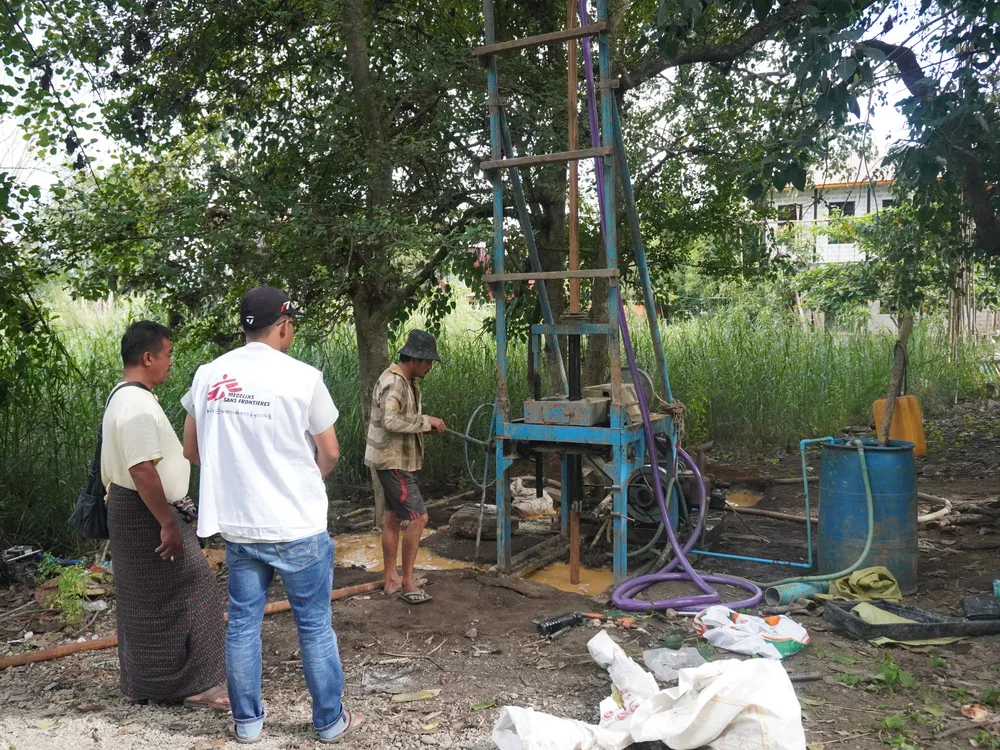
In May, after Cyclone Mocha made landfall in Rakhine, causing widespread damage to homes and infrastructure, we delivered medical care to the people affected. We also conducted water and sanitation activities, which included repairing latrines, distributing hygiene items and trucking in clean water.