Support in Action
In this section are examples of what MSF’s people achieved together in 2023, across the eight countries that received most funding from Australian and New Zealand supporters: Palestine, Yemen, Niger, Sudan, South Sudan, Afghanistan, Bangladesh and Nigeria.


Palestine
ANZ FUNDING: $5,547,983
TOTAL FUNDING: $38.9 MILLION
ANZ STAFF: 8
TOTAL STAFF: 374
In 2023, MSF adapted our activities in Palestine to assist people injured and displaced in the bloody war waged on Gaza by Israel.
During the first three quarters of 2023, our teams delivered specialised medical services in the Gaza Strip, offering support at three hospitals and various outpatient clinics, as well as the main laboratory.
After Hamas attacked Israel and Israel launched a war on Gaza in October, the already strained healthcare system crumbled under the Israeli attacks, and hospitals in Gaza City were overwhelmed with patients and people seeking refuge. The attacks were accompanied by a complete siege of Gaza by the Israeli authorities, blocking people’s access to food, medical materials, medicines and humanitarian aid.
MSF struggled to keep medical activities up and running. By the end of December, our teams were operational in six hospitals (Al-Awda, Al-Aqsa, European, Nasser, Rafah Indonesian and Emirati Maternity Hospital) and one general healthcare facility, Al-Shaboura clinic, mainly in the Middle Area and South of Gaza. There were only a few MSF staff still working in Al-Awda hospital in northern Gaza offering surgical and wound care, physiotherapy, outpatient consultations and mental health services.
In the West Bank, MSF maintained our mental health activities in Hebron, Nablus, Qalqilya and Tubas to provide psychological support, psychotherapy and psychiatric services to people affected by occupation-related violence. In Jenin refugee camp, we offered emergency care in Khalil Suleiman Hospital for patients injured in attacks by Israeli forces.
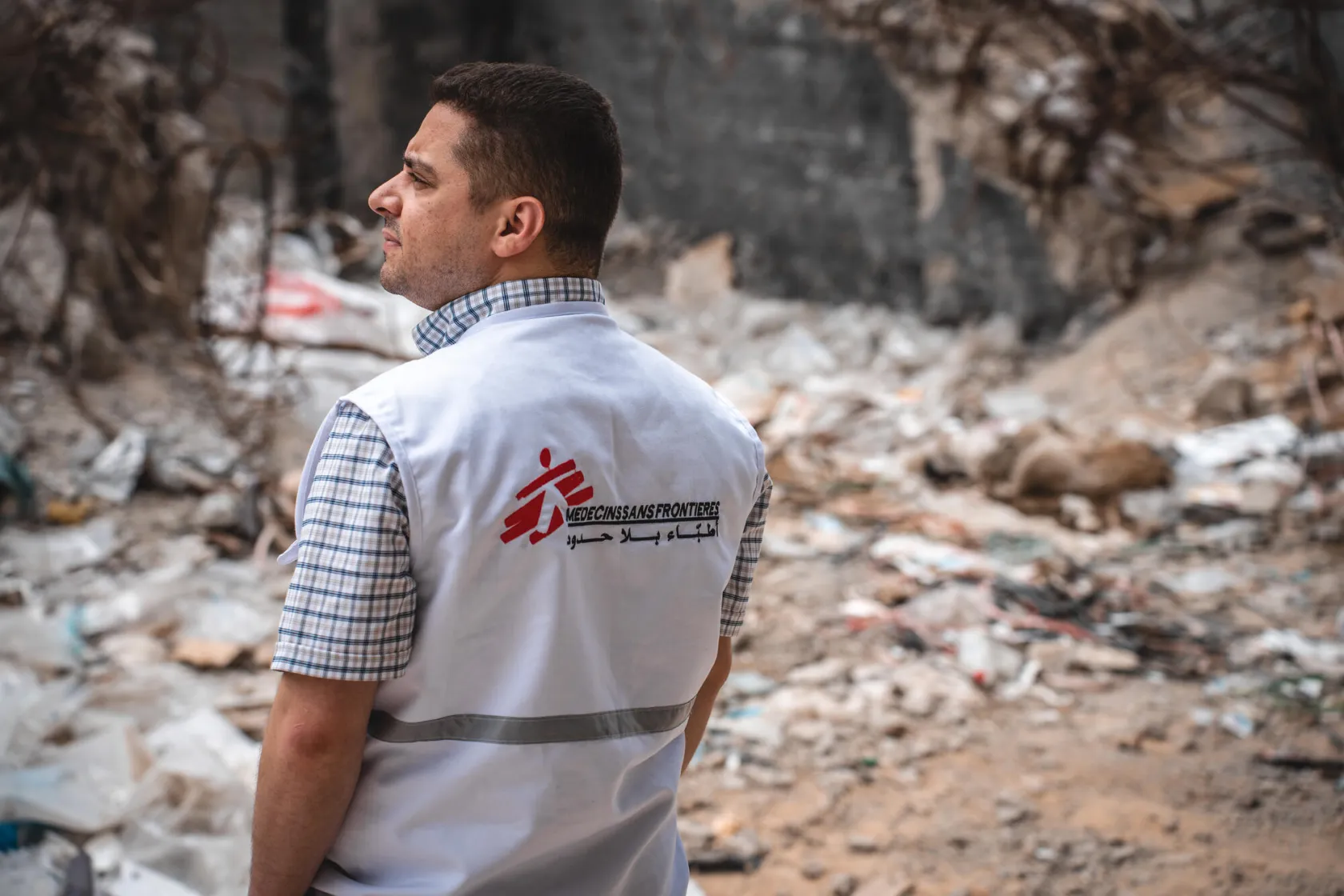
New Zealand psychologist Siobhan Lockie worked in the West Bank from May 2023 until February 2024.
"There was a young father who sought mental health support with our team; he had been living in Jabalia refugee camp in Gaza with his family. He was working in Israel before the war, and like many men, in October he was prevented from returning to Gaza and became stuck in Nablus (West Bank). He was trying to get home to his children and pregnant wife.
"I gave this patient some breathing strategies to help calm his mind. I was acutely aware that this seemed like quite a limited tool to deal with what he was going through: separation from his family while they were being bombed. But he returned the following week and told me that the breathing techniques were very useful, and that he had been using them every day. He had taught them to his seven-year-old son over the phone, and his son had shown his sisters and their friends too. I was so humbled when he told me this."
Yemen
ANZ FUNDING: $5,515,954
TOTAL FUNDING: $178.9 MILLION
ANZ STAFF: 12
TOTAL STAFF: 2,768
MSF continued to support Yemen’s fragile health system, providing comprehensive medical services and responding to surging rates of malnutrition and vaccine- preventable diseases.
War and the consequent economic deterioration continue to have a severe impact on people’s health, living conditions and access to basic services. Although the large-scale conflict in Yemen generally abated in 2023, bombing of northern Yemen exacerbated an already appalling humanitarian situation.
MSF supported 17 hospitals and 18 other health facilities in 13 governorates, focusing on maternal and child health, specialist and emergency care and responding to malnutrition and outbreaks of preventable diseases such as cholera, diphtheria and measles.
We responded to a surge in malnutrition cases among children in several governorates, such as Taiz, where we started supporting the outpatient therapeutic feeding centre in Mafraq al Mocha, and in Hajjah, where we extended the capacity of the inpatient therapeutic feeding centre at Abs general hospital from 45 to 88 beds during the peak malnutrition season.
In response to a rise in measles cases in Al-Baydah, we offered treatment and conducted training sessions for healthcare providers on managing the disease in eight locations. An unprecedented surge in cases in Taiz led teams to open a 16-bed measles isolation unit inside our mother and child hospital in Taiz Houban.
Performer, actor and activist Camilla Ah Kin was known for throwing her heart and soul into every venture. This was true in her time on stage with major theatre companies; as a much-loved face on film and TV; and in her work fighting for the rights of artists and art workers with Actor’s Equity and the Media, Entertainment and Arts Alliance (MEAA). “Ferocious is the first word that comes to mind, on stage and off. A ferocious concentration, focus, attention to detail, and commitment. Fiery, passionate, grand,” says Camilla’s lifelong friend Tim.
Camilla was a fierce advocate for those whose voices needed to be amplified, and this work that she was so passionate about will now continue through the special legacy she has left behind with MSF. Camilla’s gift in her will to MSF will make a significant contribution to our work and will help ensure we remain independent and ready to respond. MSF is grateful to honour Camilla’s memory through our work.
We thank the many generous people who left a gift to MSF in their will in 2023.
Niger
ANZ FUNDING: $5,300,000
TOTAL FUNDING: $74 MILLION
ANZ STAFF: 2
TOTAL STAFF: 1,729
The political crisis that unfolded in July 2023 in Niger compounded pre-existing humanitarian needs in the country.
Restrictions on access imposed on humanitarian NGOs as well as border closures severely disrupted the medical supply chain, particularly for nutrition products. However, MSF continued offering comprehensive care in hospitals and integrated health centres in Tillabéri, Maradi, Zinder, Tahoua and Diffa regions. This included maternity, paediatric and nutrition services.
We also continued to build and upgrade facilities in these regions as part of our long-term partnership with Nigerien health authorities to improve access to healthcare for people in vulnerable circumstances.
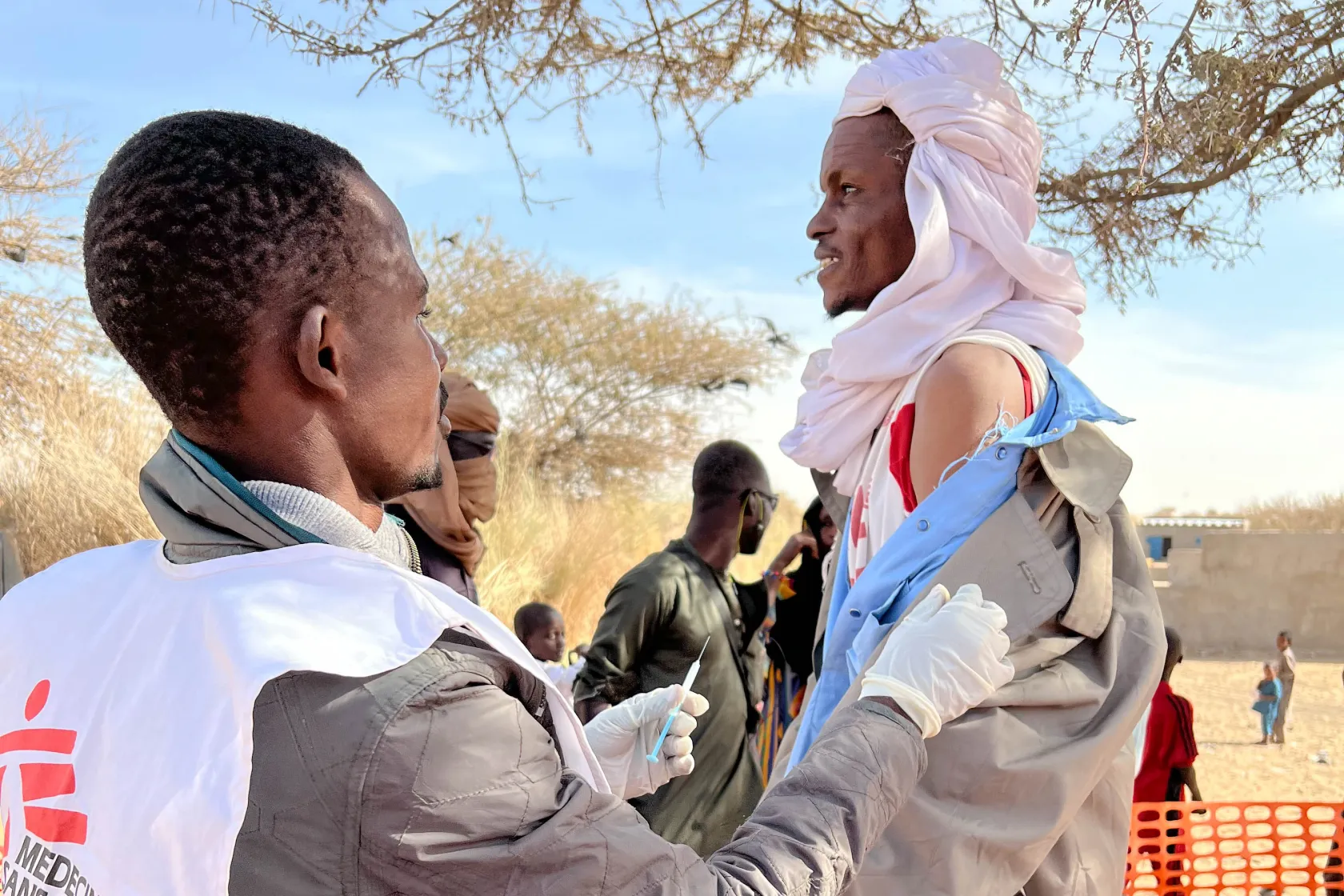
In Assamaka, several international NGOs withdrew, leaving thousands of migrants expelled from Algeria to fend for themselves in the desert of northern Niger, deprived of shelter, healthcare, protection and the basic necessities. In response, MSF distributed water and essential relief items such as hygiene and cooking kits and provided mental health support, while publicly denouncing the appalling conditions migrants were forced to live in.
Sudan
ANZ FUNDING: $5,146,148
TOTAL FUNDING: $116.4 MILLION
ANZ STAFF: 2
TOTAL STAFF: 1,239
After a brutal war erupted in Sudan in 2023, MSF quickly adapted activities to respond, despite security and administrative challenges.
On 15 April 2023, intense, unexpected fighting broke out between the Sudanese Armed Forces and the paramilitary Rapid Support Forces (RSF) in Sudan’s capital, Khartoum. The violence spread nationwide, leading to tens of thousands of casualties and uprooting millions of people from their homes.
MSF had been expanding medical activities across 11 states of Sudan since 2019, amid a volatile transition after the ousting of former president, Omar al-Bashir. There were already large groups of displaced people throughout pockets of the country, as well as refugees from neighbouring countries.
In the first 48 hours of the fighting in April, the MSF- supported South hospital in El Fasher, North Darfur, received 136 wounded patients. Patients had to be treated on the floors and in the corridors due to
the lack of space, in what was originally just a small maternity facility with no surgical capacity.
Over the following weeks, we transformed it into a hospital with an operating theatre and emergency room, with the capacity to respond to mass-casualty events.
In Khartoum, where the war began, fierce street fighting, shelling and airstrikes took place. Most hospitals in the city quickly ceased to function, and the facilities that were able to remain open were rapidly overwhelmed. MSF teams in Khartoum continued to support by donating medical supplies to hospitals and making assessments. In early May, we brought in a full surgical team to Bashair Teaching Hospital. By June, we were fully operational in the Turkish Hospital, originally a small maternity and paediatric facility with no surgical capacity that we converted into a facility capable of responding to mass-casualty events.
In other states, our work included support for mother and child health, and responses to measles and malnutrition in camps for displaced people.
We provided medical consultations in existing health facilities and via mobile clinics, and adapted activities in an effort to meet the needs of people who were displaced several times by the fighting.
Jane Clifford and her husband Andrew have been valued supporters of MSF since 2013. When it comes to philanthropy, Jane values trust and supporting people globally.
“One of the things we really love about MSF is they assist people at their most vulnerable. You have doctors and nurses who are giving up their time and using their expertise to help people. Being a doctor or nurse isn’t my skillset but I know I can contribute to help provide that care.
“When we decided to start supporting MSF, we had a young family, and we knew we wanted to give to a global organisation. Australia is a bountiful country; many of us live a safe and stable life. It’s not always easy for everyone here but we usually have places to go if we can’t feed our child or need medical care. In many other places that is not the reality. Anyone who has a family or loved ones can put themselves in that position. I think we can all relate to the story of the minority who is marginalised or treated poorly. It’s the idea of helping someone in need beyond your own borders.
“Trust is important. I prefer to give without too many strings attached; I know with MSF, we can trust they’re putting our donation where it will have the best impact.”
South Sudan
ANZ FUNDING: $4,352,941
TOTAL FUNDING: $175.8 MILLION
ANZ STAFF: 8
TOTAL STAFF: 3,773
In 2023, MSF provided care to people affected by violence, displacement, disease outbreaks and natural disasters.
MSF’s program in South Sudan continued to be one of our largest worldwide, stretching across seven states and two administrative areas and reaching over a million people. We delivered a broad range of basic and specialised health services to remote communities, refugees and people displaced by violence, through both fixed and mobile clinics, as well as through community-based programs.
After war broke out in neighbouring Sudan in April, more than 600,000 people fled into South Sudan. Our teams set up mobile clinics around transit centres in Renk, a town on the Sudanese border.
We also established a measles isolation unit and therapeutic feeding ward for children with severe malnutrition at Renk’s country hospital. In Upper Nile State, we operated a medical facility offering general check- ups, vaccinations, social support and protection services. We also transferred patients needing hospital care to our facilities in Malakal.
In September, the health ministry declared a hepatitis E outbreak in Fangak county. In response, we launched a vaccination campaign—the first to ever be conducted in South Sudan during the initial stages of an active outbreak in such a remote location—targeting women and girls of childbearing age, the group most vulnerable to the disease.
Marta Kalibe shared her family’s story from Renk Civil Hospital, in South Sudan’s Upper Nile state, after they were forced to flee the fighting in Khartoum, Sudan.
“Our lives changed in April. We were a family of eight living in Khartoum: our home was full. Everything was okay until we heard the bombs and gunshots; neighbours and people we knew were dying. My husband stayed behind, and my children and I left for South Sudan, the country we had originally migrated from. The change in food, the long journey and the grief have been arduous for me and my family. I have lost three children [to illness], and two are fighting for their lives.
“I have been at the hospital for three weeks watching over my eight-year-old son and my five-year-old daughter, both suffering from malnutrition. They are receiving special food and medicines, and a doctor checks their vital signs many times a day. As soon as my children feel better, my husband will join us and we will continue our journey. We will need a lot of courage and help to survive during the coming difficult days.”
Afghanistan
ANZ FUNDING: $3,285,756
TOTAL FUNDING: $90.4 MILLION
ANZ STAFF: 13
TOTAL STAFF: 3,269
In 2023, MSF continued to support Afghanistan’s struggling health system by providing specialised healthcare across the country.
MSF ran nine projects in eight provinces, maintaining a focus on emergency care, surgery and mother and child health. In Khost, we continued to run an 83-bed maternity hospital, providing comprehensive emergency obstetric and neonatal care and a safe space for mothers with high-risk pregnancies and obstetric complications to deliver. We also supported eight health facilities in the province with medicine donations and funding for additional midwives, so that women with no risk factors for obstetric complications could give birth closer to home.
In Bamyan, we ran a community healthcare program for people in remote and underserved districts with a focus on mother and child health.
In Herat, we launched an emergency response after earthquakes hit the province, killing more than 2,000 people and displacing over 250,000. We donated emergency kits and helped treat the wounded at Herat regional hospital, the main treatment facility for earthquake victims.
There was a gradual but stable increase in the number of patients coming to MSF facilities in 2023, largely due to an improved security situation that made it easier for people to travel. However, many people continued to face huge challenges to access care. Our facilities experienced very high occupancy rates in the year,
Bangladesh
ANZ FUNDING: $3,302,626
TOTAL FUNDING: $48.6 MILLION
ANZ STAFF: 10
TOTAL STAFF: 2,015
In 2023, MSF ran multiple health facilities in Bangladesh, primarily serving Rohingya refugees and host communities in Cox’s Bazar and the capital, Dhaka.
August 2023 marked six years since more than 700,000 Rohingya people fled targeted violence by the military in Myanmar into Cox’s Bazar, yet the possibility of safe return remained remote. MSF witnessed severe consequences on the physical and mental health of refugees in the camps, amid dire and overcrowded living conditions, a lack of basic services and complete reliance on humanitarian aid.
MSF provided general and specialised health services in Cox’s Bazar, including emergency care, sexual and reproductive care and mental health support. We also treated patients with non-communicable diseases, such as diabetes and hypertension, and survivors of sexual and gender-based violence. We treated refugees with injuries sustained from physical assaults and other forms of severe violence, and further indication of the dangerous living conditions in the camps.
In May, a World Health Organization survey revealed that nearly 40 per cent of people in the camps had scabies, reflecting what we had been seeing in our clinics between March 2022 and May 2023. MSF advocated for a mass drug administration in the camps which was implemented at the end of the year.
Muhammad Hubaib is a humanitarian affairs liaison volunteer with MSF in the Cox's Bazar camps, Bangladesh.
“I work in a team with five other Rohingya colleagues, as paid volunteers. The core part of my role is to monitor the humanitarian situation of the camps and to identify the gaps. I work with community leaders, authorities and other organisations in the camps, and with external agencies and donors, to assist our delivery of services and to advocate for a change for the better for our people. My team is like a family for me.
“I pray that not even an animal would have the life of a refugee, in any condition. It is almost the sixth year since we took refuge in Bangladesh, and we are still seeing no light on the horizon to return home. We are struggling and surviving in a challenging situation, while the world is forgetting our wish for repatriation to Myanmar, for safety and for our rights. We need support; we need the attention of the international community to live, at least, a human life.”
Nigeria
ANZ FUNDING: $2,921,416
TOTAL FUNDING: $121.2 MILLION
ANZ STAFF: 2
TOTAL STAFF: 3,058
In Nigeria, MSF scaled up activities to address the neglected malnutrition crisis and assist people displaced by violence, and we ran programs to improve maternal and child health.
In recent years, conflict, extreme weather events and deteriorating economic conditions have deepened the humanitarian crisis in North West, North East and North Central Nigeria. The country also has one of the highest maternal death rates in the world. Underfunding, lack of access to health services, soaring inflation and cultural practices that hinder women from seeking care all contribute to these rates.
In 2023, we opened a women’s health clinic for mothers of malnourished children admitted to the inpatient therapeutic feeding centre we support in Katsina. We also ran obstetric and neonatal activities, including surgery for conditions such as obstetric fistula, at Jahun general hospital in Jigawa state.
In Kano state, our teams supported two general healthcare centres and a clinic for maternal and child health, while in Cross River, we provided emergency obstetric and neonatal care. We also supported four basic emergency obstetric and neonatal care centres in northeastern Nigeria.
In Benue, where we witnessed extremely high rates of sexual and gender-based violence (SGBV) in displacement sites, we offered sexual and reproductive healthcare and comprehensive care.
MSF has supported the Noma Children’s Hospital in Sokoto, northwest Nigeria, since 2014, with reconstructive surgery, nutrition, mental health support and community outreach activities to assist patients with noma: a disfiguring and potentially deadly infection. Noma was included in the World Health Organization’s Neglected Tropical Diseases list in December following long-term advocacy by our teams.