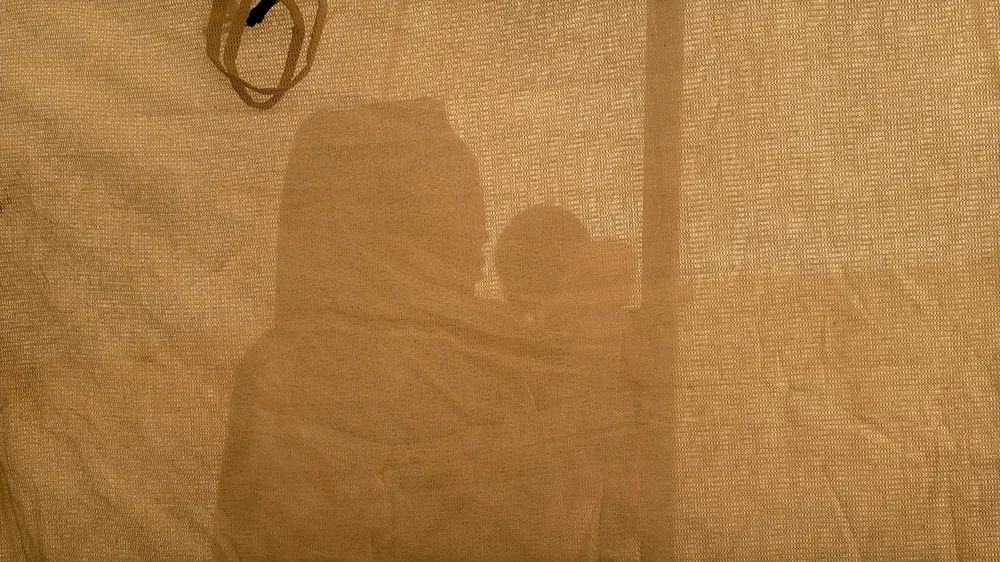
Women queue at water points in the Al-Safa cluster of camps in Abu Jubayhah locality, South Kordofan state, Sudan. Jerrycans surround them, waiting to be filled. Until recently, getting water meant walking at least three kilometres.
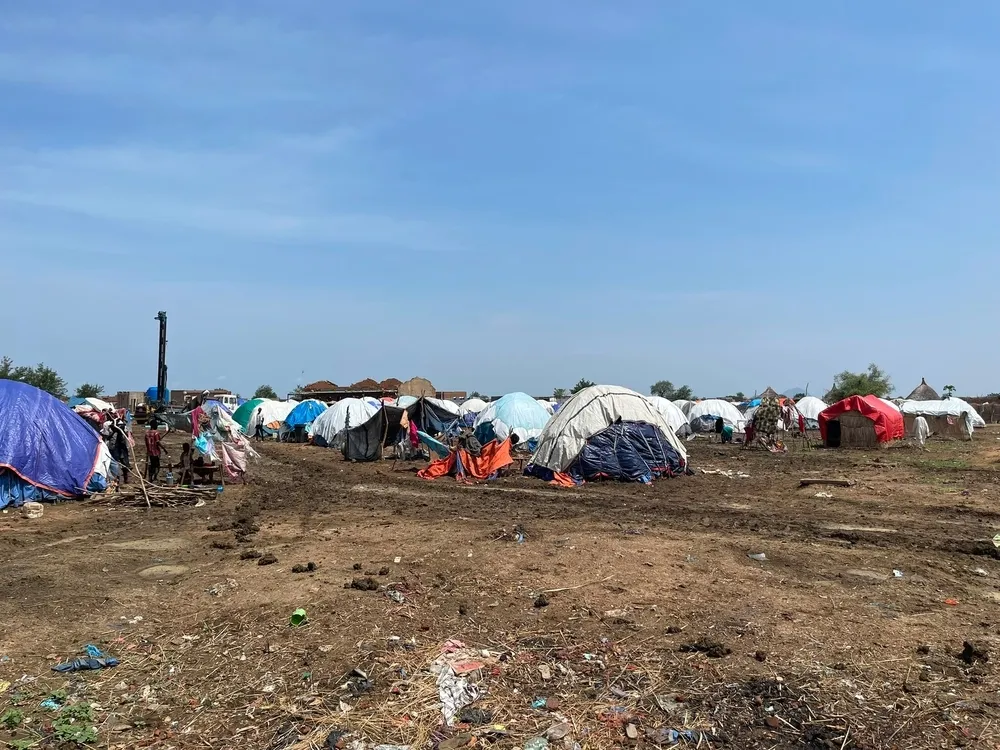
This daily scene is part of a wider reality in Abu Jubayhah, which has become one of the main areas hosting displaced people in South Kordofan. Some live in camps such as in Al-Safa, while many others have settled within the host community.
An estimated 57,880 displaced people are living across 62 locations in Abu Jubayhah according to the International Organization for Migration, or IOM, making it the second-largest hosting locality in South Kordofan, after the state capital, Kadugli. Local authorities estimate the true number to be higher.
The scale of displacement may not be immediately visible in Abu Jubayhah town, but the conditions in the camps near the town centre tell a different story.
“When you go to the camps, you see the conditions people are living in,” says Ayşe Bilge Öztürk, MSF project coordinator in Abu Jubayhah.
Families live in temporary and semi-permanent shelters, including fabric tents and straw structures covered with plastic, as well as some concrete structures. Some tents are as small as 10 square metres, leaving little space for daily life. Many of the displaced people are women and children.
The support available has not kept pace with the number of people who have arrived or the length of time they have been displaced.
Water: One of the first needs
MSF began our response in Abu Jubayhah in June 2026. Providing water in the three Al-Safa camps was one of our first priorities.
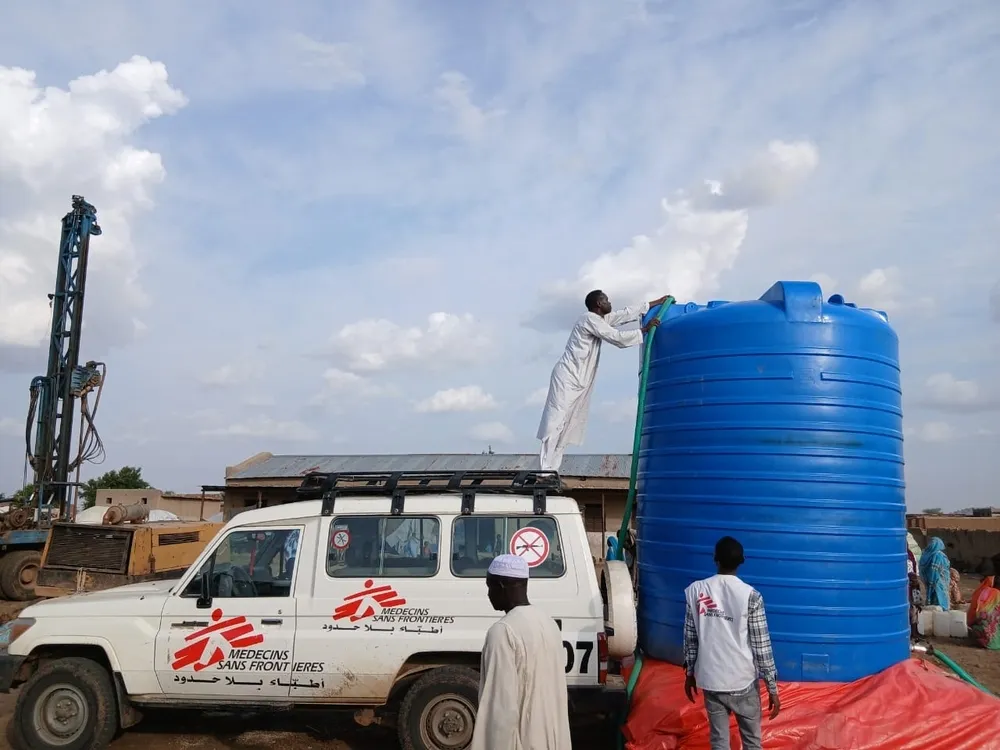
At first, water was brought to the camps by truck while teams worked to establish a more sustainable water source. This included drilling a borehole, laying a water network and installing a solar-powered water pump. Teams also repaired latrines and provided cleaning materials.
By mid-August, MSF had already provided more than one million litres of water to the community. Families in the camps depend on this water.
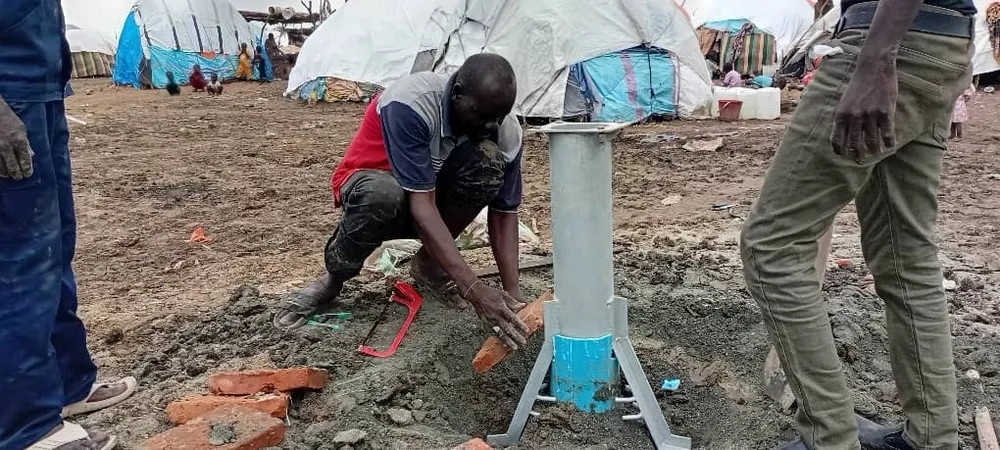
Aisha Ahmed first stayed in a school after being displaced before moving to the Al-Safa camps. She remembers water as one of their most urgent needs at the time.
Sometimes we would go a whole week without water. Now, after MSF drilled the borehole and extended the network, water is available 24 hours a day.
Smiling, Aisha describes how she feels about the change: “I am happy. Now the water is there whenever we need it.”
For Aisha and other displaced people living in the camps, the change was not only about having water available. It also meant no longer having to go so far to collect it. Previously, people had to walk at least three kilometres each day to reach a water source.
Bringing healthcare closer to people
Water is only one of the needs displaced families have.
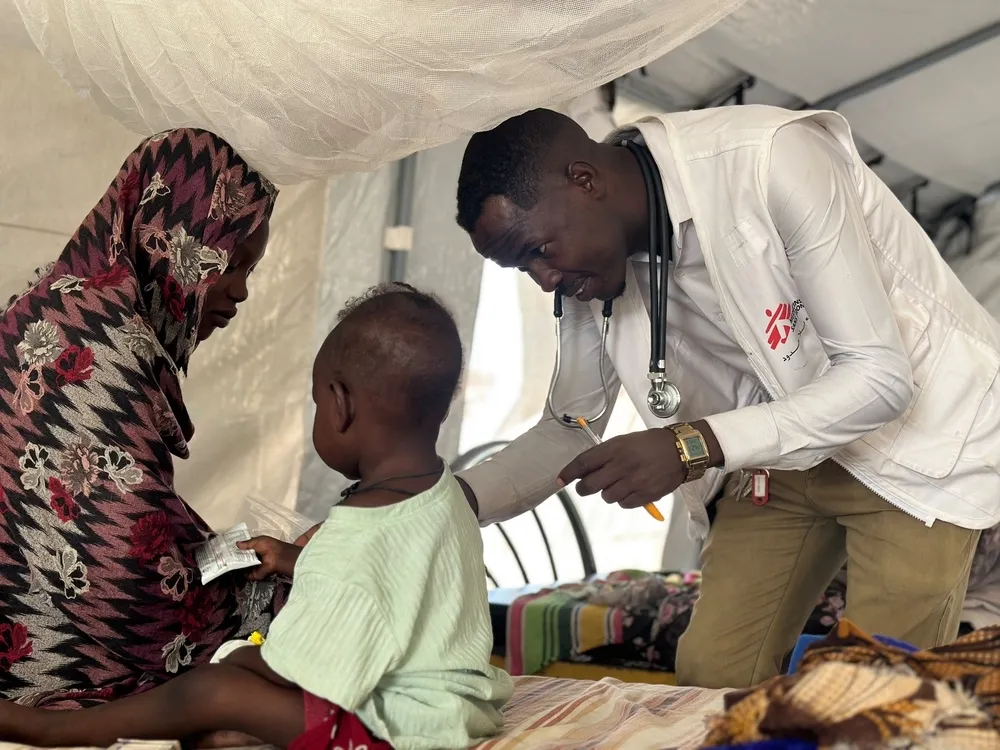
During one visit to the Al-Safa camps, an MSF team met a mother whose daughter was suffering from severe diarrhoea and needed urgent medical care. The team assessed the child and referred her to Abu Jubayhah hospital. Cases like this show how living conditions and health needs can become closely connected for families in the camps.
As teams identified more health needs, they began testing for and treating malaria in Al-Safa camp. Soon, however, patients were arriving with other health conditions, leading us to broaden our medical activities.
At the reception area for newly displaced people in Abu Jubayhah, MSF teams established a clinic. They screen new arrivals for malaria, malnutrition, and maternal health and general health conditions, and refer those who need immediate medical attention.
MSF also provided logistical support to a multi-antigen catch-up vaccination campaign led by the Ministry of Health, which included measles, rubella, polio, and yellow fever vaccines, alongside other routine vaccinations. Many displaced people also live within the host community and rely on the same basic services.
At Abu Jubayhah General hospital, MSF is strengthening the emergency department through rehabilitation, equipment, medicines, and other essential supplies, while access to more specialised care remains limited.
The rainy season brings further challenges, as unpaved roads make it harder for people to move around and for teams and supplies to reach some locations.
Despite these challenges, something fundamental has changed in daily life in the Al-Safa camps — water is now closer and more reliably available.
Join our team!
Our teams of medical and non-medical professionals provide healthcare to millions of people caught in crises in more than 70 countries around the world. Learn more about working with MSF and how to apply today.