As the Ebola disease response continues, other health needs in DRC must not be neglected
Measles and cholera are spreading in the east of the country, and a much greater commitment from health authorities and humanitarian actors is needed to guarantee access to care.
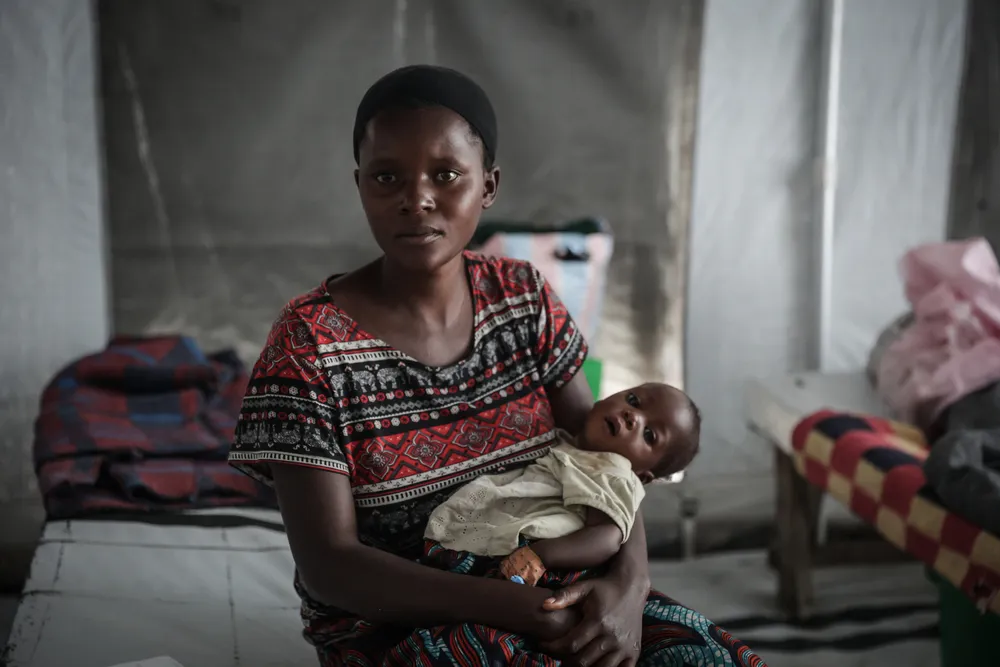
Since the Ebola disease outbreak was declared in May, media attention and resources have focused largely on the response to this emergency. While this mobilisation is essential to contain the outbreak, it must not come at the expense of other health and humanitarian needs that persist in Democratic Republic of Congo (DRC)'s North and South Kivu provinces.
Cholera, measles, malaria, and violence linked to the ongoing conflict continue to threaten thousands of people in North and South Kivu. Médecins Sans Frontières/Doctors Without Borders (MSF) is responding to the measles and cholera outbreaks affecting the two provinces.
The Ebola disease outbreak is a major emergency, but it is not the only one... Every day, we receive patients suffering from various diseases, people injured in fighting, and survivors of sexual violence. For these communities, all these emergencies coexist and require a simultaneous response.
MSF continues to support health facilities and various medical needs, but additional support is needed. We call on all humanitarian actors to ensure safe access to essential healthcare services in DRC despite the Ebola disease outbreak, in order to avoid a higher risk of preventable deaths.
Ebola is making headlines, but it’s not the only crisis in DRC
DRC is experiencing multiple simultaneous health and humanitarian crises. Communities are already living under the pressure of armed conflict, while repeated clashes cause displacement, interrupt vaccination campaigns, limit access to safe drinking water, and make healthcare harder to access.
Added to this fragile situation is the fear now associated with Ebola disease. Fear of exposure to the virus can deter patients from seeking healthcare, potentially leading to delays in treatment or deaths, including from preventable diseases.
“The Ebola disease outbreak is a major emergency, but it is not the only one,” explains Joshua Eckley, MSF head of programs in South Kivu. “Every day, we receive patients suffering from various diseases, people injured in fighting, and survivors of sexual violence. For these communities, all these emergencies coexist and require a simultaneous response. When basic healthcare is interrupted, more people risk dying from preventable diseases. It is essential to preserve continuity of care and access to primary healthcare in order to treat all other conditions.”
In the shadow of Ebola, measles and cholera are spreading in the country’s east
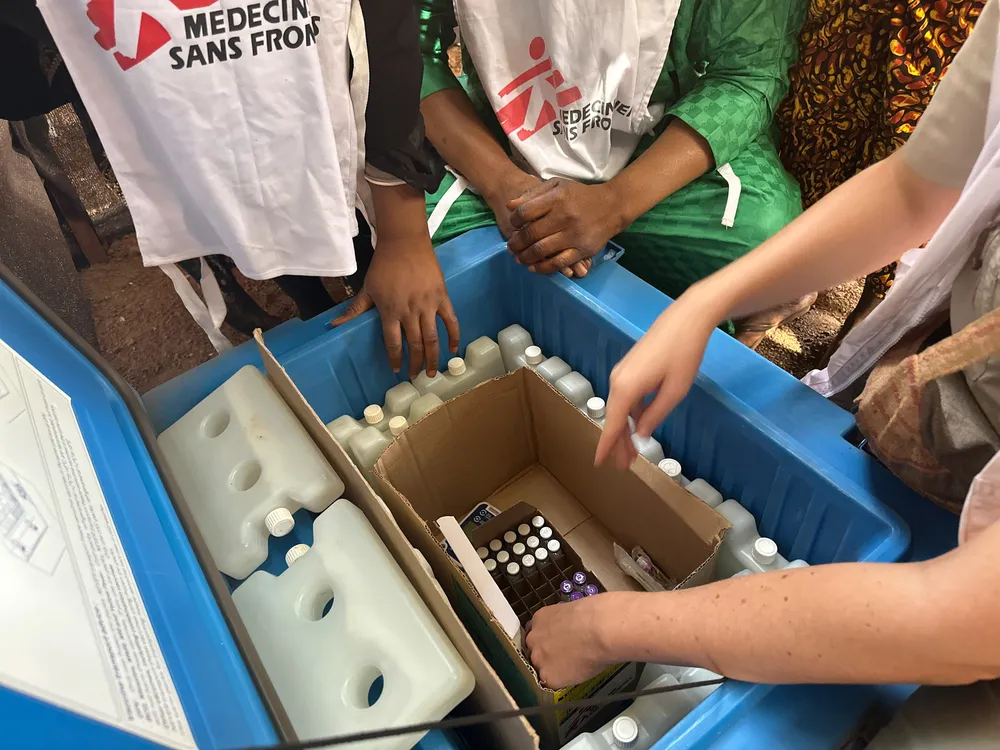
MSF teams have mobilised six interventions in response to measles outbreaks in North and South Kivu. The most recent are still ongoing in Shabunda, South Kivu, and Walikale, North Kivu. MSF teams have already treated more than 12,050 patients and vaccinated more than 283,150 children.
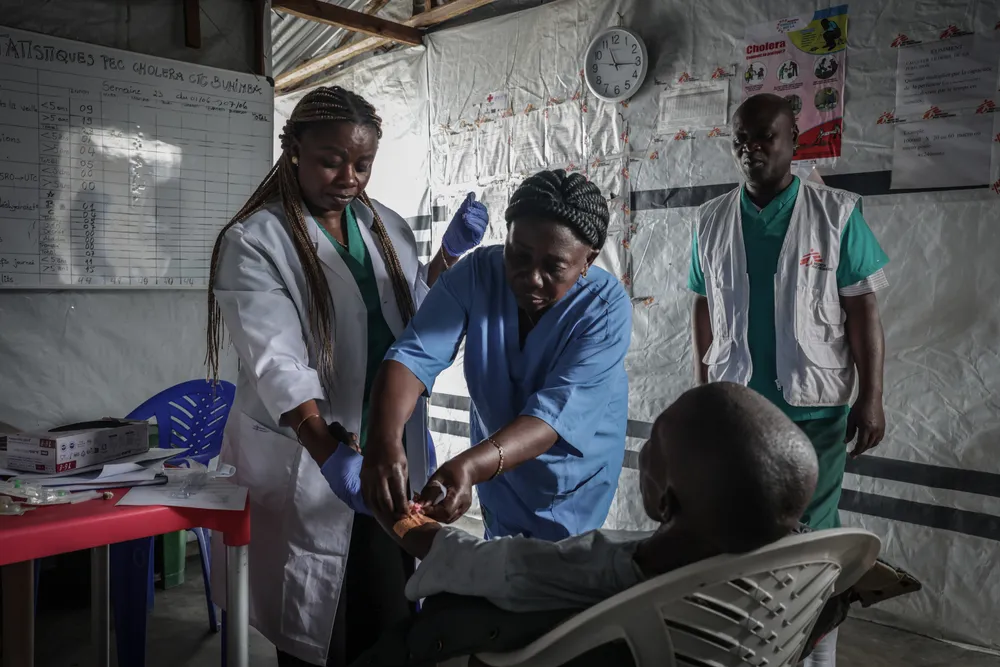
At the same time, we are seeing a worrying resurgence of cholera. In Bukavu and Shabunda, South Kivu, MSF continues to care for patients following a surge in cases recorded last year in the province. In Goma, teams were also mobilised to tackle a cholera outbreak between May and early August 2026. In total, more than 2,410 people with cholera have already been treated in MSF-supported facilities.
Measles and cholera in DRC
While the Ebola disease outbreak is the focus of attention, other outbreaks are spreading in eastern DRC. As of 19 July there were:
- 108,643 suspected measles cases (of those, more than 50,827 in North and South Kivu)
- 1,394 deaths from measles
- More than 35,464 suspected cholera cases (14,819 in North and South Kivu)
- More than 1,051 deaths from cholera.
“For the families we care for, there is no hierarchy between crises,” says Dr Yvan Mbangi, MSF deputy medical coordinator in Goma. “Whether a child dies of measles or malaria, whether a person succumbs to cholera or Ebola disease, every life matters.”
Beyond the response to Ebola disease, measles, and cholera outbreaks, MSF continues to provide essential healthcare in Masisi, Mweso, Walikale, Bambo, Kibirizi, Kirotshe, Goma, and Rutshuru in North Kivu, and in Minova, Bunyakiri, and Uvira in South Kivu. But given the scale of the needs, this mobilisation remains largely inadequate. These crises require a much greater commitment from health authorities and humanitarian actors to guarantee access to care for the most vulnerable people.
Funding is decreasing amid rising needs
While humanitarian needs continue to increase, available funding is decreasing. Despite malaria remaining the leading cause of morbidity in DRC, North Kivu could notably be excluded from the next three-year Global Fund funding cycle dedicated to the fight against malaria.
“We risk seeing a reduction in the resources dedicated to the disease that kills the most people in this region,” warns Dr Mbangi. “It would be a tragic paradox: mobilising considerable resources against one outbreak while weakening the response to a disease that continues to cause a far higher number of deaths every day.”
For the families we care for, there is no hierarchy between crises. Whether a child dies of measles or malaria, whether a person succumbs to cholera or Ebola disease, every life matters.
Years of conflict, massive population displacement and chronic insecurity, as well as the drastic reduction in humanitarian aid funding, have drastically weakened the health system in North and South Kivu. Many health centres and hospitals are operating with reduced capacity due to a lack of staff, medicines, and equipment, while others have had to suspend their activities because of violence.
In several areas, hundreds of thousands of people remain without regular access to healthcare. Population displacement caused by fighting also forces many families to seek refuge in forests or isolated areas, where exposure to mosquitoes is greater and access to healthcare is particularly limited.
“While medical-humanitarian needs continue to grow in eastern DRC, we call on the authorities, donors, and all humanitarian actors to maintain and strengthen their investments in all responses to the many and diverse needs of the people,” adds Eckley. “It is vital that all emergencies be addressed simultaneously.”