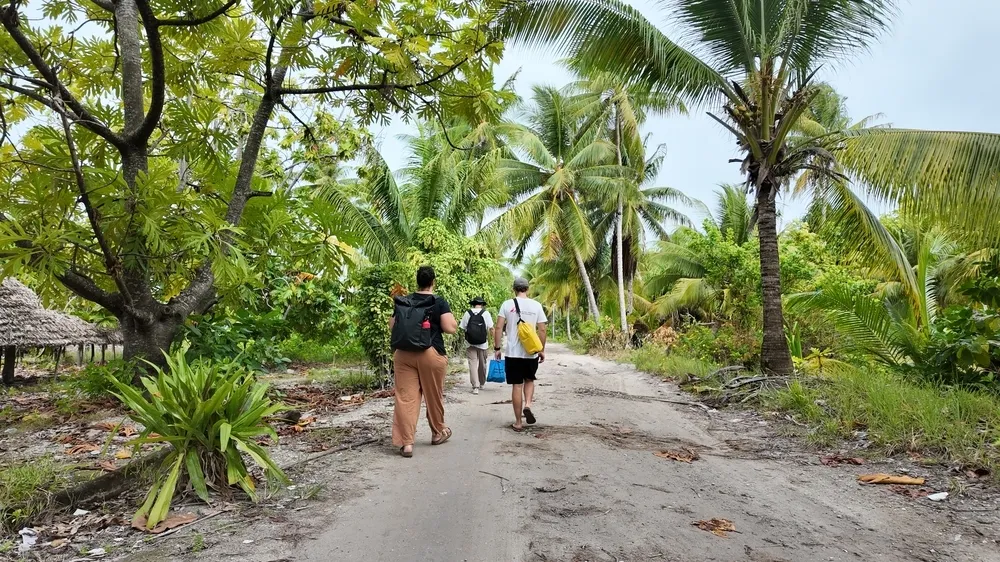

Accessing clean, safe water is a daily challenge for people in the tiny remote island nation of Kiribati. Shallow groundwater, which is contaminated with seawater, rubbish and other waste, is the main drinking water source in a region already bearing the brunt of rising sea levels, water and food insecurity.
Médecins Sans Frontières/Doctors Without Borders (MSF) has embarked on a unique planetary health model of care in Kiribati, aiming to better understand – and address – how environmental change is affecting the health of remote and vulnerable communities.
Jihun Choi, MSF’s water sanitation technical referent, works closely with the Kiribati Ministry of Health and Medical Services (MHMS) on the Island of Abaiang, one of Kiribati’s northern atolls. Recently, 95 per cent of wells tested were found to be contaminated with coliform bacteria – a clear indication of a potential public health risk.
What is the biggest challenge to people living in Kiribati?
One of the biggest challenges for communities here is the fragile freshwater supply. Most households rely on shallow open wells that are easily contaminated by rain runoff, poor sanitation, or saltwater intrusion due to rising sea levels. Combined with limited waste management and the impacts of climate change, this makes daily access to safe water a constant concern – directly affecting health, especially for children and vulnerable families.
What is a typical day like for you in Kiribati?
Like many MSF projects, no two days here are the same! On a typical day in Kiribati, I start early by checking in with my local water, sanitation, and hygiene (WASH) team to plan field visits or follow up on discussions with local stakeholders. Much of my work involves coordination with the Ministry of Health, other government authorities, and NGOs. Because we operate in remote outer islands, travel by small boats is common – sometimes we spend hours just reaching an isolated health clinic or village well. In the afternoon, I often consolidate field data, draft reports, or deliver training to my team. And of course, unexpected challenges happen daily – shipments may be delayed, meetings rescheduled, or local conditions may change overnight.
How do you test water quality in the Abaiang island villages? What are you testing for and what equipment do you use?
In Abaiang, our team monitors water mainly to ensure it is safe for drinking and household use. We check key parameters like free residual chlorine (FRC) if chlorination is in place, and we test for bacterial contamination, especially faecal coliforms, which indicate possible pollution from human or animal waste. We use portable test kits – simple chlorine test strips, photometers, and portable incubators to detect bacteria. We also check physical factors like salinity and turbidity, since many wells are shallow and easily affected by saltwater intrusion. The goal is to understand the vulnerability of the groundwater source and to plan sustainable solutions.

Tell us about the geo mapping project for the water wells. What is it aiming to do and how does it work?
One of our goals is to build a clearer picture of water quality across the island. To do this, we use basic GPS mapping to create a geo-referenced database of all wells, including their coordinates, type, water quality results, and time. This helps us and local authorities identify which communities have limited access to safe water and which wells show higher risk of contamination. It’s a simple but powerful tool for visualising water resource gaps in a scattered island setting like Abaiang.
MSF has begun rehabilitating some of Abaiang’s wells by improving drainage, covering open wells, and conducting health promotion programs, to reduce exposure to contaminants. How do you ‘rehabilitate’ a well?
In Abaiang, about 95 per cent of the 310 wells tested showed faecal coliforms, which shows just how vulnerable the groundwater is to contamination. Rehabilitating a well here usually involves cleaning in and out, installing a secure cover to reduce runoff contamination, and adding fencing to keep animals out. Because the water source remains fragile, we also promote sanitation management, good hygiene practices, and WASH committees to help protect wells and maintain improvements over time.
What is the biggest obstacle to stopping you achieve your work in Kiribati?
One of the biggest obstacles is the sheer remoteness and logistical complexity of working on small outer islands. Transporting construction materials, getting equipment repaired, or bringing in supplies often takes much longer and costs more than in other contexts I’ve worked in. Limited availability of skilled local contractors and high fuel or shipping costs can delay even basic tasks. And the unique climate and geography, like saltwater intrusion and limited land following poor waste management, add further challenges.
Even small improvements, like protecting a community well or delivering simple training, can make a real difference where resources are limited.
How long have you worked for MSF and what other projects have you worked on?
I have been working in the humanitarian sector since 2019, including multiple missions with MSF. My professional background is in civil engineering, but over the years I have specialised in WASH management in complex settings. I have worked in a range of contexts – from emergency responses in South Sudan and Sierra Leone with MSF, to supporting communities affected by armed conflict while with the ICRC in the Philippines. This is now my fourth MSF project and my first time working in a small island developing state like Kiribati, which brings unique challenges and lessons in a climate-sensitive context.
Do you feel optimistic about the impact you can make in Kiribati?
Yes – despite the challenges, I do feel hopeful. Even small improvements, like protecting a community well or delivering simple training, can make a real difference where resources are limited. Most importantly, working alongside local communities and the Ministry of Health helps build local ownership and skills, which is key for long-term impact. MSF won’t stay forever, but the goal is that the systems, partnerships, and knowledge we help build now will continue to strengthen resilience and ongoing sustainability in the years ahead.
Project medical referent Eliza Chang discusses Kiribati's water crisis on ABC's Pacific Beat
Audio file
Join our team!
Our teams of medical and non-medical professionals provide healthcare to millions of people caught in crises in more than 75 countries around the world. Learn more about working with MSF and how to apply today.