Mosul: Nine Years of Healing
Celebrating the 88,000 children born in Nablus Hospital as MSF hands it back to locals
“Mosul today is very different from the city the world saw during the battle: it is no longer a city in ruins,” says Suhaib Raad, a radio operator at Nablus Hospital in Mosul, currently supported by Médecins Sans Frontières/Doctors Without Borders (MSF).
He began working at the entrance to the emergency room when the facility opened in June 2017, one month before the battle officially ended. “In those early days, conditions were incredibly brutal. The emergency room was constantly receiving casualties and patients of all backgrounds and ages, who needed treatment for severe illnesses and horrific war wounds.”
A lifeline in a devastated city
In October 2016, a nine-month military offensive to retake Mosul began after the city had spent nearly three years under the control of the Islamic State group. The fighting killed and injured thousands of people, displaced more than one million, and left large parts of Iraq’s second-largest city devastated. By the time the battle officially ended on 10 July 2017, much of Mosul's infrastructure, including its healthcare system, had been severely damaged. “The hospitals had been destroyed and there were no health services,” says Abdullah Isaa, an emergency nurse at the MSF-supported Nablus Hospital. “So, MSF opened this facility. People needed it. We treated many patients and saved many lives.”
Initially operating as a field hospital, Nablus Hospital received critical emergency cases from West Mosul, where the city's healthcare infrastructure had been destroyed or was no longer functioning. “In the immediate aftermath of the battle, MSF was the main healthcare provider in West Mosul,” explains Gemma Dominguez, MSF Head of Mission in Iraq. “Over the years, the authorities have gradually rebuilt and rehabilitated some of the hospitals, allowing more health services to resume.” As Mosul slowly recovered, the main public hospitals began to reopen, at first operating from temporary structures and caravans. Yet the continued high number of patients admitted to Nablus highlighted the ongoing need for specialised care.
From 2018 to 2022, MSF teams assisted with an increasing number of deliveries, reaching a peak of 1,000 deliveries per month, while providing inpatient care for adults and children with urgent medical needs. As other hospitals resumed services, the needs of the community evolved. In response, Nablus Hospital adapted its activities, transitioning from a broad emergency response facility to a specialised paediatric emergency and maternity hospital, with a particular focus on emergency obstetric care and caesarean sections.
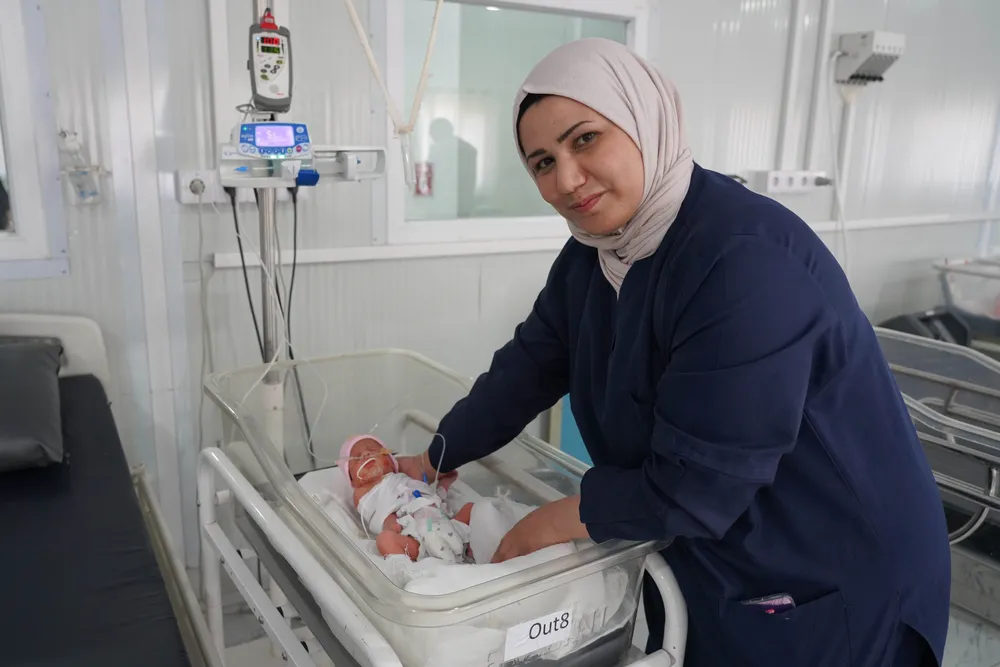
Sabah Faisal Farhan, a data entry operator in the emergency ward, has witnessed the hospital's evolution firsthand: “The transformation has been remarkable. We went from treating war injuries, which thank God have ended, to responding to the COVID-19 pandemic and caring for patients in quarantine. Once the pandemic was over, we refocused our care exclusively on children under the age of 14.” In total, more than 250,000 emergency consultations were carried out, and more than 125,000 patients were admitted between 2017 and 2026.
We sincerely hope that the painful chapters are now behind us, and we look forward to seeing Mosul prosper for many years to come.
Expanding and innovating to improve quality of care
Supporting the hospital's growth and continued delivery of quality care has required constant adaptation and innovation from MSF's medical and logistics teams. Over the years, they have developed and implemented solutions to improve the hospital's infrastructure, safety and environmental management. These include the Steriplus machine, which turns infectious medical waste into non-hazardous waste by shredding and sterilising it, and a wastewater treatment system that uses specialised bacteria to decontaminate water before it is released into the drainage network. Another major success of this project is the mini-laboratory for bacterial testing, set up in 2022, revealed high levels of antibiotic resistance among the population. Over the years, MSF shared these findings with the health authorities, along with guidance on antibiotic stewardship and training in infection prevention and control.
Mental health was also an important component of the hospital’s work. “The stories people share during psychological consultations have changed," says Safa Abdulkareem Abd Al-Badrani, an MSF psychological counsellor. “Although the difficulties they describe are still connected in some way to the consequences of the war, they are now less about war-related trauma and more about losing a job or a loved one.”
A place of birth and emotions
Above all, Nablus Hospital is about the stories that unfold there. “We have been through a lot at this hospital, especially in the maternity department,” says Jellan Mohammed, the maternity supervisor. “At times, we would receive a critical case every week and we handled each one as a team. These cases showed the results of our efforts: when we saved a mother’s life, we were saving her baby’s life as well.”
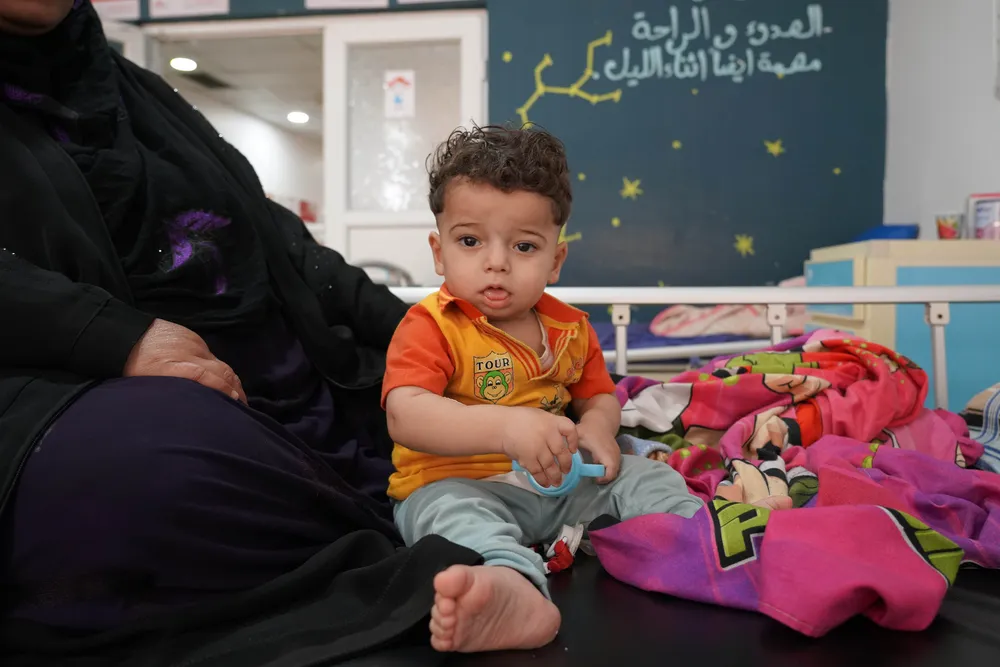
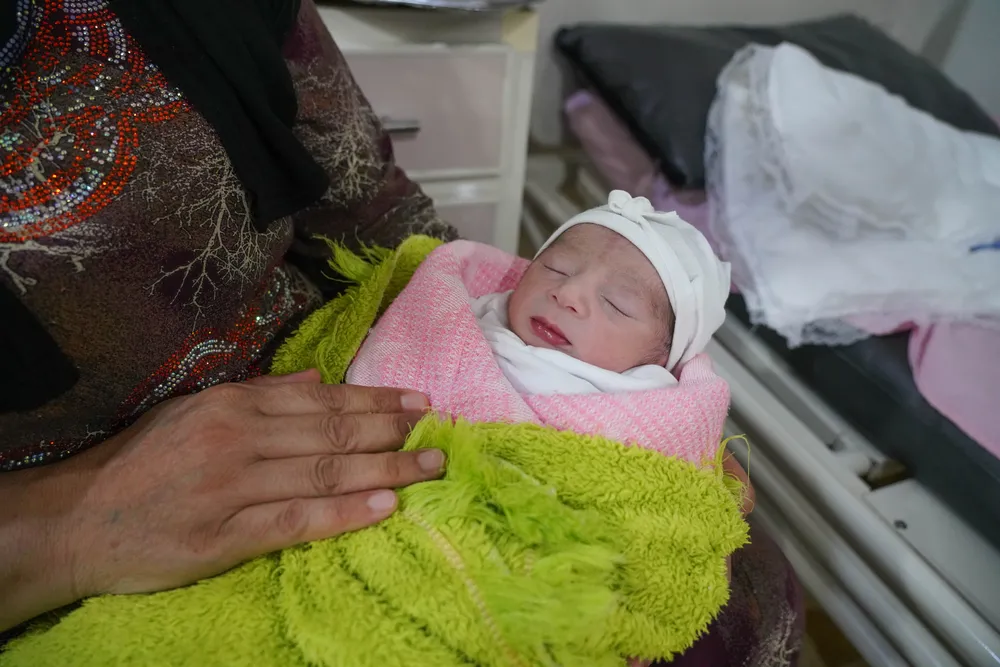
Born at the MSF-supported Nablus Hospital six years ago, Sanad is one of the 88,000 children delivered there over the past nine years. Like him, all his younger brothers and sisters were born at the hospital. “When my wife was discharged, she told me how well they had looked after her and the baby,” says Hadi Ali Ahmed Mohammad, Sanad’s father. “I thought to myself that anyone having a baby should come here.” This facility has been the go-to place for the family’s children, who live in a village west of Mosul. “Once, my daughter got sick with a high fever, so I brought her here, and she stayed for a few days,” he continues. “After that, she was much better and went home happy.” Sanad and his father have come back to visit the family’s newborn, who is hospitalised in the neonatal unit.
In the same ward is baby Zaid, who was born at the rebuilt Al-Batool Hospital but was referred to Nablus for jaundice. “He is a miracle baby,” says his mother. “We had been trying to have a baby for 10 years. Since he was born a few days ago, it has felt like a dream. It’s very emotional – there’s a bit of worry, but mostly joy!”
The services we provided will never be forgotten by the people of Mosul, and we will never forget the patients we saw and all the things we were able to help with.
A city's journey towards healing
“Mosul has undergone a complete transformation, a wonderful change for the better,” says Sabah Faisal Farhan. The bridges are busy with traffic, the markets are full again, and every corner of the old city is being rebuilt. Many relatives of patients say that, although finding work in Mosul is still very difficult, they recognise that the city is now safe and hope it stays that way. Suhaib Raad adds: “We sincerely hope that the painful chapters are now behind us, and we look forward to seeing Mosul prosper for many years to come.”
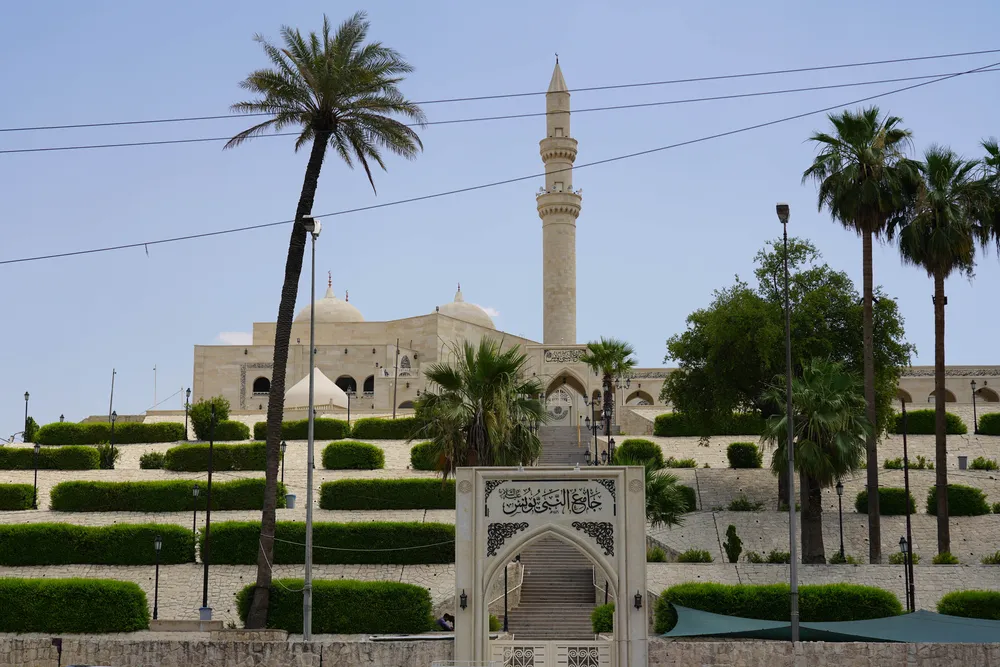
“Today, people have access to healthcare services,” says Gemma Dominguez, MSF Head of Mission. “Our collaboration with the Directorate of Health has played an important role in ensuring high-quality care, both at Nablus Hospital and across the public health system. We are proud of what has been achieved here. This is the right moment to hand over the hospital and build on these achievements, while continuing to respond to other critical healthcare needs in Iraq.”
At the end of December, MSF will hand over Nablus Hospital, which will continue operating as a public maternity hospital. As one chapter comes to a close, the hospital's legacy lives on in the hundreds of thousands of patients cared for and in the staff whose dedication and commitment shaped its journey. “Our lives have completely changed over these nine years. Mine, in particular, has changed profoundly,” adds Sabah Faisal Farhan. “The services we provided will never be forgotten by the people of Mosul, and we will never forget the patients we saw and all the things we were able to help with.”