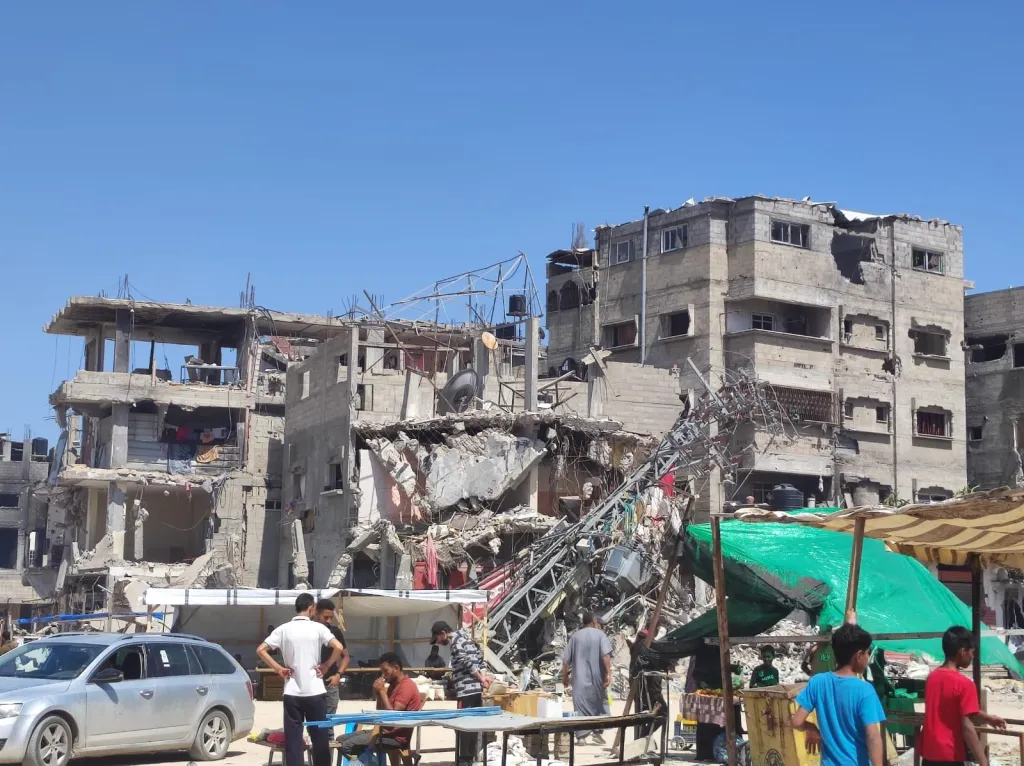
On 26 May, Israeli forces killed at least 49 Palestinians in airstrikes on a displaced persons camp in Tal Al-Sultan in Rafah, Gaza. More than 180 injured people were taken to a nearby stabilisation point supported by Médecins Sans Frontières (MSF). Two days later, Israel bombed a camp for displaced people in Al-Mawasi, west of Rafah, killing at least 21 Palestinians and leaving 64 wounded.
These massacres occurred after the International Court of Justice (ICJ) on 24 May ordered Israel to “immediately” halt its military offensive in Rafah, in application of the Convention on the Prevention and Punishment of the Crime of Genocide.
Caroline Seguin, MSF’s head of emergency programmes in Gaza, describes the ongoing apocalyptic situation.
What happened following the Israeli airstrikes on the camp for displaced people in Tal Al-Sultan on 26 May?
MSF was supporting a stabilisation point operating round the clock right next to where the Israeli airstrikes took place. Our teams treated more than 180 people with complex injuries, including shrapnel wounds, fractures and extensive burns. We also received 28 people who were already dead on arrival at the stabilisation point or died of their injuries soon after.
Our teams worked throughout the night to stabilise the patients and transfer them to health facilities located further west near Al-Mawasi. They were forced to flee the following night as fighting intensified in the area, once again putting an end to vital medical activities for Gazans.
Women and children were among the victims. There are entire families, often consisting of several dozen people, sleeping in tents and living in extremely difficult conditions. These are civilians who, once again, are being injured and killed by Israel’s bombing of densely populated areas.
This strike illustrates once again the total disregard for Palestinian lives by Israeli forces. The area where the airstrikes took place is a camp for displaced people and the civilians there had not received any order to evacuate. There is no safe place in Gaza for civilians.
MSF could save more lives if the Israeli government stopped intentionally blocking humanitarian assistance. In addition to the bombings, people are dying every day because of Israeli obstruction of aid.
What conditions have displaced people been living in since the beginning of the Israeli offensive on Rafah on 6 May?
Long spared from ground fighting, more than 1.3 million Palestinians had been sheltering in Rafah, the vast majority of whom have been forcibly displaced multiple times in a war without respite for the civilian population. More than 900,000 people have fled Rafah since the beginning of the Israeli offensive on the city and its surroundings. They have been forcibly displaced for the umpteenth time, this time to Al-Mawasi, a stretch of sand along the Mediterranean coast, Deir al-Balah and Khan Younis.
The Israeli military continues to push Gazans inexorably into areas that it declares safe but which are in reality exposed to bombing and fighting. On 16 May, 78 per cent of the Gaza Strip was ordered by Israeli forces to evacuate. Palestinians in Gaza are now caught up in the fighting and crammed into a tiny, unlivable area, trying to survive in impossible conditions with no guarantee of safety.
Massive and indiscriminate Israeli bombings continue to devastate northern and central Gaza including repeated airstrikes on the Palestinian refugee camp of Nuseirat and in the south with the current offensive on Rafah. Since the beginning of the war, more than 35,000 Palestinians have been killed and at least twice that number have been injured and are in need of treatment, including complex surgical operations. MSF teams have been forced to evacuate 12 health facilities over the last seven months, including nine that were attacked. It is worth repeating that our colleagues have suffered 23 violent incidents — direct attacks, sometimes being rounded up, arrested and tortured by Israeli forces.
This is a massacre that has been going on for almost eight months, in which women and children are the main victims. Today in Gaza, the whole population is within range of bombs, gunfire and tank shelling, and anyone can be killed, including humanitarian workers in a clearly marked convoy, as was the case for MSF in November 2023 and World Central Kitchen in April 2024.
What are the consequences for Palestinians in Gaza and how are MSF teams continuing to work?
No MSF trucks have entered the Gaza Strip since 6 May. On 26 May, around 130 vehicles carrying humanitarian aid were allowed through the Kerem Shalom crossing, controlled by the Israeli military. The supply operation was interrupted by fighting, forcing around 70 trucks to turn back.
Since the total closure of the Rafah crossing on 7 May, we have been witnessing a further strangulation of the Gaza Strip, a new collective punishment for Palestinians. We have had to reorganise the hospitals in which we work, closing facilities and transferring patients from the Indonesian and Emirati hospitals in Rafah to Nasser Hospital in Khan Younis, where we treat trauma and burns and provide follow-up care.
Water supply is critical throughout Gaza. Due to a lack of fuel, desalination plants are operating at reduced level. This week we were only able to distribute 50,000 litres of water due to the lack of fuel, compared to 400,000 litres the week before. There is more imported food available in some markets, where it gets through in private company trucks, but it is unaffordable for most Gazans.
Israel is continuing its policy of obstructing humanitarian aid; we are seeing this obstruction of aid combined with a charade designed to make people believe that aid can enter the Gaza Strip via the floating pier built by the United States or through the Kerem Shalom crossing. In reality, nearly eight months on, we are still seeing blockade, obstruction, and appalling delays in the transport of equipment patients need for treatment, such as generators, water pumps, scanners, X-ray equipment, oxygen, sterilisation equipment, and more. Aid, when it is not completely blocked, comes in dribs and drabs, and can in no way adequately meet the immense needs of Palestinians in Gaza.
MSF could save more lives if the Israeli government stopped intentionally blocking humanitarian assistance. In addition to the bombings, people are dying every day because of Israeli obstruction of aid.
The only way to get aid into Gaza today is to increase the number of road entry points into areas where the lives of humanitarian workers are not in danger—areas that are not on the front lines, as is currently the case for Kerem Shalom, which is not a viable solution. Humanitarian aid must enter Gaza in sufficient quantities to meet the immense needs of a devastated population. We must have the means to distribute the aid and we must be able to do so unhindered and in safety. It should also be remembered that more than 220 humanitarian workers have been killed in Gaza since the beginning of the war.
Since the beginning of the war, the health system—hospitals, ambulances, medical personnel and patients—has been the target of deliberate and systematic attacks by the Israeli military.
What does the ICJ ruling change on the ground?
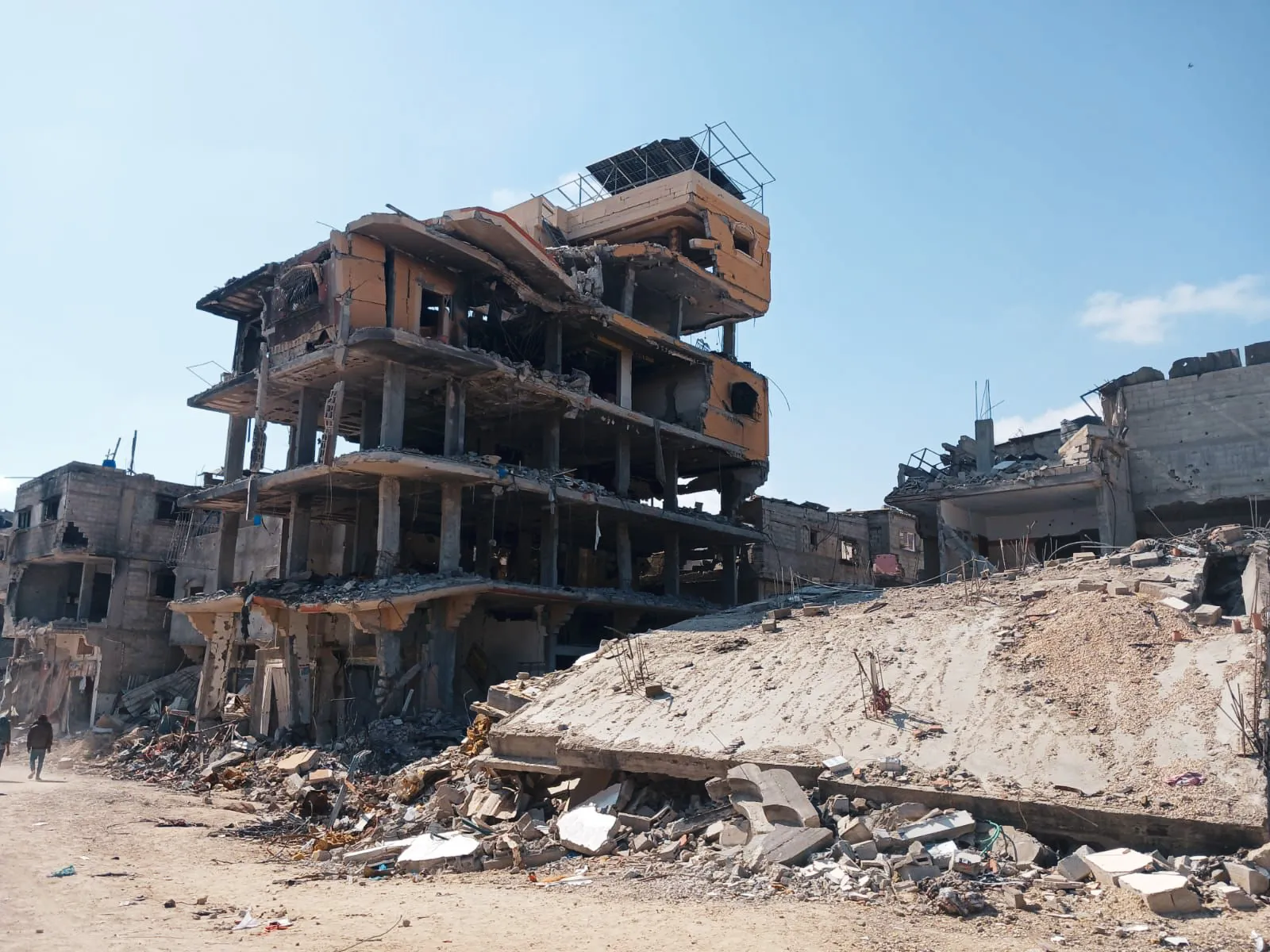
The ICJ has ordered Israel to “immediately halt its military offensive, and any other action in the Rafah Governorate" which could bring about "the physical destruction" of the Palestinians. For Palestinians who are being bombed and are trapped in the fighting, the ICJ’s ruling does not radically change their daily lives. The measures ordered by the Court are legally binding, but it has no means of enforcing them. On 26 January, the ICJ issued provisional measures ordering Israel to prevent and punish acts of genocide and ensure that basic services and aid reach people in the Gaza Strip. The Court’s rulings, both in terms of the pressure they exert on Israel and the media coverage they generate, highlight the systematic and manifest nature of the destruction of civilian infrastructure in Gaza, including attacks on hospitals—which we have documented in recent months—as well as schools, mosques, universities, roads, farmland, and more. These are being deliberately and methodically destroyed. The entire social fabric of Gaza is being annihilated.
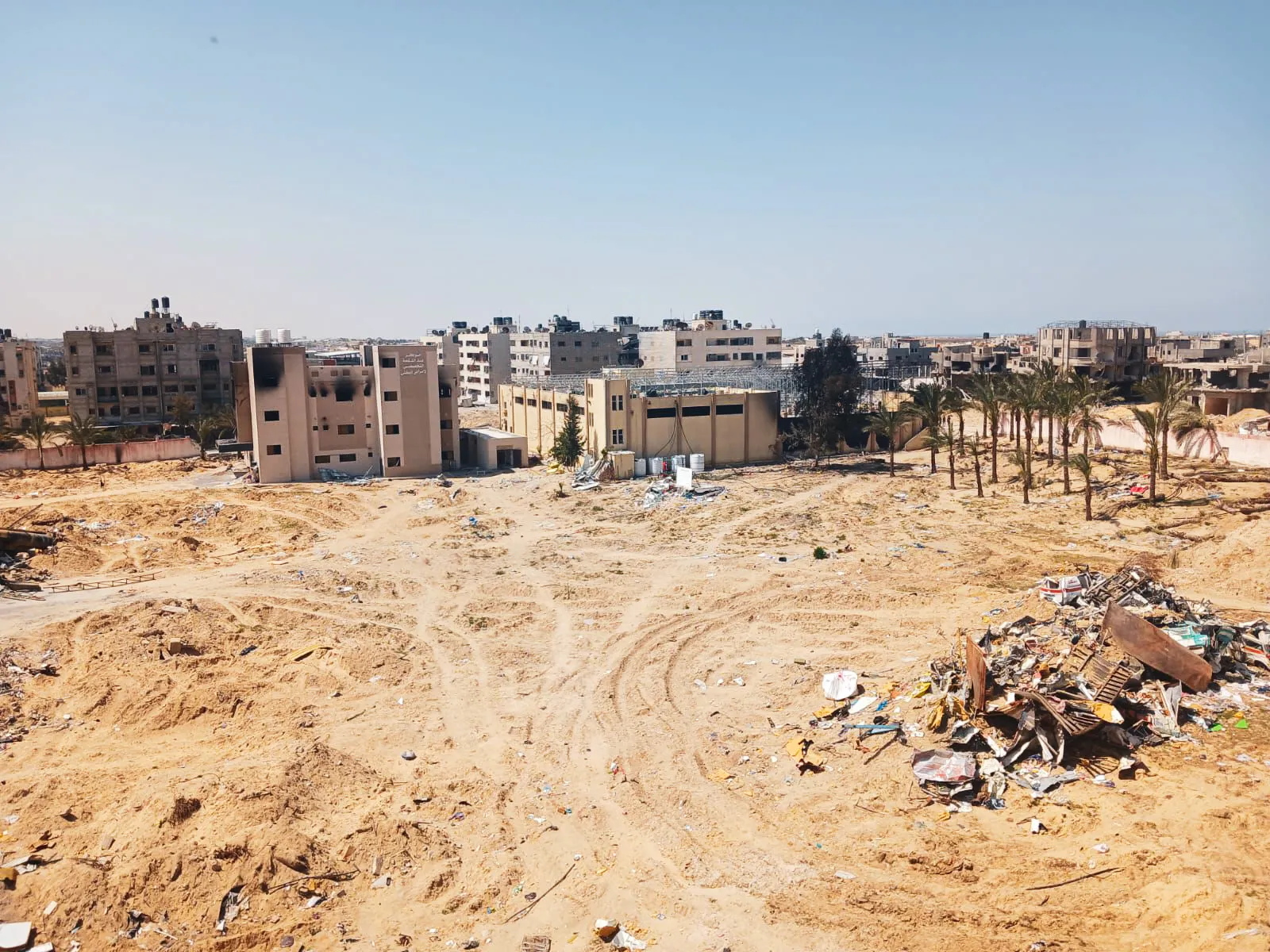
Hospitals in the north of Gaza continue to be targeted in attacks and have undergone massive destruction, as is the case for Al Awda and Kamal Adwan hospitals. There is no longer a fully operational hospital in Rafah since the Kuwaiti Hospital was taken out of service following an airstrike that killed two of its staff. Since the beginning of the war, the health system—hospitals, ambulances, medical personnel and patients—has been the target of deliberate and systematic attacks by the Israeli military. Currently, Israel refuses to take in patients, particularly children, who cannot be treated in Gaza, and medical evacuation to Egypt has not been possible since Israel took control of the border.
There is vital and urgent need to force Israel to immediately cease its policy of destruction of all sources of life in Gaza. The United States, which systematically opposes UN Security Council resolutions calling for a ceasefire, is complicit in this policy of destruction and fueling it, as do the United Kingdom and European states allied with Israel. These countries must stop supporting Israel’s military operations in order to protect civilian lives and prevent the genocide of the Palestinian people.
Join us in calling for an enduring ceasefire
We call for an enduring humanitarian ceasefire in Gaza to prevent further civilian deaths and allow aid workers unrestricted access to provide lifesaving medical care.
MSF is calling on governments to unite in their call for an immediate humanitarian ceasefire in Gaza.