
Planting and painting: self-care and solidarity on assignment
Seinn Seinn Min and Narin Fandoglu have each chosen meaningful hobbies to reset and recharge, hobbies that also connect them with their new environments and the people whose lives they discover there.
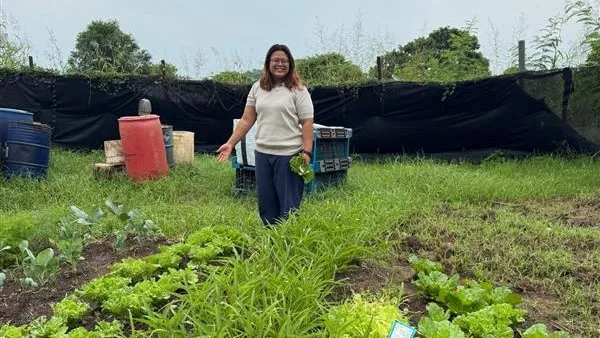
Seinn Seinn Min has an apt first name for her new hobby of gardening: Seinn means ‘green’ in Burmese. But it’s only recently as an adult, working with MSF, that she’s explored gardening for relaxation, and to remind herself of the resilience that can bear fruit even in the toughest conditions.
“When I learned I was matched for South Sudan as Deputy Project Coordinator, I began thinking about how to make the most of my spare time. During my previous assignment in Zimbabwe I had experimented with gardening, guided by a Pakistani colleague who was a farmer back home. However, I left Zimbabwe before my garden had fully grown, having started too close to the end of my assignment.
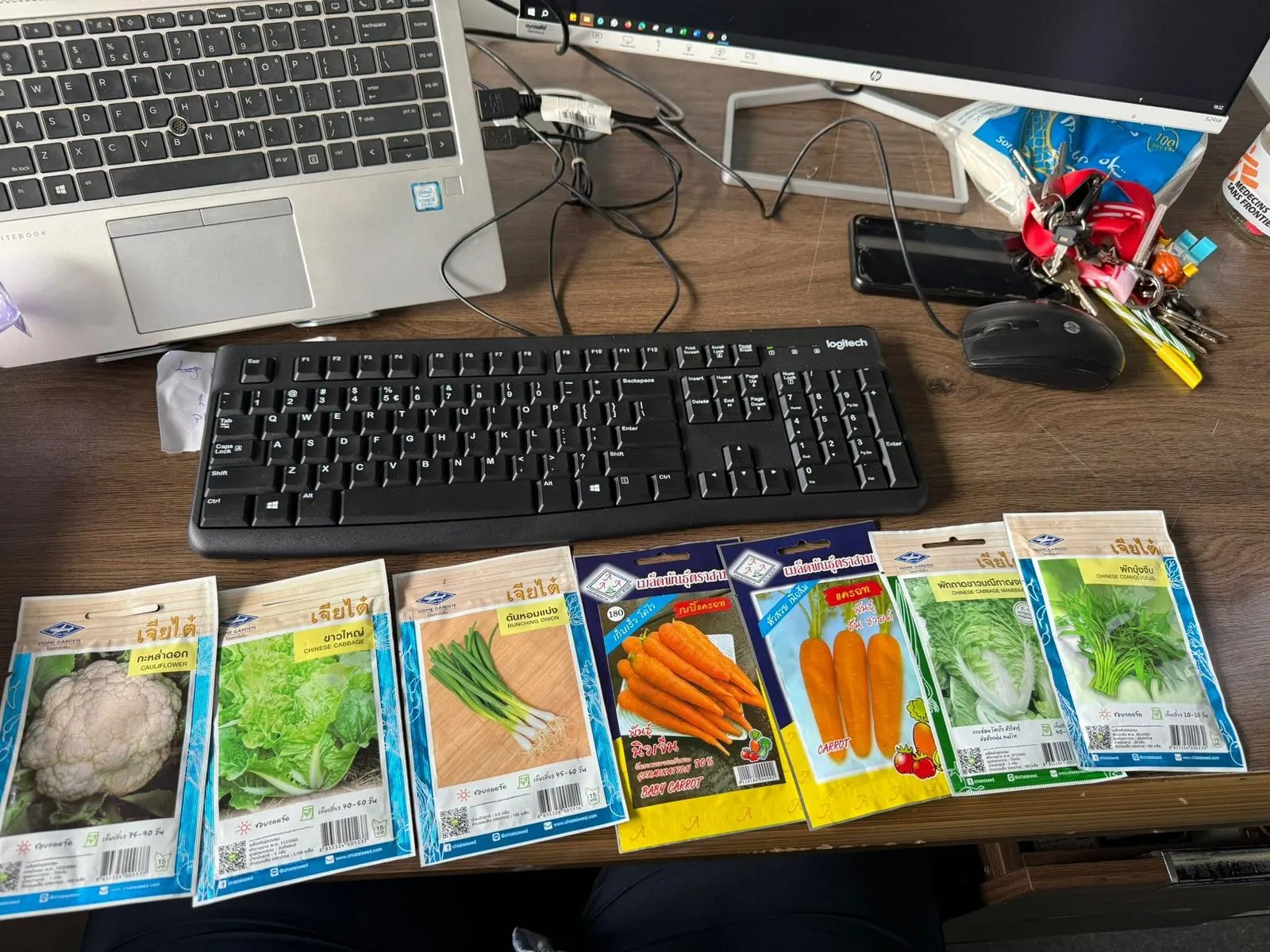
Upon arrival in Juba, I learned more about MSF’s work and the project I would be joining. While waiting for the plane to take me from Juba to the project site, I wandered through the local market and managed to find seeds and a watering can. I told myself that this time, unlike in Zimbabwe, I would start gardening from the very beginning—watching each seed sprout, each leaf unfold, and each harvest come to life.
As Deputy Project Coordinator based in Boma, my days are full and often intense. The responsibility can be heavy at times, and I’ve learned that finding small ways to cope with stress is essential. In this assignment I thought gardening could be that balance—something that not only relaxes me but also feeds me. After all, happy belly, happy mental health.
Preparing the garden is hard work—removing weeds, clearing grass and marking plots—but every step is deeply satisfying. Fortunately, our head of watchmen, Johnson, is also a farmer. Together we planned the garden, labelled each plot, and hired some local help to dig and clean the soil at the office backyard.
Within three months the garden began to flourish. Mustard leaves, Chinese cabbage, morning glory, basil, coriander, dill, cauliflower and carrots now grow in neat rows, and I eagerly await the sunflowers that will bloom before I leave.
In MSF, ‘green initiatives’ usually refer to renewable energy, solar panels and sustainable infrastructure. I fully support these efforts, yet I also consider my garden a personal green initiative—promoting healthy eating, livelihood, and connection to nature.
Life here is not easy. Barriers to healthcare, long distances, and challenging living conditions test both the communities we serve and the teams that work alongside them.
When my assignment ends, I will hand the garden over to my replacement, hoping they too will experience the quiet magic of growth—from seed to plate, and from effort to reward. In every way, this garden reflects what I see in our work with MSF: resilience, patience, and hope can flourish, even in the most challenging places.”
Narin Fandoglu is an operations coordinator in the Geneva headquarters of MSF. For almost a decade, sketching and painting people’s lives in the countries she has worked has provided not just release, but a bridge to solidarity and shared humanity.
“Almost a decade working with MSF has meant many assignments and countless stories: Nights when my heart bled with what I had seen and heard; moments when the weight of it all pushed me into a complete emotional freeze – I could not cry, I could not scream.
And so, I turned back to a small thing from my childhood: sketching.
In 2017 I began to draw what I saw in my watercolour journal. It helped, I cried it out, and the next day I went back, ready to support people in dire need.
Sketching became my way to slow down, to process my emotions, to keep going.
I visited Sudan twice in 2025, once to the east, once to the west. It pained me to recognise the country this way, split in two.
This time, I also wanted to document what I was seeing, what I was feeling.
Often, when I come back from countries like Sudan—forgotten conflicts—even those closest to me only associate these places with war and suffering. Through my drawings, I try to share another perspective.
So, I sketched little details: markets, coffee shops, roads, food. To show that Sudan is more than conflict. Alongside war, there is resilience, beauty, and everyday life.
When I shared a drawing of the pyramids in Sudan, many people didn’t even know they existed. That sketch sparked conversations about history and culture, not only about war.
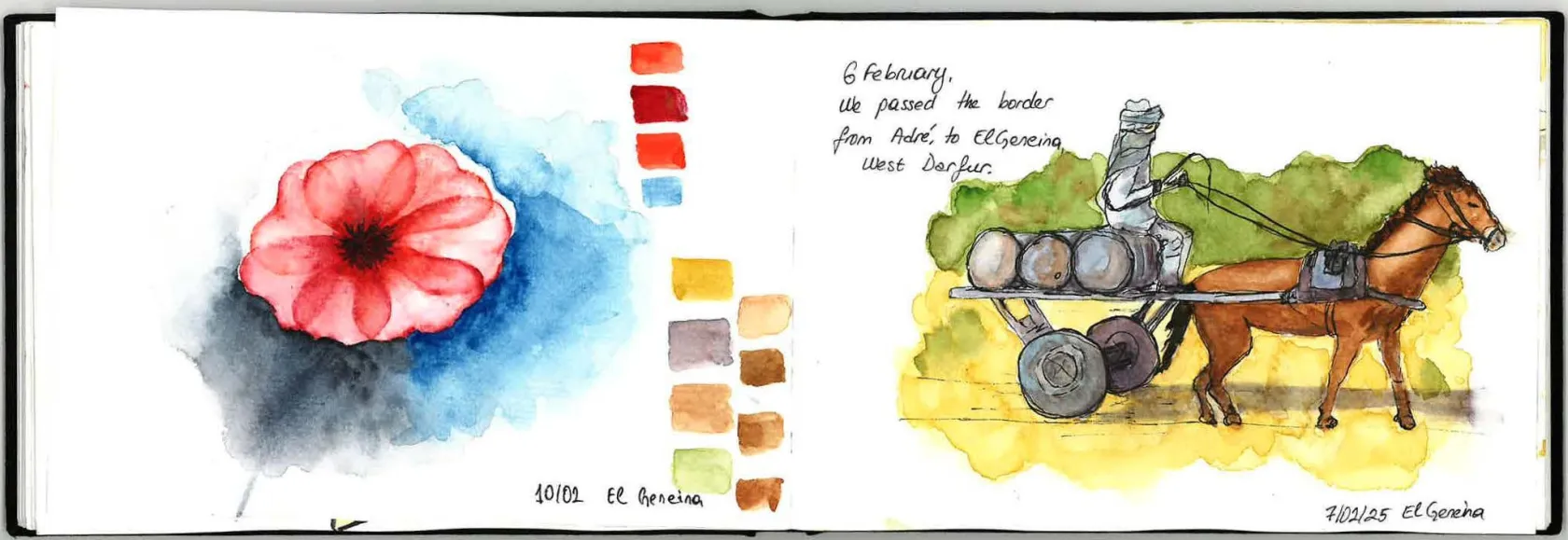
In El Geneina, the capital of West Darfur, I painted a clay water pot I saw in the street. My colleagues explained that neighbours maintain these pots so anyone passing by can drink cool water. A simple, generous tradition that endures even in war. I found that deeply moving, and I wanted to honour it in paint.
From Darfur, I also remember a man carrying fuel on a wooden cart pulled by a weary donkey. It was scorching hot, the air bone-dry, people waiting for hours. From the comfort and convenience of Geneva, the city I reside in, to that scene of struggle—the contrast unsettled me. It left me questioning the injustices of our divided world.
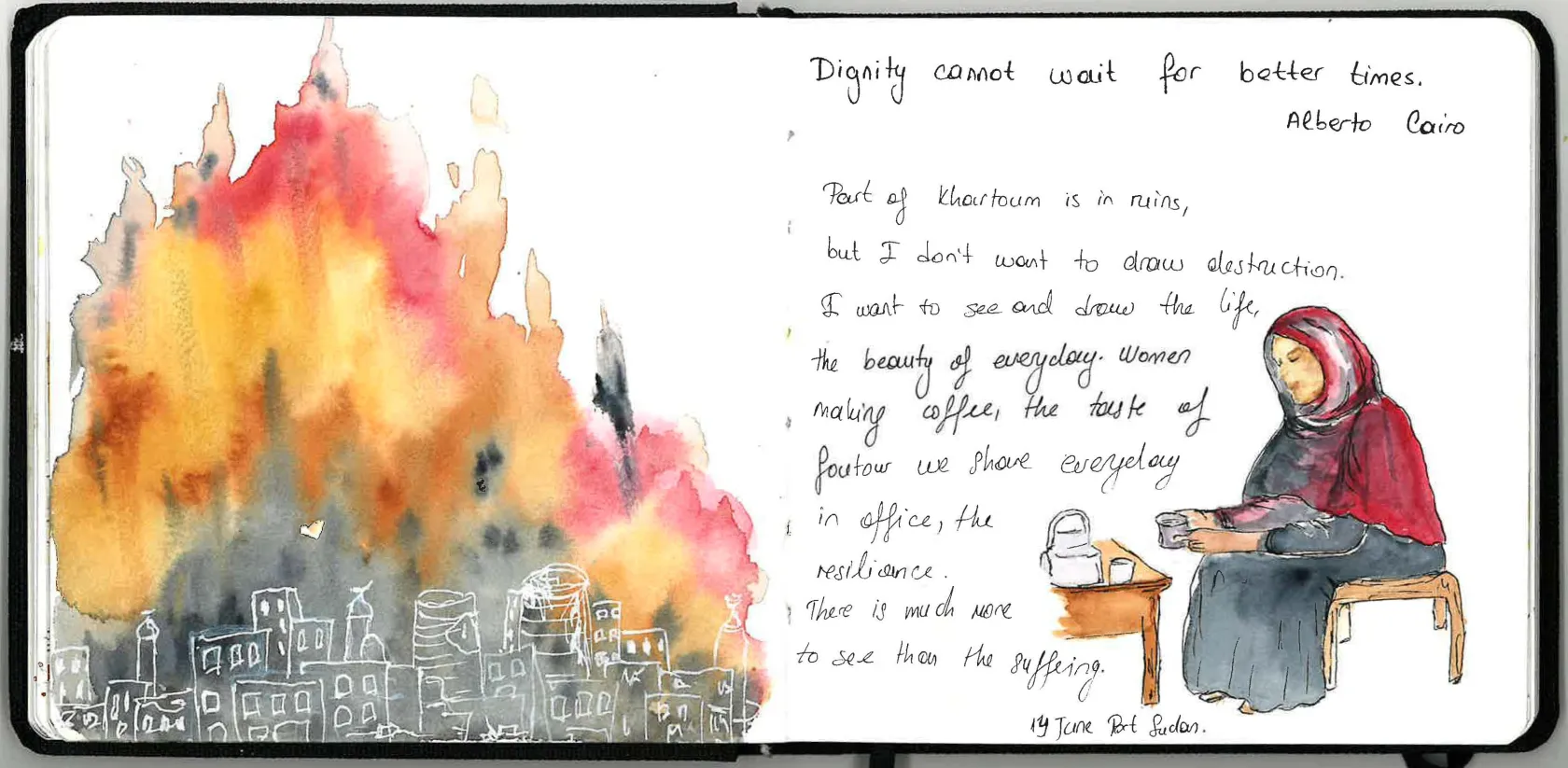
And on the road from Port Sudan to Khartoum, I remember a woman making coffee. Her stand was set up in front of a half-ruined house, almost in the middle of nowhere. At first, she seemed alone. Then I noticed a baby on a bed behind her, and a toddler playing nearby. She worked while caring for her children. When I ordered coffee without sugar or ginger, she laughed through our driver and teased me for my poor taste. Her strength and ease embodied the Sudanese women I had imagined.
Later, I painted her—not a portrait, but a memory, a mixture of her presence and the impression she left.
Through pictures, I can share Sudan more honestly.
We cannot stop the war with drawings, but we can refuse to look away, and we can bear witness.”
This article contains excerpts, with author Narin Fandoglu’s permission, from her full story published here: “Sudan’s crisis of compassion, sketched in my watercolour journal” | Médecins Sans Frontières Australia | Doctors Without Borders
Join our team!
Our teams of medical and non-medical professionals provide healthcare to millions of people caught in crises in more than 70 countries around the world. Learn more about working with MSF and how to apply today.