
MSF AU Gaza update – oil and spare parts shortages
DONATE NOW
Any one off donation makes a tremendous difference in the lives of those in need.
Now, imagine the ongoing and long term impact you can have by becoming a regular donor to our organisation.
There is a critical shortage of engine oil and spare parts in Gaza, Palestine - crucial items for the running of medical and humanitarian activities. Due to these shortages, some Médecins Sans Frontières/Doctors Without Borders (MSF) services have been closed or curtailed.
In some instances, patients have no longer been able to access surgery at night, nurses have not been able to sterilise essential equipment, some X-ray services have stopped, and people with painful burns have been left to suffer in extreme heat without air conditioning.
No engine oil also means no healthcare services, potentially leaving hundreds of thousands of people without the medical care they desperately need.
Without functioning generators, health services would be forced to shut down, medical equipment such as oxygen plants and concentrators, heart rate monitors, suction machines for children with respiratory diseases, lab equipment to identify infections, operating theatres and anaesthetic machines for surgery, and mechanical ventilators in intensive care units will cease working. Generators are used to power the blood bank, if there is no blood, people cannot be treated in the event of severe blood loss.
A full breakdown of the generators at just one MSF field hospital alone would affect over 460 patients per month, stop 700 surgical procedures per month, and deprive patients from lifesaving care. Just a single operating theatre sees on average 10 people per day.
Now, the massive demand is pushing prices ever higher. In July, our teams were quoted over $1,800 per litre of engine oil, which is more than 20 times the price it was six months ago.
This is part of an escalating problem. Since the beginning of January 2026, MSF has been prevented by the Israeli authorities from bringing international staff and additional supplies into Palestine, and by 1 March our remaining international staff were forced to leave the territory.
Our Palestinian colleagues continue to work under immense pressure; our medical programs are facing shortages. Restrictions on supply and staff entry are depriving our medical teams of much-needed materials and technical skills.
In addition to our depleting stocks from 2025, MSF relies on solidarity from different partners in the wider health sector in Palestine to sustain part of its ongoing medical activities.
Aid continues to be used intentionally as an instrument of oppression against Palestinians. Supplies continue to be delayed by shifting restrictions at crossings, and aid is folded into ceasefire negotiations as though they are political concessions. The phases of so-called ceasefire implementation itself are also used as a cycle to weaponise aid: treating aid as leverage rather than a legal obligation.
Please consider making a donation today and help support our patients and staff in Palestine, and beyond.
HOW MSF USES FUNDS
71%
of our funds are used to further our social mission by providing assistance to people in distress and to victims of natural or man-made disasters.
29%
of our funds are used to responsibly manage our organisation via fundraising and administration activities that ensure we can continue to meet our operational needs.
DONATION FAQS
Here you will find the most frequently asked questions about donating to Médecins Sans Frontières Australia.
Privacy and communications
Your support matters
By making a donation, you are helping to ensure that when an emergency happens, our teams are there to relieve suffering and save lives.
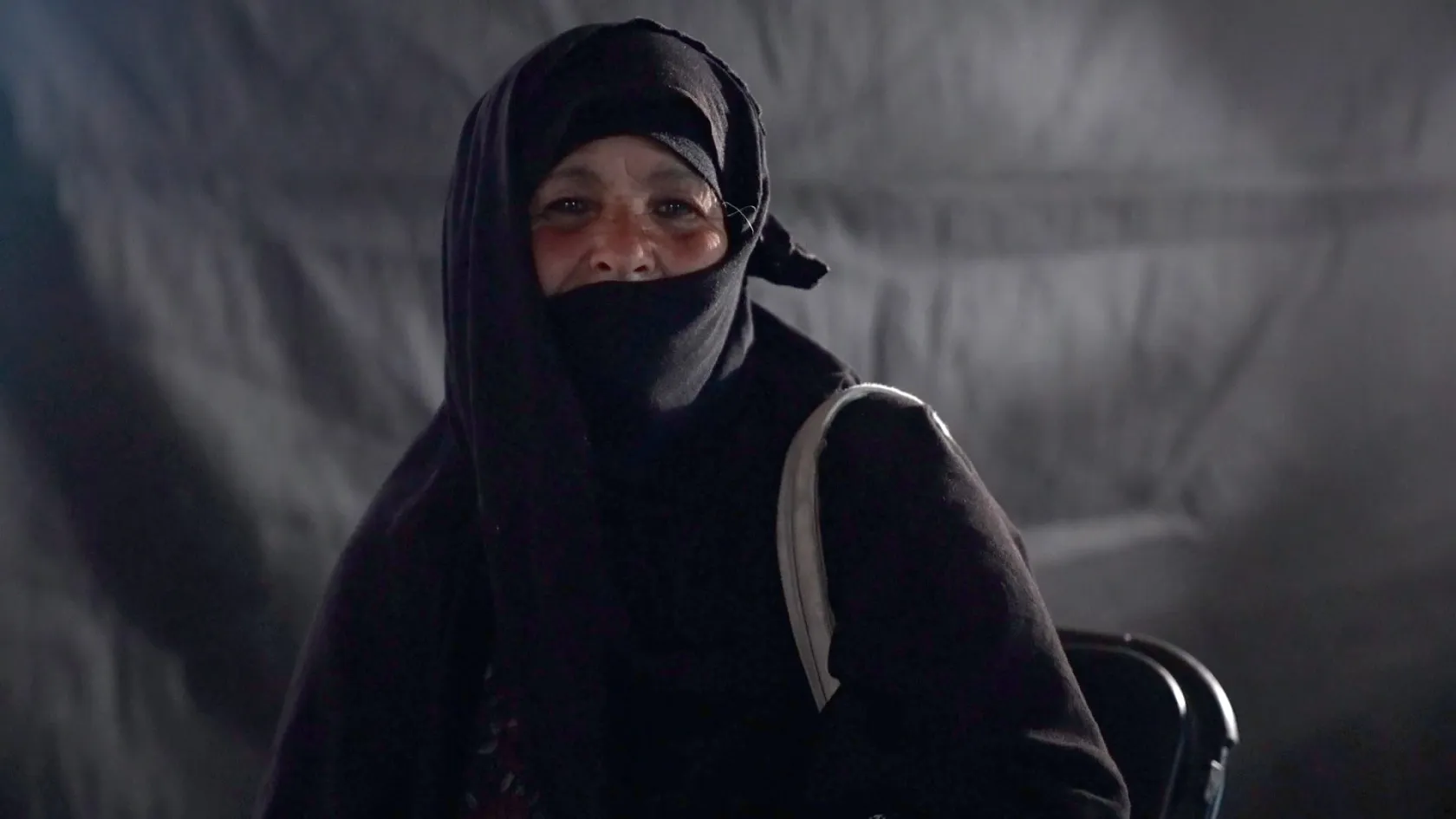
Portrait of Neama Awad. She was injured in 2025 during food distribution by the militarised Gaza Humanitarian Foundation. “I went looking for a loaf of bread. I went walking as I don’t even have one shekel for transportation. I wanted to bring food for my children. There was no food, nothing. We became skin and bones. I went to the aid distribution because we had no support at home: no flour, no food, no aid reaching us, not even a loaf of bread.” © Nour Alsaqqa/MSF
Provide urgent crisis support
MSF teams respond to emergencies in many forms: armed conflicts, disease epidemics, natural disasters, malnutrition crises, and more.
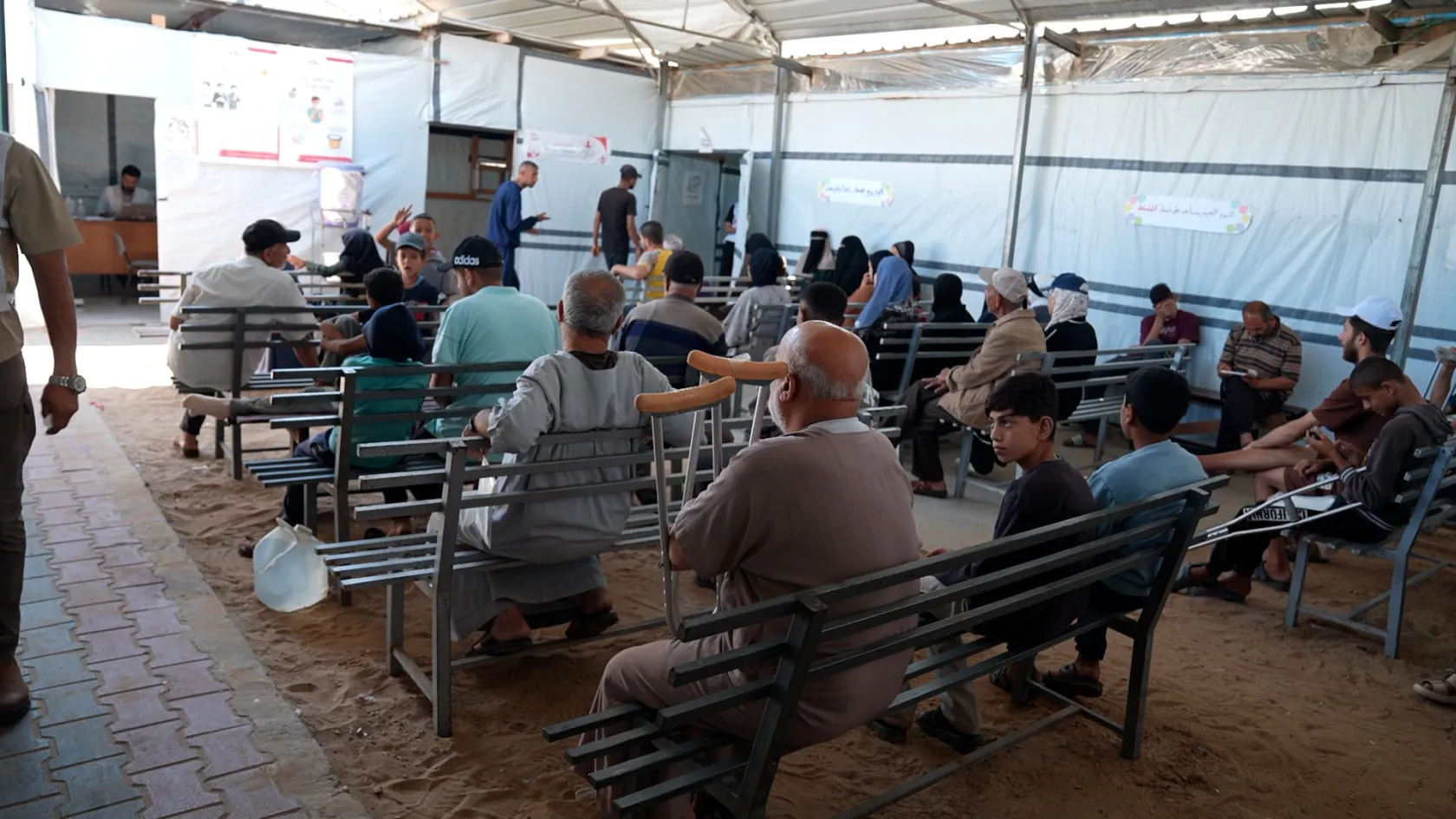
Patients wait at MSF’s Al Mawasi primary healthcare centre, in the Gaza Strip, Occupied Palestinian Territory. © Nour Alsaqqa/MSF
Help save lives across more than 70 countries
Your donation today will help provide critical medical care where it is needed most.
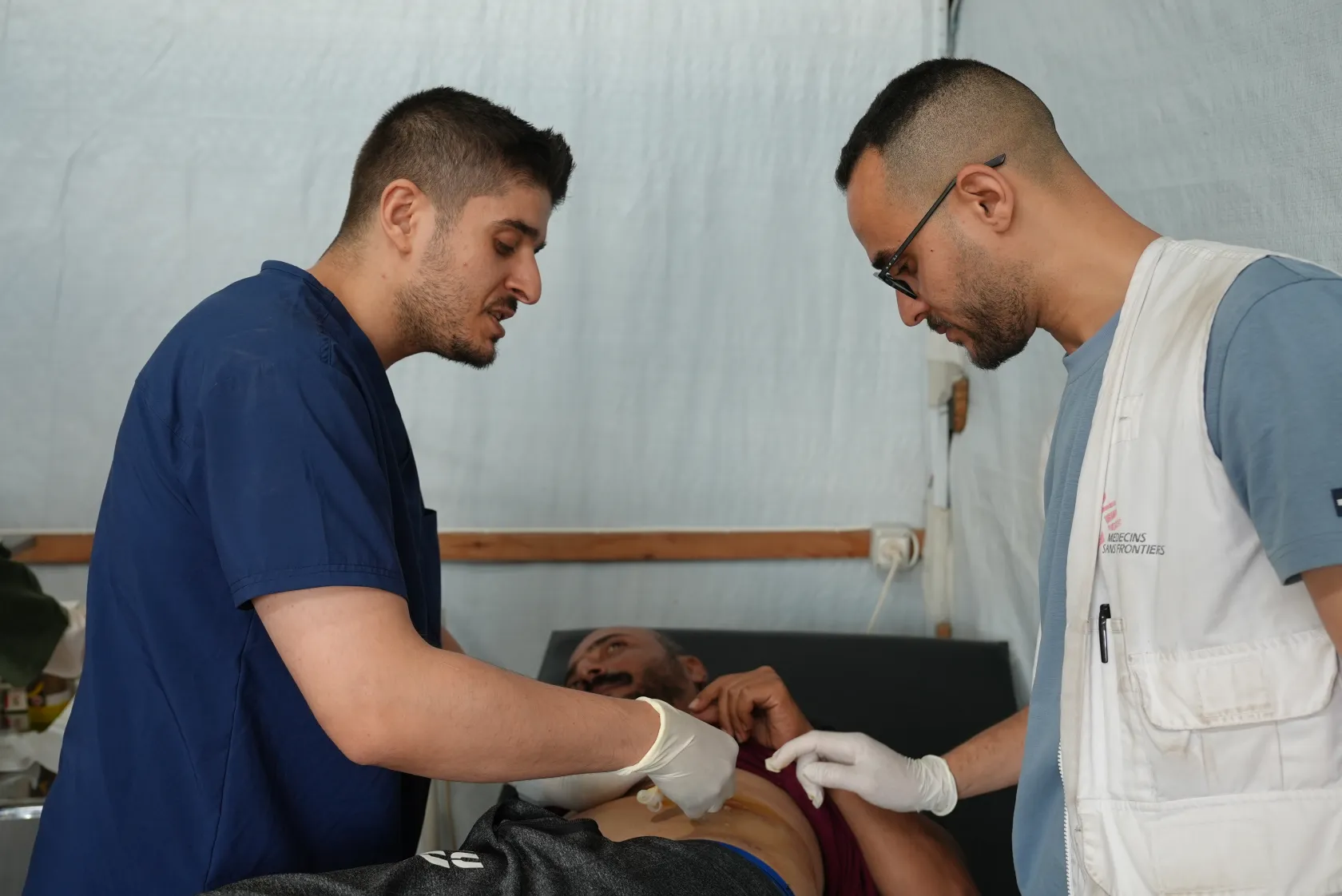
An MSF medical team changed the dressings on the wounds of their colleague, MSF radio operator Ashraf Afifi, who was shot by an Israeli drone while outside his tent on 5 June 2026. In Gaza humanitarian workers are experiencing the same violence as the communities they serve. © Nour Alsaqqa/MSF
TAX DEDUCTIONS
All donations are processed in AUD.
Donations are tax-deductible in Australia only.