
MSF AU | In Palestine, childhoods are stolen by genocide
DONATE NOW
Any one off donation makes a tremendous difference in the lives of those in need.
Now, imagine the ongoing and long term impact you can have by becoming a regular donor to our organisation.
In Palestine, childhoods are stolen by genocide
Three years of Israel's military offensive, mass displacement and destruction have devastated the mental health of children in Gaza.
Many have lost family members, homes, schools and friends, while repeated displacement and catastrophic living conditions have taken away the spaces where children should be able to feel like children and play without fear.
Instead of focusing on playing and going to school, fetching water, queuing for food or helping their families survive are now part of their daily responsibilities.
Children have also begun to recreate what they see around them through play and drawings. Instead of games reflecting an ordinary childhood, counsellors see children imitating aid distributions, describing attacks or playing among the rubble of destroyed buildings.
“Children who grew up during the war, who are today three or four years old, have lost their understanding of so many fundamental concepts... Many don't know what ‘home’ means. The tent has become their home, because they have never experienced living in a house.”
- Mahmoud Al-Balbisi, an MSF mental health counsellor.
According to the World Health Organization (WHO), the number of people in Gaza requiring urgent mental health and psychosocial support has more than doubled since before the conflict, from around 485,000 to more than one million people. Mental healthcare has become a crucial part of MSF’s work: teams provide individual consultations, psychosocial and psychoeducational group activities for adults, as well as recreational activities for children and adolescents, who are particularly vulnerable.
Despite their resilience, for children the effects of prolonged violence are visible in their everyday behaviour. Counsellors report increasing anxiety, fear, screaming, aggressive behaviour, nail-biting and involuntary urination among children.
“After three years of violence, inhumane living conditions and loss, children are not simply carrying memories of war; their experiences have reshaped how they understand safety and childhood itself,” says Franz Luef, MSF head of mission for Palestine. “There is still no safety for children in Gaza. Bombing can happen at any moment, and they continue to live in constant fear, with no opportunity to recover or escape from what they have already endured. Mental health needs in Gaza are enormous but the services and the spaces available for children to recover remain severely limited following the systematic decimation of the health system by Israeli forces.”
Between late 2023 and September 2026, MSF teams provided more than 132,000 individual mental health consultations and supported more than 246,000 people through group activities.
All of our work in Palestine, and in more than 70 other countries where we work, is only possible with your support. Please make a donation today and help us continue this invaluable work. Thank you.
HOW MSF USES FUNDS
73%
of our funds are used to further our social mission by providing assistance to people in distress and to victims of natural or man-made disasters.
27%
of our funds are used to responsibly manage our organisation via fundraising and administration activities that ensure we can continue to meet our operational needs.
Data from the 2025 consolidated MSF Australia and MSF New Zealand Financial Report
DONATION FAQS
Here you will find the most frequently asked questions about donating to Médecins Sans Frontières Australia.
Privacy and communications
Your support matters
By making a donation, you are helping to ensure that when an emergency happens, our teams are there to relieve suffering and save lives.
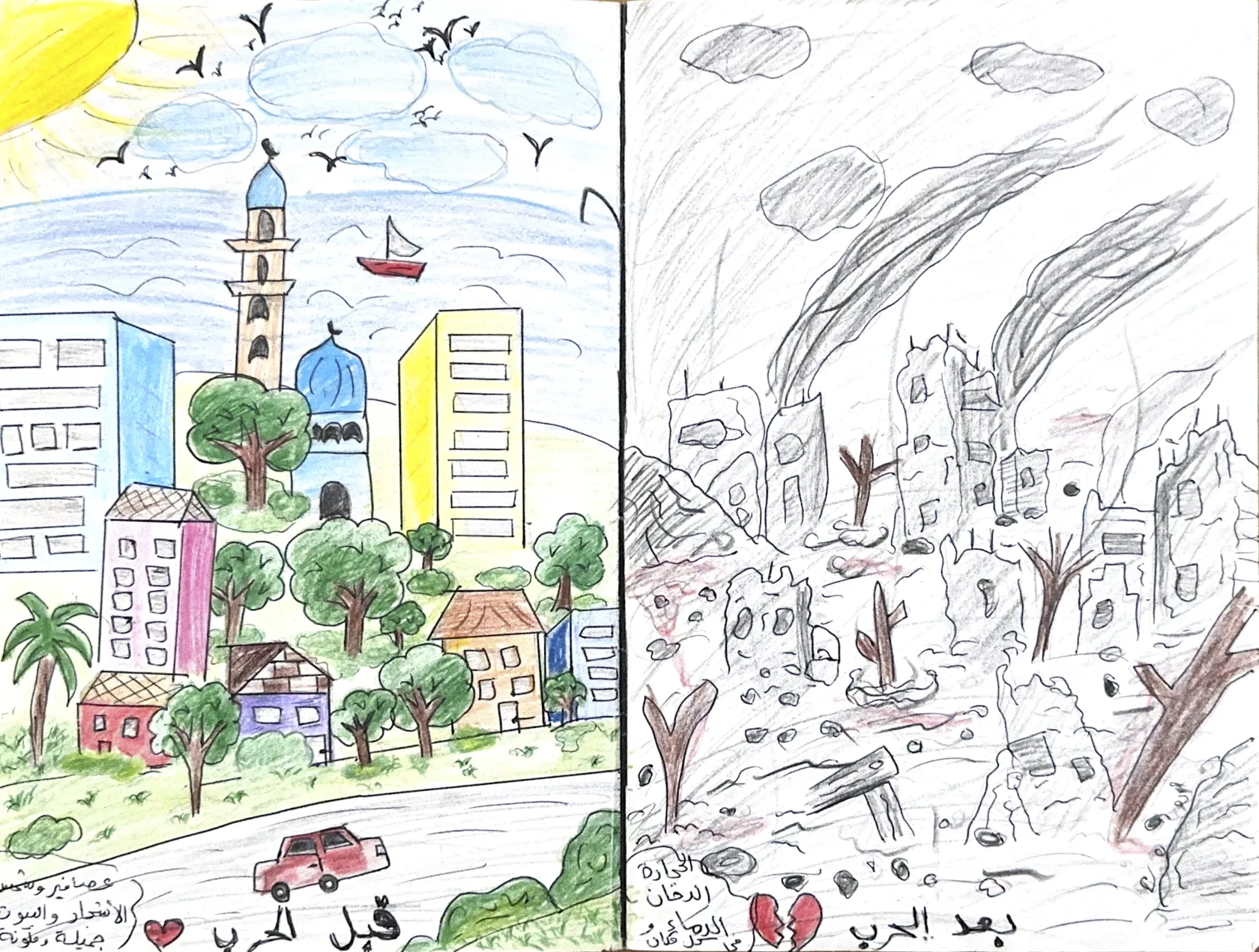
Eleven-year-old Dina drew her neighbourhood before and after the start of the genocide, recalling the mosque, buildings and trees. She said she thought she would return from the south to find Gaza again, but she didn’t. © Nour Alsaqqa/MSF
Provide urgent crisis support
MSF teams respond to emergencies in many forms: armed conflicts, disease epidemics, natural disasters, malnutrition crises, and more.
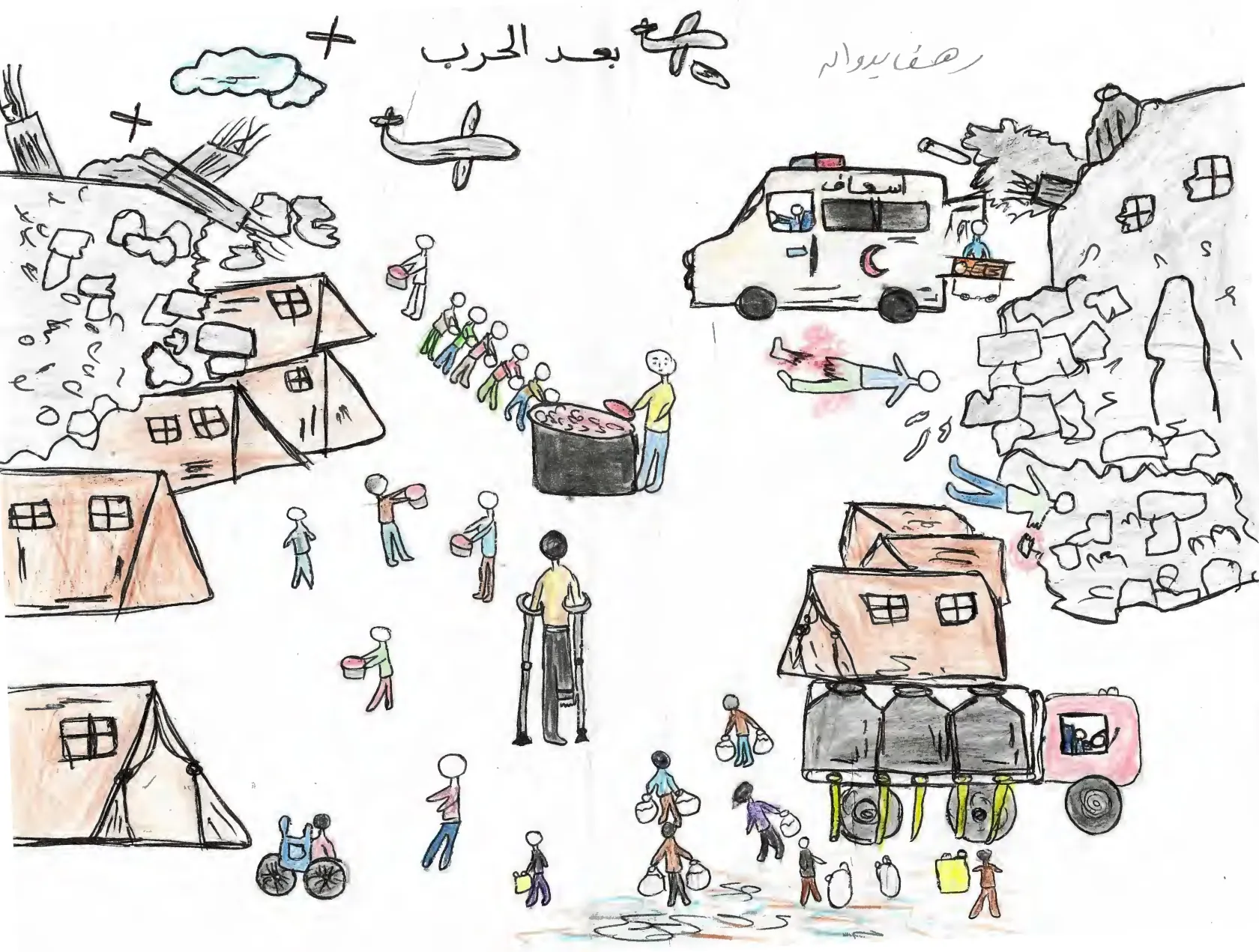
Eleven-year-old Rahaf made two drawings: one from before the war, one from after the genocide started. In the "before," she drew her neighborhood which has clean streets, children playing, and a school full of classes and learning. In the "after," (pictured) she drew tents, homes that are being targeted, an ambulance, a water truck, children filling jerrycans with water, and an adult with an amputated leg, walking with crutches. © Nour Alsaqqa/MSF
Help save lives across more than 70 countries
Your donation today will help provide critical medical care where it is needed most.
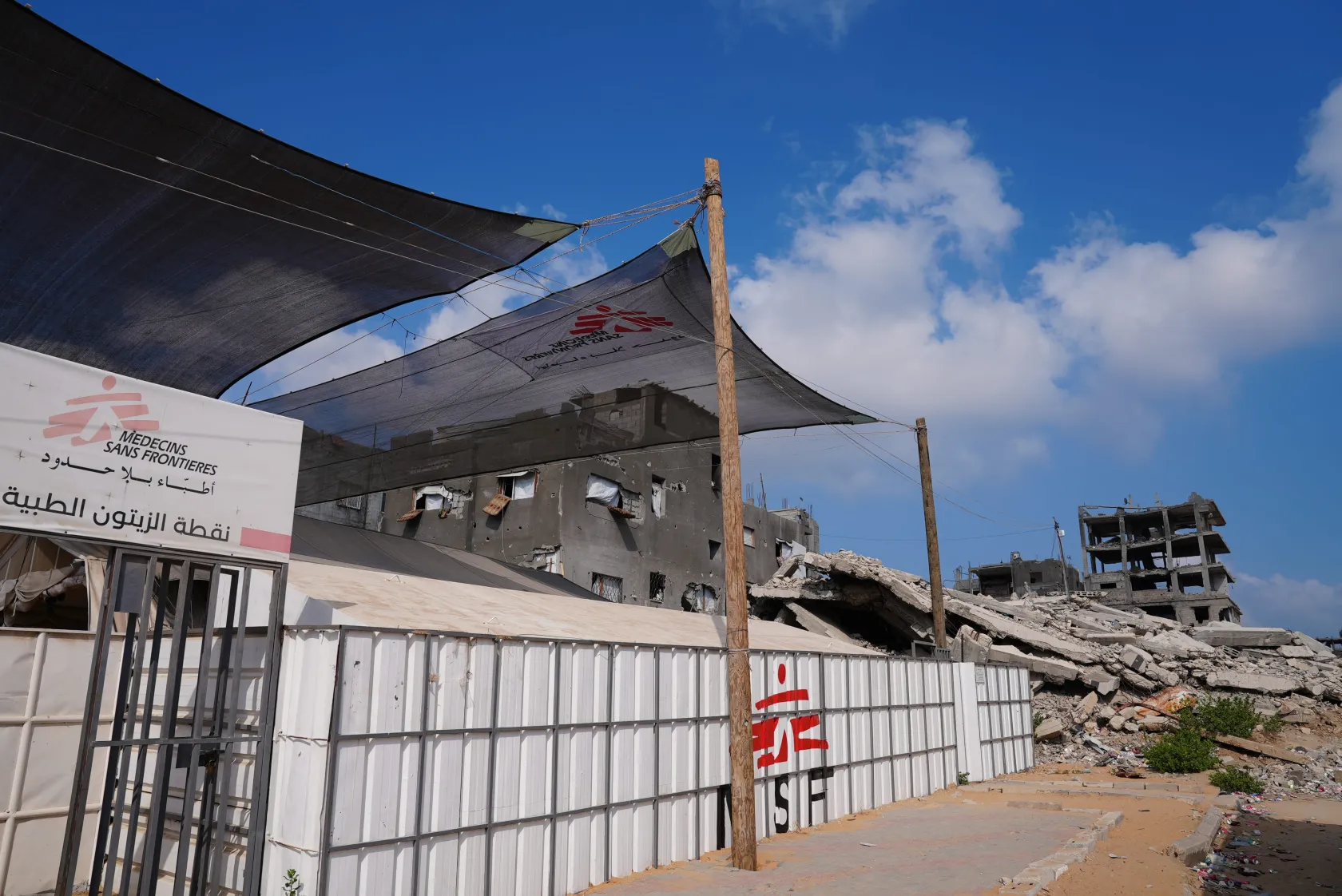
The entrance to MSFs' Al Zaytoun Advanced Medical Point, in Al Zaytoun neighbourhood of Gaza City. Shade netting shields the facility from the sun during the heatwave. The clinic is surrounded by damaged remains of residential buildings destroyed during the genocide. © Nour Alsaqqa/MSF
TAX DEDUCTIONS
All donations are processed in AUD.
Donations are tax-deductible in Australia only.