
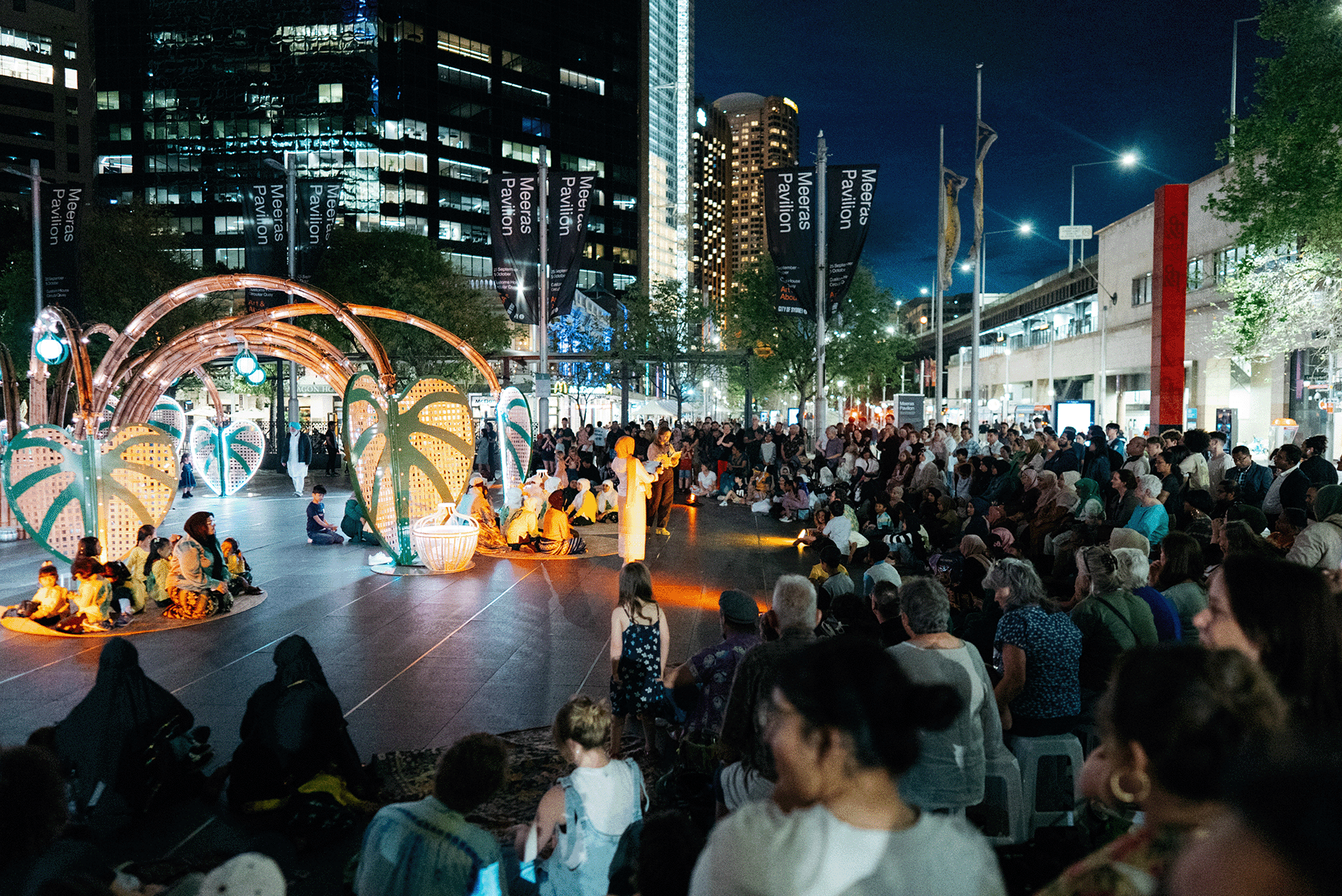
Meeras Pavilion

Come Support Meeras Pavilion this September 

From 25 September to 6 October, Sydney audiences are invited to experience the Meeras Pavilion and photo exhibition at Customs House Forecourt.

This immersive installation, created in partnership with Rohingya artists and communities, offers a rare opportunity to engage with the heritage, resilience, and struggles of the world’s largest group of ‘stateless’ people.

Please come and bring your families to the performance and story-telling nights as the Rohingya community showcase their art, fashion, poetry, stories and culture. 

What’s On

📅 25 September – 6 October 2025
📍 Customs House Forecourt, Sydney

All events are free; some require bookings.

  • 27 September, 6:00pm – Performance & Storytelling Night
  • 2 October, 5:30pm – Film Festival & Panel Discussion (registration required)
  • 4 October, 3:30–5:00pm – Embroidery & Bamboo Weaving Workshops
  • 4 October, 6:00pm – Performance & Storytelling Night

Find out more via the City of Sydney.
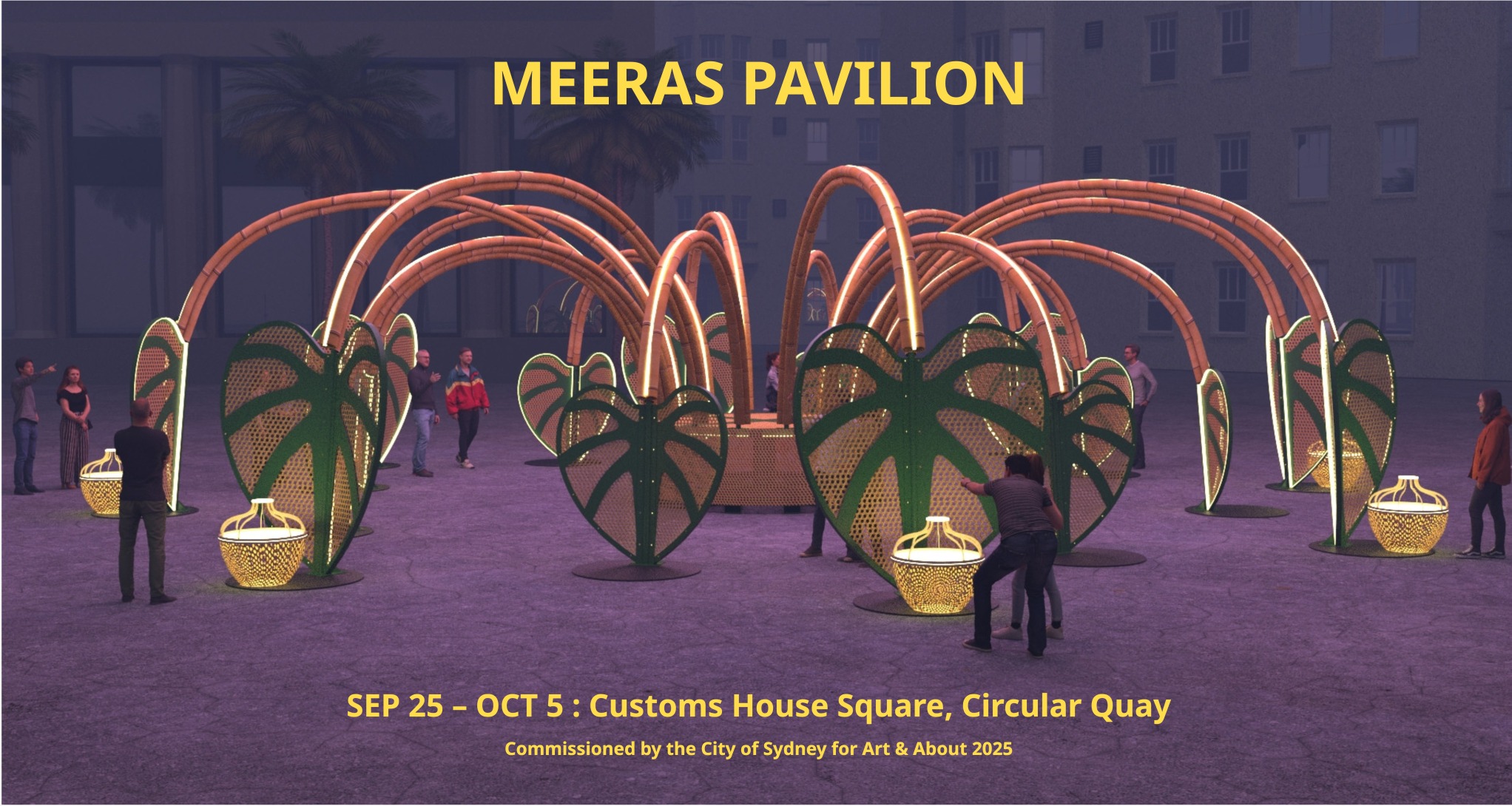
Meeras

About Meeras Pavilion

Meeras means heritage in the Rohingya language. Rising from the heart of Sydney — on unceded Gadigal land — the pavilion is free for the public to explore.

Sixteen towering taro leaves form a bamboo structure illuminated by light and sound. Visitors step inside to experience water-like projections, glowing woven jugs, and a cross-cultural soundscape of music and poetry.

The pavilion stands to shed light on the plight of the Rohingya, through Rohingya symbols, stories, and artistry. It was co-designed over three years by Rohingya and Australian artists, in collaboration with Rohingya communities in Sydney, Cox’s Bazar, and Kuala Lumpur.

Over ten days, Meeras will come alive through a vibrant activation, blending public and registered events. The program includes hands-on embroidery and bamboo weaving workshops, youth advocacy trainings, and a school education series for children. Audiences will also experience a curated film festival and panel discussion, culminating in a dynamic public showcase featuring music, fashion, poetry, and talks. 

Photo Exhibition: Like Water on a Taro Leaf

Alongside the pavilion, the photo exhibition showcases Rohingya people as they preserve culture, resist erasure, and advocatefor their rights. The title draws from the Rohingya proverb Hoñsu Fathar Faaní — “We are like water on a taro leaf” — expressing the precarious reality of statelessness.

The photo exhibition is presented by Médecins Sans Frontières Australia and Rohingyatographer in partnership between photographers Sahat Zia Hero and Victor Caringal. 

An Experience of Statelessness

The Rohingya are among the most persecuted minorities in the world. Denied citizenship in Myanmar and across the region, 99 per cent live in conditions of containment — refugee camps, detention centres, or countries that deny them basic rights.

Statelessness erodes more than legal protections. It strips away culture, identity, and belonging itself. Yet the Rohingya are not defined by this. Every day, through art, music, traditions, and advocacy, they continue to make their mark — and demand a dignified return home to Rakhine State.

Today, the majority of Rohingya live in Bangladesh, in the world’s largest refugee camps. Eight years after nearly 800,000 people were forced to flee Myanmar, more than 1.3 million remain in limbo in Cox’s Bazar.

MSF has been providing medical care in these camps for nearly three decades. Our teams witness the consequences of protracted displacement every day: families almost entirely dependent on dwindling humanitarian aid, people prohibited from formal employment, and generations of children growing up without access to recognised education.

Living conditions continue to deteriorate, with outbreaks of unexplained fevers, hepatitis C, and increasing scarcity of food and water. Most urgently, Rohingya communities face a future with no pathway beyond the confines of the camps — a future without hope.

What is creative advocacy?

MSF has partnered with the Creative Advocacy Partnership (CAP), a group of Australian advocates, artists and designers who use creative practice to influence positive change. CAP partners with communities to make things together, including artworks, installations, events, audio stories, poems, talks or performances., and through these projects aims to connect people together, shift oppressive narratives and strengthen the way communities are advocating for change. 

Through creative advocacy approaches, MSF has been able to partner with the Rohingya community and co-produce dinners, talks, exhibitions, remembrance events, and tools for our mental health and medical programming. You can read more about the collaboration here. 

Partners

The Meeras Pavilion is an initiative of the Creative Advocacy Partnership. Originally seed funded by MSF, it is now supported by Rohingya and Australian artists, communities, and organisations: 

Rohingya-led Organisations

  • Australia Rohingya Women’s Development Organisation
  • Rohingyatographer
  • Rohingya Maìyafuìnor  Network

Advocacy & Humanitarian NGOs

  • Amnesty International Australia
  • Asylum Seeker Resource Centre
  • Médecins Sans Frontières
  • Refugee Council of Australia

Alliances & Networks

  • Australian Global Health Alliance

Government and Public Partners

  • City of Sydney
  • Hampden Park Public School

Creative & Design Partners

  • Amigo & Amigo
  • Event Engineering
  • Lucid Space Design