
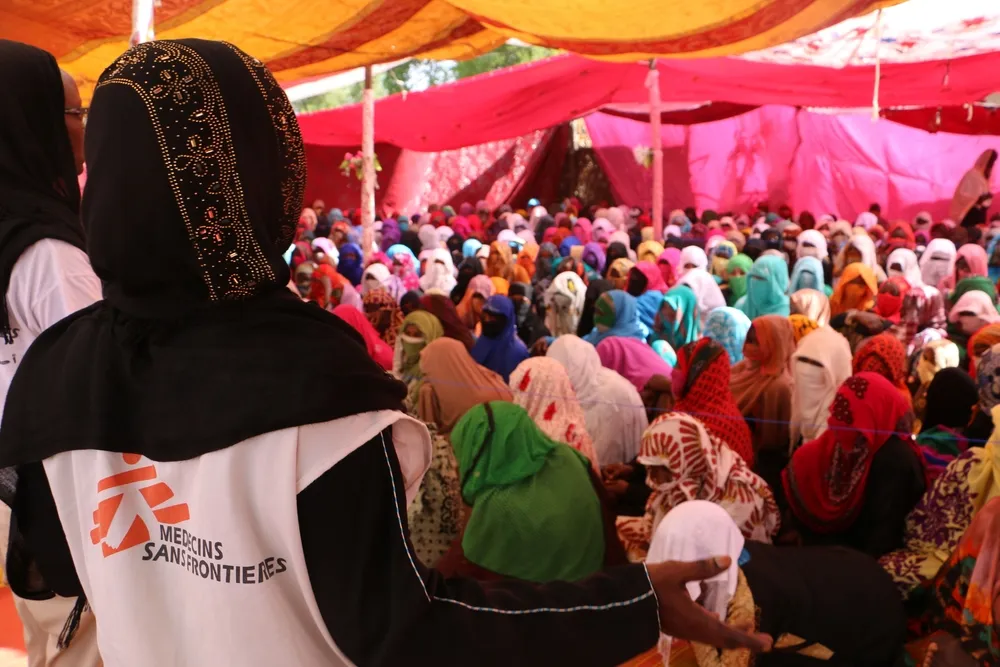
Why are we there?
- Armed conflict
- Endemic/epidemic disease
- Healthcare exclusion
Latest links
- CAR Refugees in Chad: “At least here we don’t hear the sound of bullets”
- Chad: Arrival of tens of thousands of refugees forced to flee CAR
- Chad: Dozens killed in Darfur violence
Our work
This is an extract from our latest Activity Report, looking back on our work in the previous year.
2013
Although the Chadian government has promised to increase investment in healthcare, the quality of care and health indicators are still poor, particularly for rural communities, children and refugees.
The mortality rate for children under five is high, and routine vaccination coverage is low. People often die from malnutrition and preventable diseases such as malaria and cholera, and disease epidemics are recurrent.
Instability in the surrounding countries also means Chad is host to a high influx of refugees. In 2013, some 60,000 new refugees arrived in the country, with urgent needs for basic and specialist medical care.
Focusing on malaria
Malaria, a mosquito-borne disease, is one of the main causes of death for children under five, but deaths can be prevented with simple measures such as the use of mosquito nets, preventive medicine and early detection and treatment.
For the past few years, teams from Médecins Sans Frontières (MSF) have worked on preventing and treating malaria in the Moissala and Bouna districts, Mandoul region. Teams focussed on children with severe and complicated cases of the illness in Moissala hospital‘s malaria unit. MSF also supported health centres and community health workers in rural areas with drug supplies and staff.
Seasonal Malaria Chemoprevention – the distribution of antimalarials as a prevention strategy – was organised for children under five and pregnant women during the high season (July to October).
The strategy had previously proven effective in reducing the number of people developing severe malaria. In 2013, prophylaxis was distributed to 53,000 children and teams recorded an overall reduction in malaria of 60 per cent in Moissala when compared to the previous year.
At Massakory hospital, Hadjer Lamis region, where MSF provided support in paediatric care, teams treated 36,600 patients during an acute peak in malaria cases between July and December.
Children also received treatment for malnutrition in the hospital and surrounding health zones. A large water sanitation campaign for people’s homes was launched to help prevent outbreaks of diarrhoea. This activity currently reaches 900 families in 20 villages.
From August to October there was an emergency intervention in response to high levels of malaria in the Salamat region. Based at Am Timan hospital, outreach activities expanded to ensure people in remote areas of the district could get the medical care they needed. An MSF team in Am Timan hospital also continued to provide basic and specialist care with a focus on women and children.
Reproductive healthcare, emergency obstetric care and treatment for tuberculosis (TB) and HIV, including prevention of mother-to-child transmission of the virus, was offered. Teams carried out 5,280 outpatient consultations, assisted 1,895 births and tested 2,050 people for HIV.
A paediatric nutrition programme based at the hospital and in nine outreach sites admitted 9,990 children for treatment. Six of these outreach sites were handed over to the Ministry of Health at the end of the year.
Providing assistance to Sudanese refugees
Renewed clashes in Darfur, Sudan, led to an influx of refugees in the Tissi area of Chad early in the year. MSF launched activities in Tissi town, establishing an emergency room to treat victims of violence, a health centre in Ab Gadam camp, and a health post in Um Doukhum. People were suffering mainly from malaria, respiratory tract infections, diarrhoeal and skin diseases, and malnutrition.
The team carried out 52,820 outpatient consultations and treated 10,400 people for malaria. MSF provided clean drinking water and built latrines to improve basic hygiene in Ab Gadam camp. In Goz Beida, a team carried out basic healthcare consultations, provided access to drinking water and distributed relief supplies such as blankets and washing kits to improve living conditions.
Extensive vaccination campaigns
Without routine vaccinations, children are at greater risk of infection, and the consequences can be fatal if they are also malnourished. MSF has been involved in expanding routine vaccination coverage in collaboration with the Ministry of Health, and organises vaccination campaigns for displaced people and in response to outbreaks of disease.
There were three measles vaccination campaigns in 2013, reaching 257,000 children in Ouaddai region in May, and 102,000 children in Guéréda and 68,100 children in Iriba in September.
Beginning in February, a vaccination campaign was carried out in Goz Beida for an outbreak of yellow fever, a mosquito-borne viral disease that can cause severe liver disease and death. A total of 161,300 people were vaccinated. In Salamat region, outbreaks led MSF to vaccinate 12,250 people against measles and 26,800 against meningitis.
Responding to emergencies
Following flooding in Maro, Moyen-Chari region, MSF provided assistance to refugees from Central African Republic living in Yaroungou and Moula camps, carrying out 12,200 basic health consultations, and offering nutritional support to 2,630 children, as well as immunisations. In August, assistance was also provided to refugees in Koldaga and Moissala.
Programme handovers
An MSF programme started in 2008 in Abéché provided medical, rehabilitative and psychosocial care to women with obstetric fistulas. Fistulas, a consequence of birth complications, cause not only pain but incontinence, which in turn often leads to social exclusion and sometimes rejection by friends and family.
The programme handover to the Ministry of Health began at the end of 2013. The 45-bed village des femmes had welcomed around 850 women in total, and patients had benefited from rehabilitative surgery and post-operative care.
An emergency nutrition programme in Bokoro, Hadjer Lamis, was handed over to the health ministry in February.
At the end of 2013, MSF had 1,039 staff in Chad. MSF has worked in the country since 1981.
Chad is Africa’s fifth largest nation, and home to more than 14 million people. Since 2003, the nation's primary source of export earnings has been crude oil.
Since 2015, thousands of people in the Lake Chad region have been forced to flee their homes as a result of violent clashes between armed groups and Chadian military forces. Access to basic healthcare is limited in Chad, where malnutrition, malaria, and outbreaks of disease are common. MSF supports local hospital infrastructure and is active in upgrading water and sanitation services.
In the wake of humanitarian emergency
The Lake region remains fragile, and violence by Boko Haram in the area continues. The conditions of the displaced population have improved with the presence of other humanitarian organisations, and many people are returning home. However, the humanitarian needs remain and there is still a need for long-term services and solutions to allow returnees to reintegrate safely and with dignity.
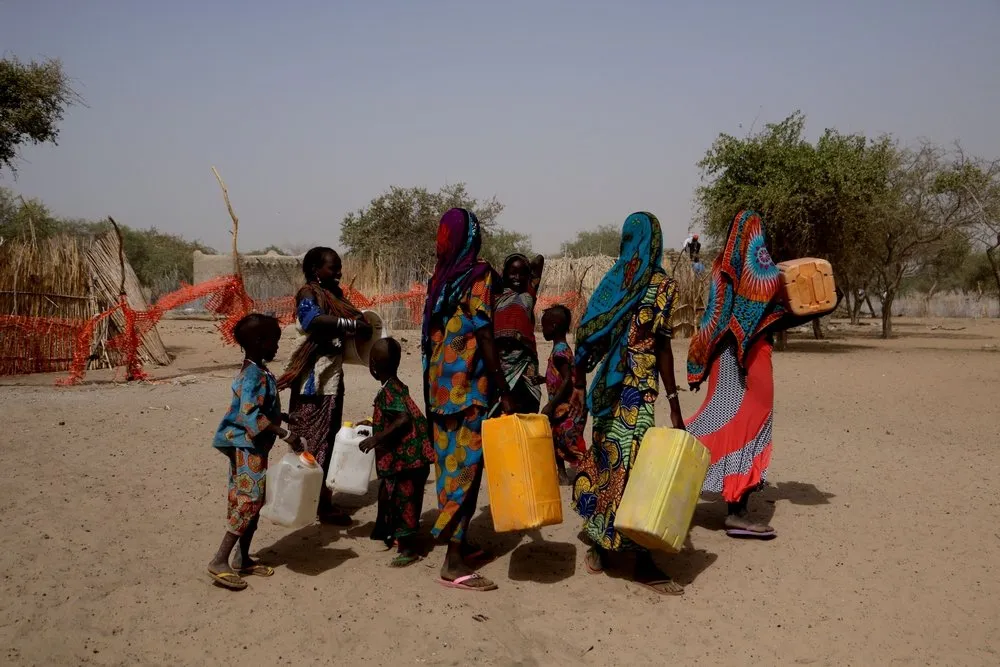
MSF is present in the east and south of Chad and have an emergency response unit (CERU) capable of delivering medical care in under 72 hours.
MSF teams are based in Baga Sola, Bol, Liwa and Kiskawa from where they run several mobile clinics providing basic healthcare and mental health support to the displaced and local population. The most common medical conditions seen in MSF clinics are linked to the difficult living conditions and the lack of housing and access to clean water.
Providing Essential Healthcare
Making the journey to public health clinics in Chad can be expensive. Local clinics often don’t have the necessary medicines or enough trained staff, and despite a national free care policy for malnourished children there are often other hidden costs that make it impossible for people in this area to afford this essential care.
Chad has an extreme climate, and cultural traditions that often clash with the need for specialised medical care. Mothers often prefer to take their sick child to a religious leader rather than a health clinic.
MSF projects were established to fill the healthcare vacuum in the region, and to address the urgent needs of the population. MSF teams provided relief to hundreds of thousands of people living in precarious conditions, without access to drinking water, food, or adequate sanitation.
MSF has assisted in the management of nutrition programs, and has provided care for tuberculosis and HIV/AIDS patients.
A focus on maternal and child health
The focus in many regions has been on specialist care for children, including treatment for severe malnutrition, as well as sexual and reproductive healthcare for women.
MSF has been supporting paediatric, maternity and laboratory services in regional hospitals. An important focus of the activities is on obstetrics, gynaecology and neonatal care; the teams have supported general medical, antenatal and nutrition clinics in health centres, in collaboration with health authorities.
Malnutrition is endemic across much of Chad, with almost half of child deaths in the country associated with the condition.
In partnership with the Ministry of Health (MoH), MSF is running mobile outpatient clinics for malnourished children aged between six months and five years old, providing services in villages across the Bokoro region. In Bokoro town, MSF has an Inpatient Therapeutic Feeding Centre in an MoH Hospital, equipped with an intensive care unit.
In Bol, MSF upgraded the operating theatre and maternity ward at the regional hospital, where teams also supported the paediatric and nutrition departments. MSF supported reproductive healthcare services in Sawa district by raising awareness among traditional midwives of the importance of encouraging pregnant women to give birth at local health facilities. MSF also launched a preventive malaria treatment campaign for children under the age of five.
Education rates are low with a national literacy rate of just 33% and most of the mothers we see here haven’t spent a day at school. Many don’t understand what it is that’s making their children ill. A short lesson on hygiene and nutrition is a core part of each mother’s visit to either our outpatient clinic or intensive care unit.
MSF participates in the distribution of hygiene kits in response to hepatitis E and cholera epidemics. Awareness about waterborne diseases, their treatment and prevention are a critical part of MSF’s presence. Many patients treated for cholera at MSF’s centres draw water from untreated sources as they work in nearby fields. Epidemics evolve rapidly and spread through regions. MSF treatment centres and emergency projects are regular and ongoing.