
Malnutrition crisis persists in Nigeria
More than 50 years after outrage over war and famine in Nigeria sparked the creation of MSF, another malnutrition crisis is gripping the country’s north. But it’s a crisis largely unnoticed by the global community. MSF Australia’s Simon Eccleshall, recent head of mission in Nigeria, shares what he saw.


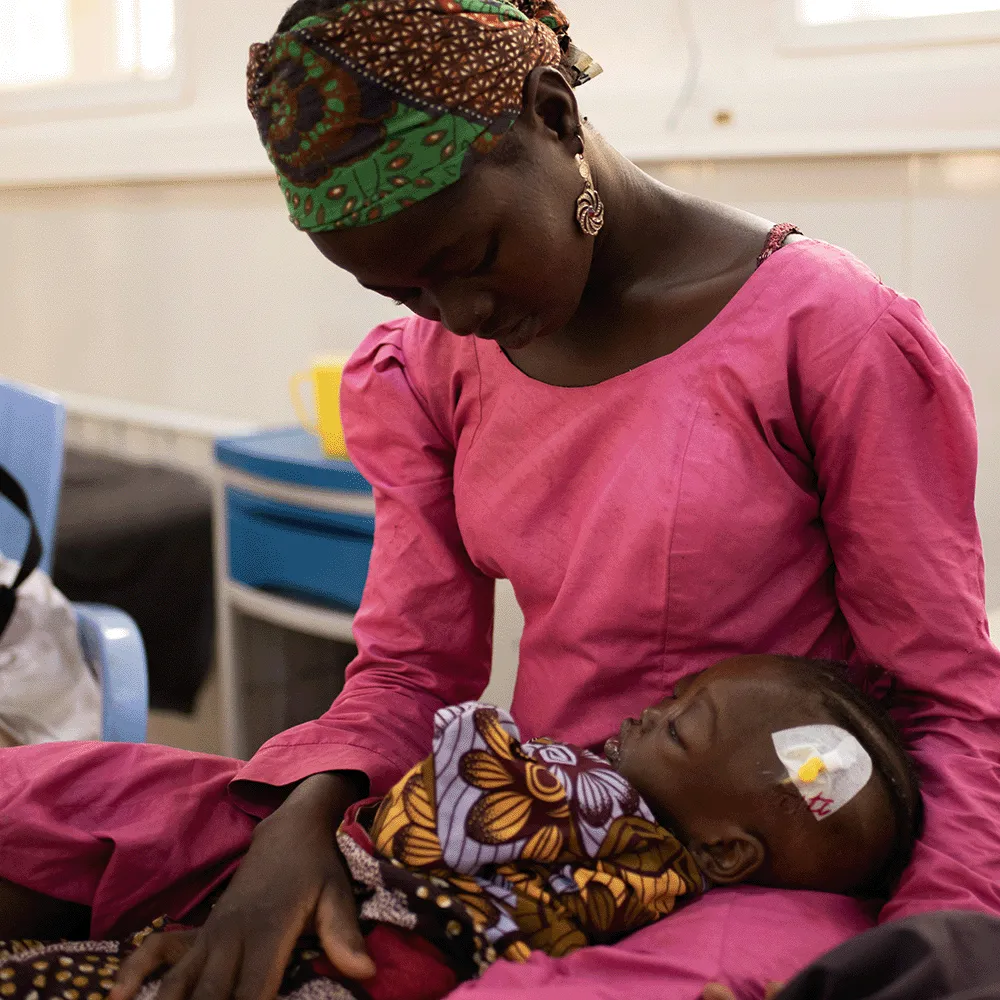
How would you describe the scale and urgency of the current malnutrition crisis in Nigeria?
It’s hard to emphasise just how large and how urgent the malnutrition crisis is. In 2024, more than 250,000 people were treated for severe malnutrition in our facilities. That was a 38 per cent increase on 2023. And then already this year we’ve had a 13 per cent increase on top of those numbers, and we haven’t reached the peak.
What’s driving such a huge increase in malnutrition?
It’s really a complex mix of factors, particularly in the northwest. This is an area that’s been neglected by other organisations. It’s a hard area to work in, because you’ve got insecurity – banditry, criminal action, risk of kidnapping – which means people aren’t confident to go to the field and plant their crops. And then you compound on top of that changing patterns of weather [that] impacts agricultural productivity. But because of other structural problems in the economy, for example, Nigeria had inflation running at 35 per cent last year, 55 per cent this year, which has just taken the purchasing power away from people. People have reduced the number of meals they have. They’ve gone from three to two or two to one. They’re eating the seed stock that they would have used for planting. They’re engaging in risky behaviour to get food. So, there’s all sorts of anecdotal indicators which show that we’re not only seeing an acute malnutrition crisis for kids, but we’re also seeing pregnant and lactating women presenting with severe acute malnutrition.
The world is largely going to forget this humanitarian disaster. A lot of people are going to die.
How is MSF responding, and what more do we need?
MSF is currently managing 11 inpatient therapeutic feeding centres and about 30 outpatient therapeutic feeding centres in seven states across the northeast and the northwest. It is really heartbreaking to see so many of the kids we treat become critical again. We get them back over that [malnutrition] level and then they go back to the village with Plumpy’Nut [a therapeutic food enriched with vitamins and minerals for treating malnutrition], and then they come back in a month’s time, or in two months’ time. And that’s because of a range of factors. The kids get sick. Maybe they’re not taking all the nutritional supplement that they should – it’s being shared with other kids, or some of it’s being sold to be able to maintain the household’s income and survivability. People are in a desperate state where they’re doing whatever they can to survive, because so little aid is getting through.
What will the outcome be if enough aid doesn’t get through?
It’s death. These kids, who are between three months and five years old, they die. They’re unable to be strong enough to survive disease or they die from malnutrition. We look on the boards every day at the hospital. We [see] the number of children who have died and that number creeps up. It was at 652 kids in the first six months of the year. And the first six months is the regular season. It’s not the lean season, which is why we’re getting the whistle blowing, getting this on people’s radars now. We’re saying children, thousands of children potentially, are going to die from malnutrition if there isn’t an increase in access to therapeutic feeding and to food more broadly for the whole community.
What message you would like to share with donors?
[There is] a weed called Tafasa. It’s normally fed to animals. It’s a last resort for people. When we see people are just eating weeds, we know it’s close to their last resort. The world is largely going to forget this humanitarian disaster. A lot of people are going to die. With everything else going on in the world, it’s easy for a massive malnutrition crisis in Nigeria or Sudan or elsewhere to go on without getting headlines.
We need to scale up. This isn’t business as usual here – there is a major crisis unfolding in northern Nigeria. Every, every dollar here will save lives.