


Supporting victim-survivors
Papua New Guinea
Sexual and gender-based violence (SGBV) persists at alarming levels across PNG, particularly in the Highlands. With the few medical facilities scattered across rugged terrain, it is difficult for rural communities in Jiwaka province to access care, leaving many without the treatment they need.
MSF, in collaboration with PNG health authorities, began setting up a project in Jiwaka last year, aiming to improve access to care for victims and survivors of violence.
The team will engage communities to understand values and attitudes towards sexual health and family planning and offer education through health talks and training for caregivers and volunteers on sexually transmitted illnesses, gender-based violence care and survivor care.
“Information is power to change people’s mindsets,” said Janet Kilea, MSF community engagement supervisor. “Together we have to reach out to the women who are silent out there. We can be a voice for change.”
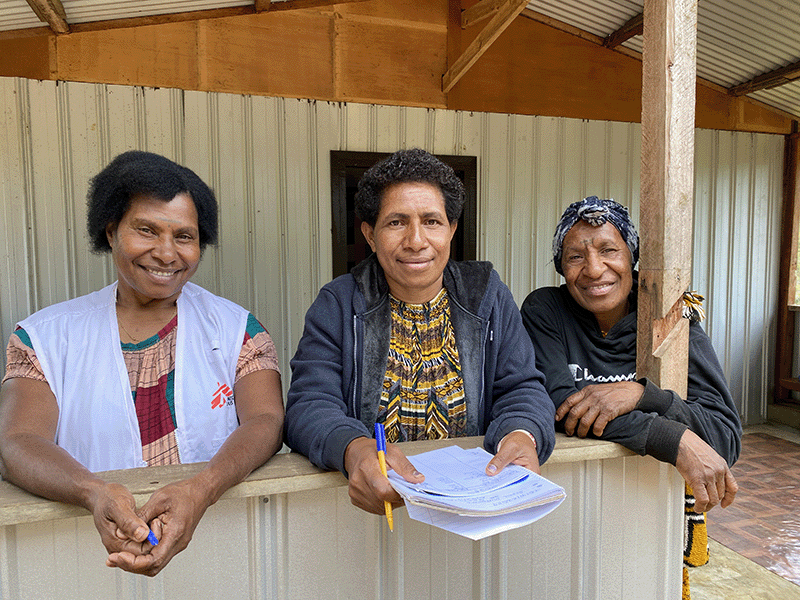 Janet Kilea, MSF community engagement supervisor, with Judith, a community health worker, and Cathy, a village health volunteer, in Mondumil village aid post in Jiwaka province, PNG. © Sophie McNamara/MSF
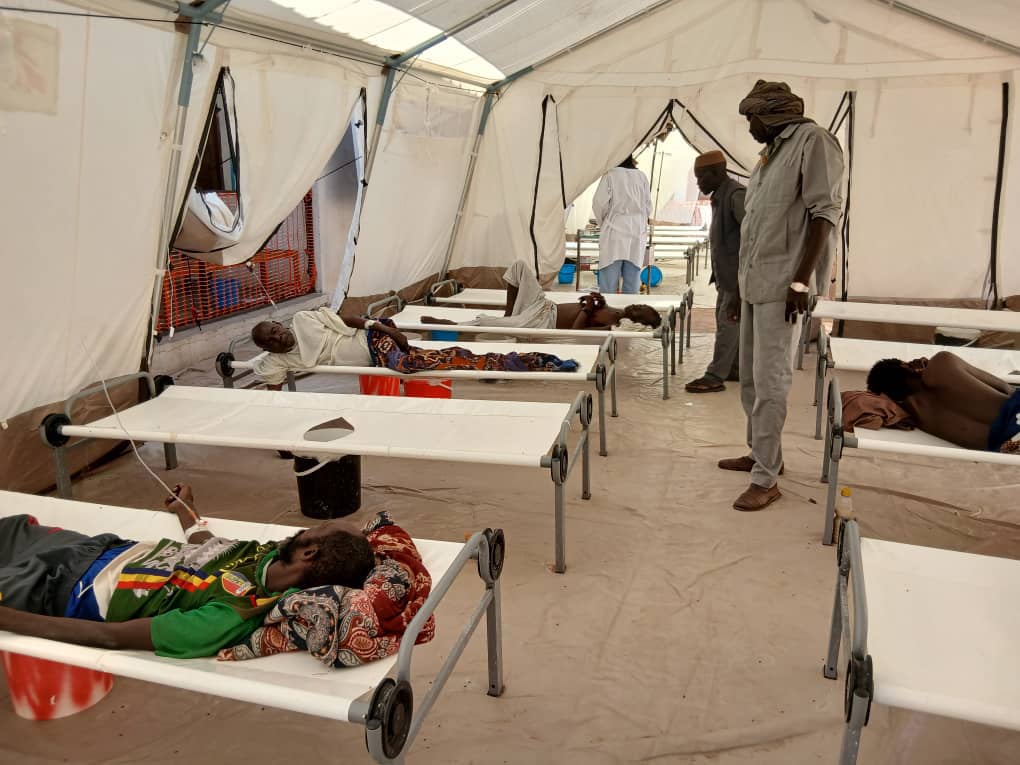 Cholera patients inside the MSF-supported cholera treatment centre in Al-Nahda Hospital in Nyala, South Darfur, Sudan. © Rehab Adam Adam Abaker/MSF
 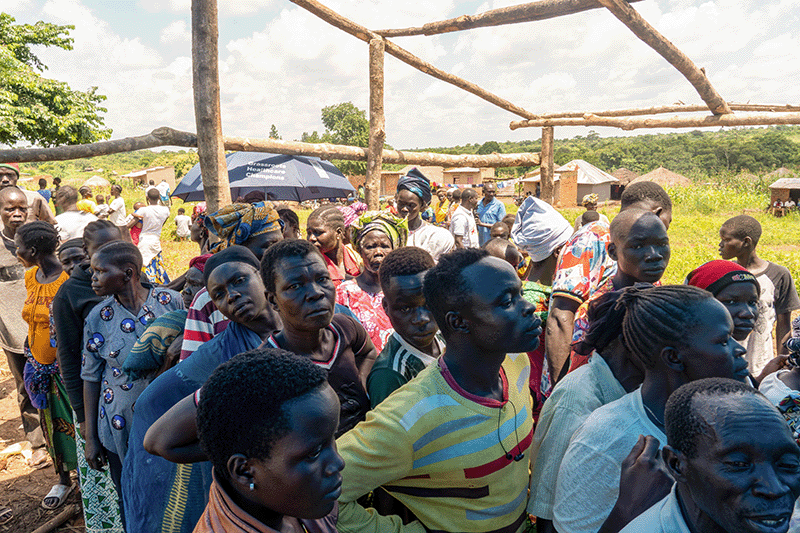 South Sudanese register with DRC’s National Committee of Refugees. Once registration is complete, they become eligible to receive non-food item (NFI) kits from MSF. The kits contain mosquito nets, buckets, soap and other essential items. © Sam Bradpiece/MSF
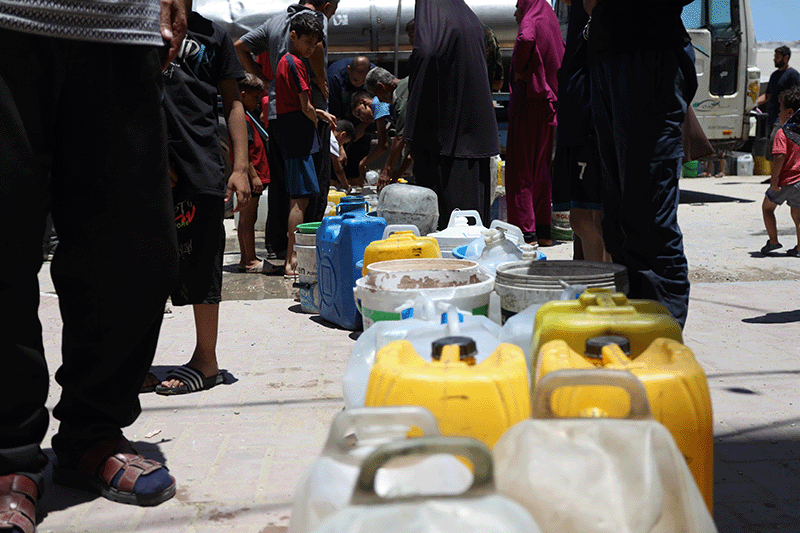 Displaced Palestinians in Gaza line up their empty jerrycans for water, 15 July 2025.© Nour Alsaqqa/MSF