


Staff profile: Tara Pollock
Home:
Brisbane, QLD (Turrbal land)
MSF experience:
Pakistan, Papua New Guinea, Sudan
Can you tell us how you started with MSF?
I remember hearing about MSF when I was younger, but with no concept of how anyone who wasn’t a doctor could go and do this sort of work. Then while studying psychology, I had an interest in moving into the humanitarian sector. After a few career transitions and spending a long time as a child protection social worker in Australia, I had an opportunity to work in child protection in Nauru. From then on, humanitarian work was sort of essential for me.
A former head of mission of mine in a different organisation – he’d worked for MSF for a long time – said, “Tara, you have to go and join MSF. With your experience, your position, you need to go and be a PC [project coordinator] in MSF and experience that.”
And I really took that to heart. When the opportunity came up, I applied. My first assignment was a year in Pakistan. I spent a year there and loved working for MSF. Then I had an opportunity to go to Papua New Guinea. I spent many years of my childhood in the PNG highlands. Opening a project so close to where I grew up was an amazing opportunity. After that, it felt like time to try and come back to Sudan, where I had worked before joining MSF.
Was there a moment when you realised MSF was the place for you?
Probably not a singular moment, but a few moments that sort of kept me with MSF.
In Khyber Pakhtunkhwa province in Pakistan, we were the only international NGO, the only healthcare facility. Meeting with community leaders and seeing the ability to provide urgent care for women who were pregnant and needing to give birth was really important. You see the value of the work – the distances people have to travel to get basic healthcare, and that people were dying of things they didn’t have to die from due to lack of access.
We worked on a maternal, neonatal and child health project proposal while I was there, and being able to develop that proposal just based on the needs of the community – not based on the influence of a donor or an external party – was a really different experience for me compared to other NGOs.
What we were doing was purely based on what the community said they needed and what we could see was necessary. We also had access to areas other NGOs didn’t, and we could respond much faster. That ability to respond quickly, compared to how long it took me to get funding or access to communities with other organisations, was a defining difference for me.
Do think they viewed MSF differently to other organisations?
Yes, that was a huge part of it. We spend a lot of time engaging with communities and with whichever authority is in charge of the area, and the reputation of MSF obviously helps. Then again, in Papua New Guinea, in the highlands, nobody had any idea who we were. They were surprised we were living in the village, not in the main city, and staying close to the community rather than living remotely like most other organisations, particularly for international staff.
You’ve had longer assignments than a lot of international mobile staff. Do you think that changes the way you work on a project?
Yes, but I think it’s also context- and project-specific. In emergency response, three or six months allows you to give a lot of energy and focus, and then hand over – that’s what that type of response needs.
But for something like Jiwaka in Papua New Guinea, opening a new project in a new province meant we needed to establish relationships and show who MSF is and our commitment to the community. For me, that wouldn’t have been possible in six months.
When you stay longer, you develop stronger relationships with communities and authorities, you gain a deeper understanding of needs, and you have more impact in shaping how the team works and how the project develops.
Here in Khartoum, we started as a full emergency response and have been transitioning into a more regular project setup, with systems like evaluations, career development and sustainability planning. That kind of shift really requires time.
Can you describe the project coordinator’s role?
My job is to help make it easier for other people to do their jobs, and to represent the organisation. That means liaising with local authorities, government or military to provide access for teams, supporting medical teams in healthcare facilities, and helping logistics and supply teams move what they need.
Some days you’re in the hospital all day, moving between operational issues, meeting hospital directors, and resolving problems. Other times you’re debriefing staff, sitting with community leaders or groups, or meeting authorities and reinforcing MSF principles, especially when there’s pressure to compromise them. I have to say, the biggest strength we have is our local teams. Their dedication is inspirational. They are the ones who guide our projects, make sure what we do is linked strongly to their communities, and when things get really tough, they are the ones who stay and deliver.
What’s the access situation in Sudan now?
It varies state by state. In Khartoum, we’re in a transition phase with federal government departments moving back from Port Sudan.
We have to navigate federal authorities, with systems that are very bureaucratic, with lots of permits, procedures and checks. We’ve worked with the UN humanitarian affairs office on access issues and had some success streamlining processes. The airport is functioning again for domestic flights, which helps.
Security-wise, Khartoum was relatively stable, but we started experiencing drone strikes again in early May. There’s still the visible impact of conflict everywhere. I worked here before the war, and coming back this time it was devastating to see the streets I’d once walked through freely and safely so damaged by the conflict.
What do you do to stay grounded?
It’s a quiet life here in Khartoum. I like to run – we were very happy when we got the treadmill working. We have a designated area where we can walk during the day, and we sometimes play volleyball with different teams – I’m terrible at it, but it’s fun.
We try to have dinners or coffee outings, and sometimes just sitting on the rooftop with a fresh juice watching the sunset is enough. It’s about finding balance where you can.
Staff profile: Maia Blenkinsop
Home:
Christchurch (Ōtautahi)
MSF experience:
South Sudan, Ukraine, Bangladesh, Iraq
How did you start with MSF?
I started during COVID-19 in 2020. I’d always wanted to work for MSF, but it was about lining up the right time and the right skill level. I’d actually gone into emergency nursing because MSF needed emergency nurses at the time, and that was about 20 years ago. Life happened, and I didn’t get the chance to apply again until 2020, when they needed people. My first project was in South Sudan. Then I worked in Ukraine in 2022, Bangladesh in 2023, and after almost two years off because I’m studying, this project came up in Iraq, where I am now.
My first role was IPC [infection prevention and control], but they realised I could do emergency work, so I was helping in the hospital with after-hours emergency cover. Ukraine was more in line with my background. I’m an ED nurse, but I also do a lot of rural work, and that project was focused on rural populations. I also speak Russian, which was useful.
What was it like working in a conflict area like Ukraine?
The work itself was very much in line with what I do, which is look after rural populations. Of course there were security incidents – there was bombing, and there were a few incidents along the way – but I focus on the work and let operations focus on security. I’ve found that in every project there’s been some level of incident. In Bangladesh, for example, we had a mass casualty event, and you could hear artillery fire from about 20 kilometres away near the border with Myanmar. You just stay focused on what you’re there to do.
What do you hold onto from the different contexts you’ve worked in?
The main thing I’ve held on to is the people I’ve met. Some of the local staff go to work every day and deal with whatever they’re dealing with, while I’m there for a short time. I get really tired, but I can’t imagine how that compares to their day-to-day lives. It’s humbling to realise that what feels like an intense experience for me is someone else’s normal life. Our local staff also show up better dressed than us and look like they’ve slept more, even when they haven’t. They’ve still taken care of their families. Sometimes I feel humbled by how tired I get, and then I think: they’re just superhuman.
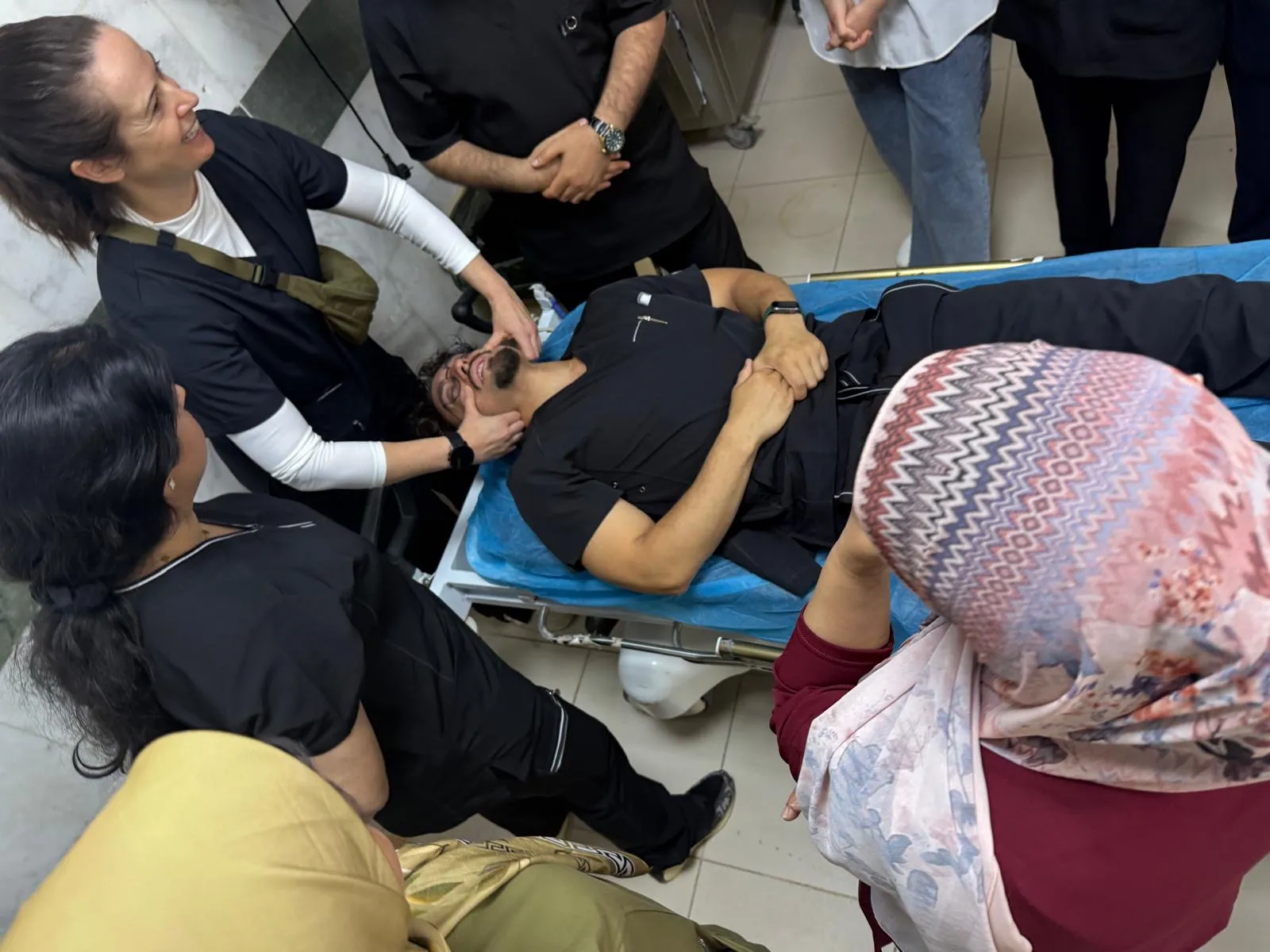
What does your role involve now in Ranya?
The main reason we’re here is to position ourselves so that if things escalate, we can respond. In the meantime, we’re strengthening the emergency services here. We’re working across three hospitals in the region. In Ranya, we’re strengthening the emergency department and the ambulance system, which is another area I have experience in from New Zealand. I’ve worked in ED for 20 years and in ambulance work for six or seven years as a nurse. Here, the paramedics are nurses – there’s no separate paramedic degree. It’s been nice to go in and offer continuing education and clinical coaching to the local staff, especially since many of them have said they haven’t had much investment in professional development. If someone came into my ER and offered that, I’d love it.
Tensions have escalated in the region in the last few months. How is the relationship with the local community?
The Kurdish people are very welcoming and friendly. A lot of people have said, “Thanks for coming,” because this region is semi-rural and, as far as I can tell, hasn’t had an NGO here for at least 10 years. So people are curious about us, but in a positive way.
I think people understand that we’re here to strengthen services for them – their emergency departments, some biomedical equipment, the ambulances, and professional development support. There have been drone strikes in one of the areas, including on one of the hospitals, and there are displaced persons camps where people who had been displaced from Iran were living, so those camps were being hit too.
Overall, people know we’re here to help, and we’ve been very welcomed.
Is it different working in a new project, compared to your other assignments?
Yes, definitely. It’s very different not moving into a house that’s already set up. I’ve also never been part of strategy work at this level before. I arrived and the next day we started doing the project strategy. I was thinking, “I don’t know anything”, but I spoke up when I thought something wasn’t going to work, based on my ER experience.
What’s next?
I try to keep a balance between staying at home and supporting the employers who support me, while still doing work with MSF. I’m hoping to start my nurse practitioner final year in February, which is like an internship year. If that works out, I’ll have from October to February without a job, so we’ll see. Hopefully I can squeeze something in.