Ebola disease outbreak response update
With over 3,200 confirmed cases and more than 1,400 reported deaths, the current Ebola disease outbreak in the Democratic Republic of Congo and Uganda is the fastest growing on record and is continuing to spread at an alarming rate.
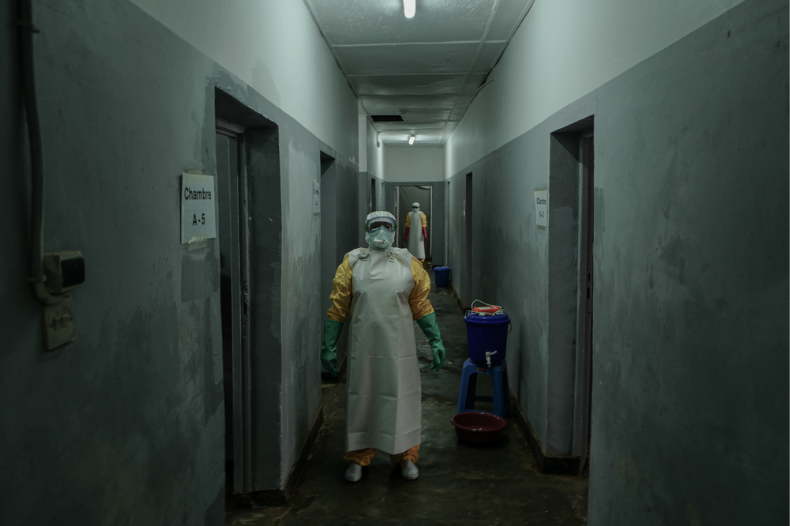
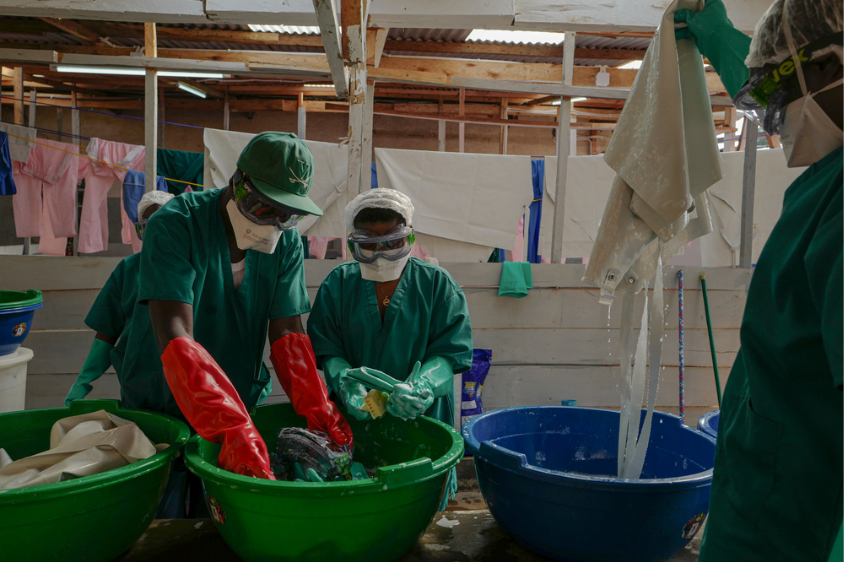
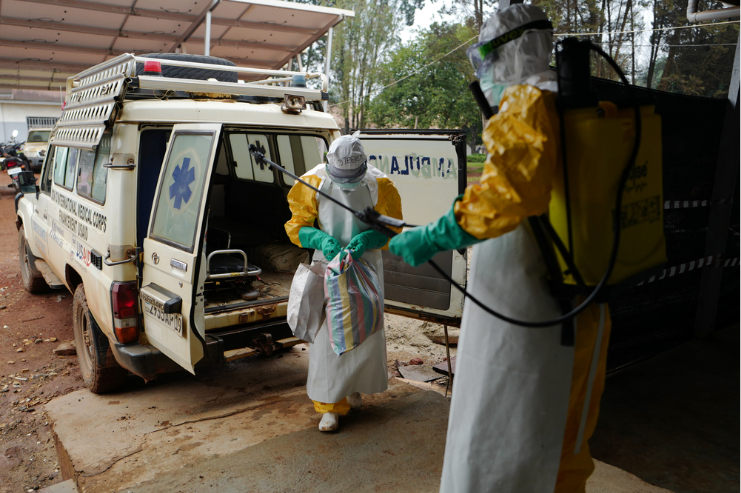
Médecins Sans Frontières/Doctors Without Borders (MSF) currently has more than 1,400 staff responding to this outbreak. Our work includes running Ebola treatment centres across multiple affected areas in the provinces of Ituri, North Kivu and South Kivu, where collectively, we have a capacity of over 430 beds within the treatment centres and isolation units.
“Healthcare workers are getting really tired. Our local Congolese colleagues are putting in a lot of time, energy and effort to keep things running in a space where we just need more and more services.”
Kate White, MSF emergency medical coordinator in the DRC speaking to ABC News, 23 July 2026
But still the epidemic is outpacing the combined domestic and international response efforts, and we need your help to address what more needs to be done.
The need to scale up the existing surveillance and rapid detection systems is urgent, especially in hard-to-reach areas to ensure cases are identified as early as possible. MSF is working to urgently scale up the international medical response outside of urban centres, closer to communities where there is currently little to no provision of care.
We recognise every aspect of the response must be rooted in continuous engagement with communities, including listening to people’s concerns, addressing fear and misinformation, and building trust so people feel safe seeking care.
This outbreak is unfolding in provinces affected by decades of conflict and displacement due to the presence of myriads of armed groups, which have limited people's access to healthcare and made it extremely difficult for humanitarian organisations to reach affected communities.
Conducting surveillance, follow-up, testing and getting test samples from remote areas to laboratories can be extremely challenging. Poor roads, insecurity, armed checkpoints, shifting front lines, and moving between areas under control of the different armed groups hinders the response.
Access constraints like these combined with airport closures, flight restrictions and suspensions are disrupting our staff rotation, diagnostics, referrals and supply chains. These restrictions create critical risks for community engagement, people’s access to Ebola care, outbreak control and the continuity of other essential healthcare services.
MSF is calling on all authorities, de facto authorities, parties to the conflict, and stakeholders involved in the response to facilitate humanitarian and medical access across borders and conflict lines.
Your support makes our work possible. Please donate to our Ebola fund today so we can continue to help save lives.
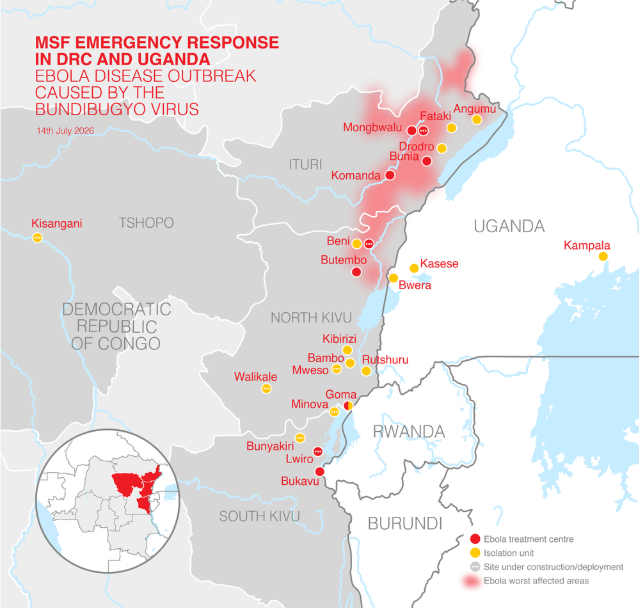
Map of the MSF’s Ebola treatment centres, Isolation units, and new sites under construction covering the worst Ebola-affected areas as of 14 July 2026. © MSF