In a world that has largely looked away, we ask: who is telling Sudan’s story?
When we put this question to one of our Sudanese colleagues, the answer came before we finished asking.
“It is we, the Sudanese, who can tell the world our story,” they said.
Sudan’s war has entered its fourth year. That’s more than 1,200 days of conflict. And its story is not being told in news headlines; it’s told through the lived realities Sudanese people face.
Despite the scale of the crisis in Sudan, its complexity, and its impact on people, this story has received little international attention and media coverage. One of our Sudanese colleagues put it plainly: this is a result of “deliberate international indifference to the war in Sudan”.
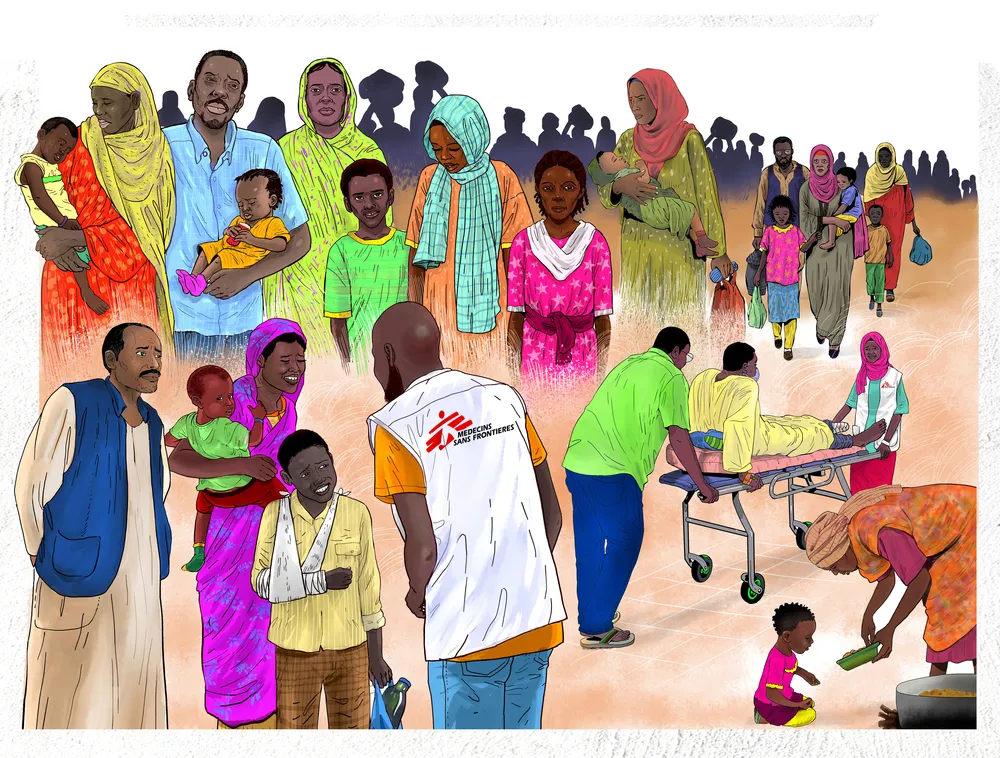
In an endeavour to tell Sudan’s story through the words and lines of its own people, Médecins Sans Frontières (MSF) collaborated with a network of Sudanese cartoonists from Khartoon Magazine, some of whom have been displaced or live as refugees in the diaspora.
Together, these cartoonists portray Sudan’s humanitarian realities using art and language that speak directly to Sudanese people — those inside the country as well as in the diaspora.
“I think art helps people because it makes them feel that someone understands them, that someone is with them,” says Nader Jenni, an illustrator and writer for Khartoon Magazine. “Sometimes a simple drawing says what large international conferences cannot. On a human level, art can soften the sharpness of the tragedy – for someone, somewhere – and that is exactly what keeps me going.”
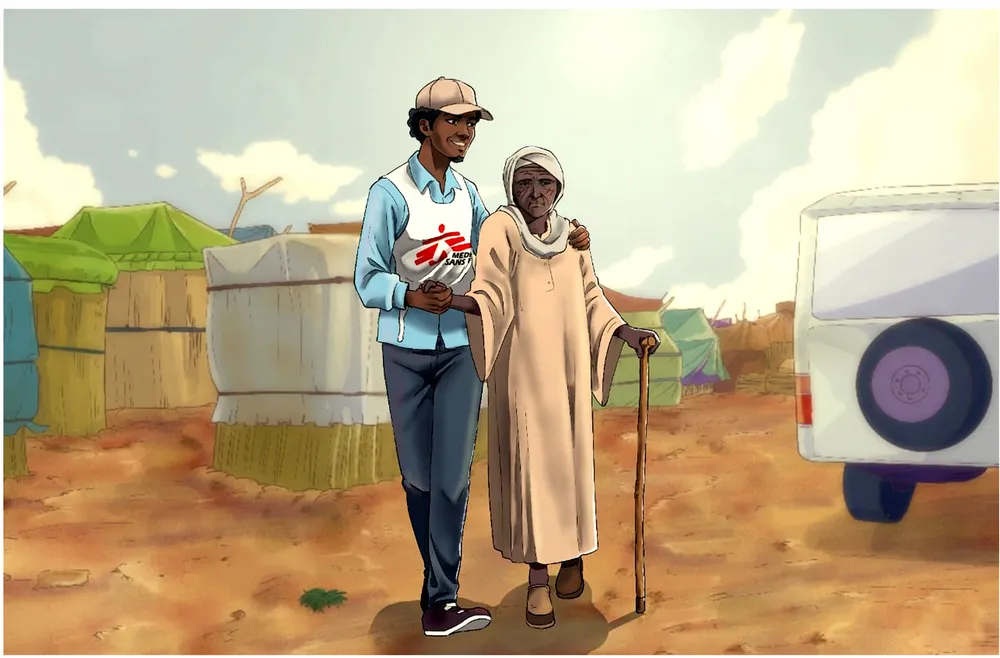
In Sudan, cartoonists and artists hold a special place in public life. Cartooning has long provided a way for people to express feelings and experiences that may be difficult to communicate with words. In this lens, illustration is not simply decoration, but commentary.
In this collaborative series, artists depict the realities of war — including hunger, epidemics, mental health needs, and barriers to healthcare — through familiar Sudanese sayings, proverbs, and expressions. These range from sayings such as “reassurance is half the cure” and “patience is the first step toward recovery”, to using familiar, everyday terms like Hakim [the wise one] or Baseer [the one who sees clearly] to refer to a doctor.
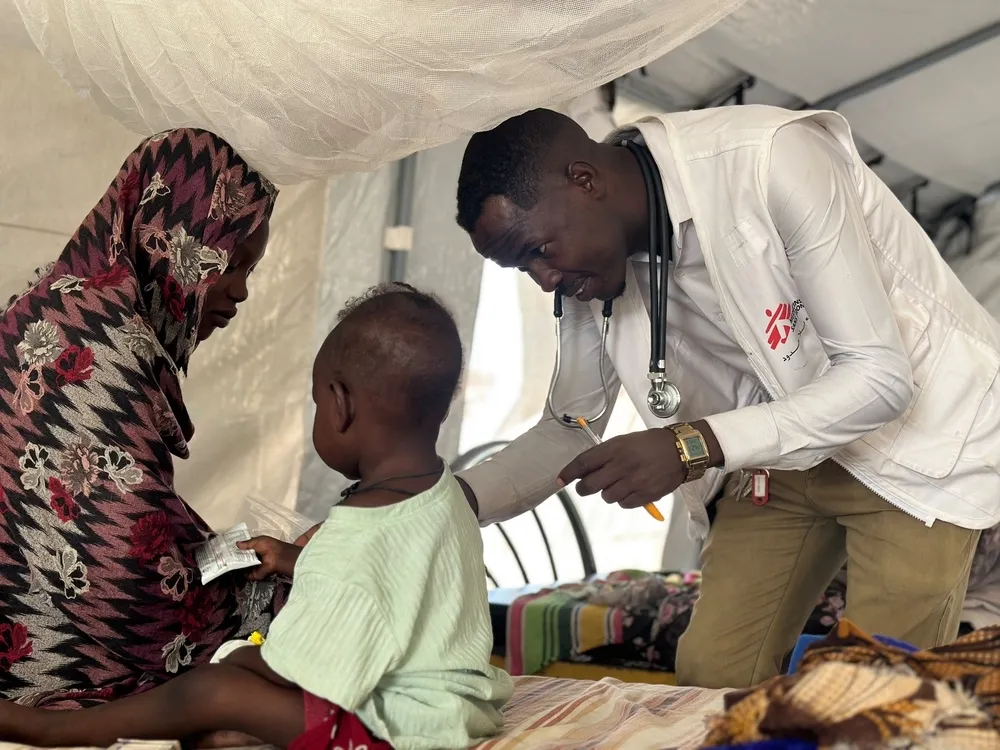
Each cartoon focuses on a humanitarian issue, anchored by data collected from MSF projects in Sudan, where we have been present for more than 40 years. When this war began in 2023, we expanded our activities to respond to people’s growing needs, providing maternity care, treatment for malnutrition, sexual and reproductive health care, and mental health support.
“Art is a powerful way to express humanitarian realities because it transforms suffering and numbers into images and feelings that anyone can understand,” says Akram Abdo, one of the illustrators who contributed to the series. “As a Sudanese artist, I believe art can draw attention to issues such as cholera and malnutrition in a way that is simple and feels close to home.”
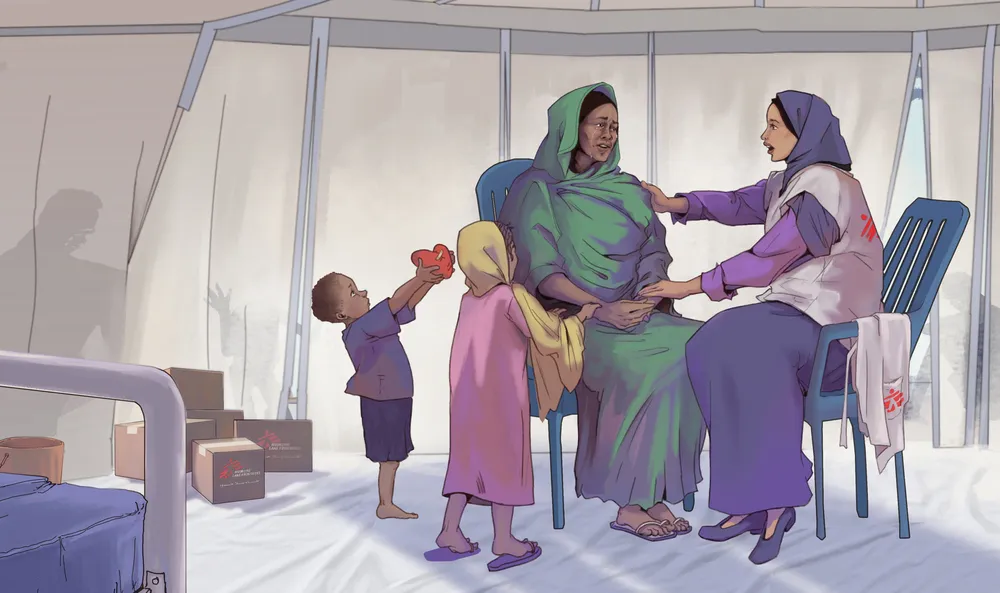
Art is a shared language, one that can cross borders. Artistic talent also exists within our own teams.
Narin Fandoglu, an MSF operations advisor, visited Sudan twice last year and witnessed life in Khartoum and Darfur. While she was there, she drew sketches to process what she was seeing.
“Sketching became my way to slow down, to process my emotions, and to keep going,” she explains.
What Narin chooses to draw is spontaneous: a street market, a coffee stand in front of a partially destroyed house, a communal clay water pot that neighbours refill for passers-by, or Sudan’s ancient pyramids that many people outside the country do not know about.
Her drawings show that what’s happening in Sudan is more than a war, and that shortfalls in the international humanitarian response reflect the lack of public attention this crisis has received.
Narin also stresses the importance of Sudanese artists telling their own stories.
“One effect of war is that artists and storytellers have lost the space to tell their own stories,” says Narin. “When outsiders step in to speak for them, they often focus on narratives of ‘victimhood’. That is why MSF’s collaboration with the cartoonists of Khartoon Magazine is so important; it gives them back the space that war has stolen.”
The lived realities behind the cartoons
In Sudan, no one is immune to the war. According to the UN Refugee Agency, nearly 12 million people remain displaced – inside Sudan and in neighbouring countries – while OCHA reports that about 33.7 million people in the country need humanitarian assistance. The World Health Organization (WHO) states that more than one-third (37 per cent) of health facilities in Sudan remain non-functional, leaving a large segment of people without access to essential healthcare.
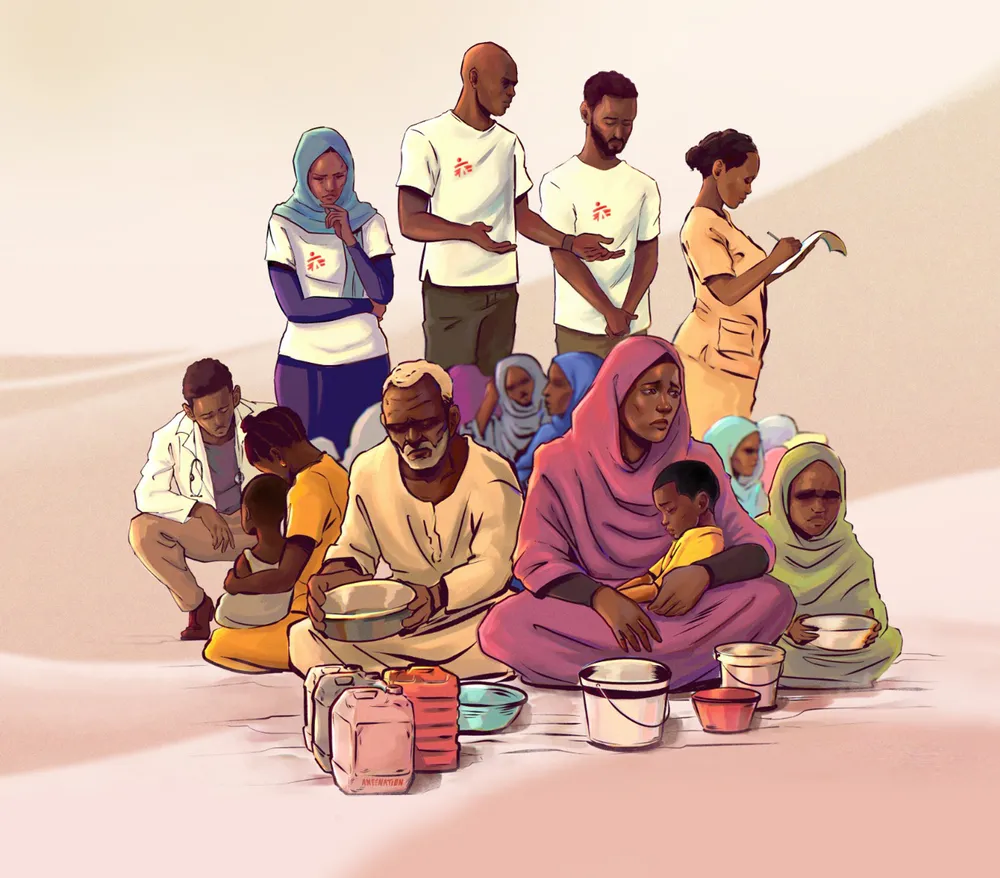
As the violence has intensified, many international organisations have withdrawn from Sudan due to security concerns or funding cuts, further diminishing access to healthcare for communities already lacking adequate services. Despite the significant health challenges people face, cartoons can provide a sense of hope.
“Cartoons give both the artist and the viewer a chance to see some hope, even when the drawings are about disease, displacement, and war,” says Mustafa Kiobi, another illustrator who participated in the series. “I want my work to reach our people across Sudan, to plant hope and ease some of the suffering.”
An image may not change the world, but it can document the struggle to access life’s essentials and carry that story to people who may not have been paying attention.
“For me, art is not a solution to every problem, but it opens a door by making the problem visible,” says Amani Al-Zein, an illustrator and designer for Khartoon Magazine. “Turning to art is a shortcut for carrying humanitarian messages.”
So, who tells Sudan’s story?
The little news coverage that Sudan has received is a story in itself, reflecting what many describe as a ‘crisis of compassion’.
MSF’s collaboration with Khartoon Magazine is yet another attempt to give Sudanese cartoonists space to portray their country, its suffering, its resilience, and its humanity.
“We cannot stop the war with drawings, but we can refuse to look away,” says Fandoglu.