
How did you join MSF?
I’ve volunteered a lot, but I’ve never really put myself out there on such a level in terms of aid work. I’ve always wanted to do that. One of the first things I thought when I got to medical school was I must go and join MSF. How do I do that? Of course, you're 18 and you know nothing. So I was a bit disillusioned. But I always felt that I would at some point. And finally it seemed like the time was right, so I just applied. And I was very surprised I got accepted.
Why were you surprised?
It seemed that people who did this must have some sort of magical skill set. Here in Australia, we’re not dealing with war or famine. We’re one of the most privileged populations on earth, I think. So you wonder if you’ve got the right skills for the job. You hear about people going to Gaza or other conflict zones where there’s bombs dropping, and that’s the immediate thought – that’s what I’ll be expected to do.
I’ve given a few talks to colleagues and friends about my trip. The overwhelming comment is, “Wow, you’re so brave to do that” – which is surprising, because it can be stressful, but generally you’re safe, you’re doing what you can do. And I believe they wouldn’t send me if they didn’t think I could do it. I think most people can do it – they just think they can’t.
What were some of the challenges you had to deal with?
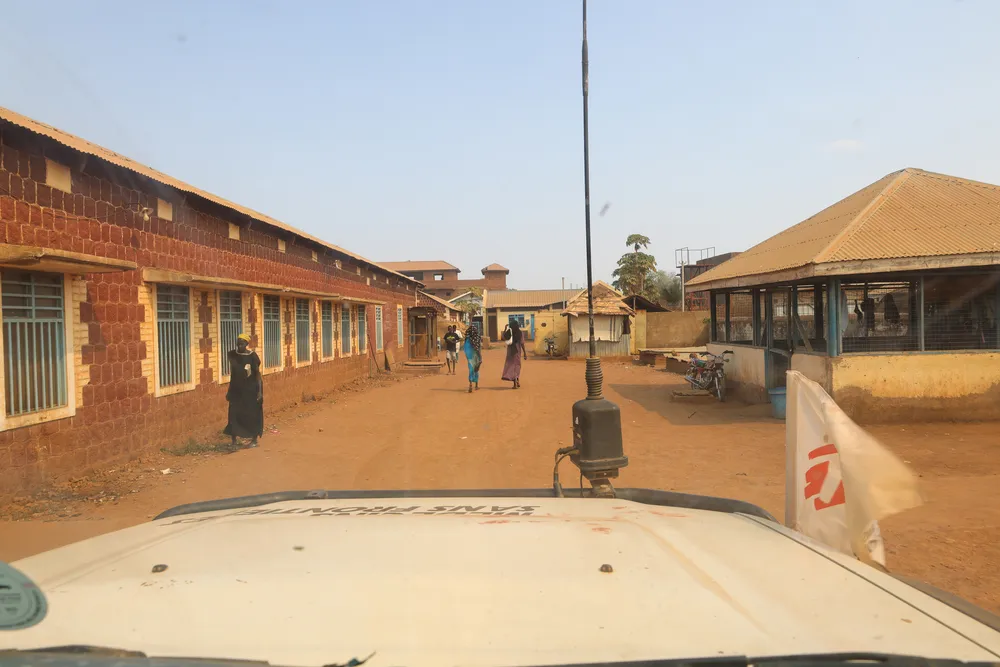
Two days before departure, the anaesthetist I would replace sent me his field report. I became somewhat anxious. But Aweil is a well-established hospital, and the anaesthetic nurses were every bit as competent as promised.
The challenges are not logistics or environmental; they’re purely medical. You have difficult hours. My work routine [as an anaesthetist] was 24-hour on-call shifts six days a week, so you don’t know when you’re going to sleep or when you’re going to be working. You have very sick children, mothers who may die or have major complications or potentially lose their children in childbirth. Those are very difficult things to manage on a day-to-day basis. It’s not just one event once every month; it’s every day.
On my first day, I anaesthetised two neonates suffering from sepsis who both survived despite the absence of specialised paediatric equipment. Afterwards they lay side by side on recovery mattresses until someone carried them back to the ward.
Another day later in my assignment, alongside the team, I had cared for two women undergoing caesarean sections and another with an ectopic pregnancy by 7 am. That night I’d had diarrhoea and vomiting; it was not an easy shift.
Children with burns were almost a daily presentation, often caused by open fires inside tukul huts. Most dressing changes and grafts were done with ketamine and midazolam alone for pain relief and sedation.
One girl with severe burns and a degloved foot cried softly while I performed a spinal anaesthetic without local anaesthetic, or shared language.
Do you get good at improvising?
Yeah, very much so. You just do what you need to do and what they need at the time. And I think you either have that, or you don’t. I noticed that with my colleagues, and obviously the more you’re exposed to that sort of environment, the better you get at it. You need to be able to apply your skills and your knowledge to make it work with what you’ve got.
How did you connect with the people you were working with?
You’re all there for the same reason. You have a common interest in getting on with everyone, and they need to find a community within the people that they have. Especially people doing humanitarian work, you tend to be someone that wants to form communities and form friendships. Everyone generally is very friendly, very willing to help each other, so it seemed pretty easy to get on with people.
And you brought something else that ended up being really special, which you wrote about. Where did that come from?
Oh, my origami! One Christmas at home, I suggested making origami tree decorations, and we went all out. It’s really nice and it’s easy to do. So I guess that’s where it started.
Before leaving for South Sudan, I was stressed about what to do with my free time, and I thought, why not make an origami each day about something that happened? Every day became a story in paper: a gorilla after we talked about gorillas; a dog for someone whose favourite animal was a dog. I’d leave them on doorsteps. People loved them. It made friends.
I started teaching people to fold butterflies. Groups would gather around, folding together. By the time I left Aweil, I think everyone had made a butterfly. It brought the whole camp together.
My colleague Marianne thought it would be nice to hang them all up, and I was trying to work out how to do it. Before I knew it, the logistics coordinator had gone to the shops and bought string already – word had got around. When we hung everything up, there was a massive party. Kids from other wards, nurses, everyone came to see the commotion. It was really wonderful, and it gave the camp a bit of soul.
What’s next? Another assignment?
My aim is to go on assignment at least once a year. I told myself I’d go at the end of next year. Then about a month after I got back, I said, just sign me up. I’m hoping to go somewhere at the beginning of next year. And I’m learning French.
How did you come to join MSF?
I met a doctor on his way to his first assignment with MSF in 1986. It took me just over 30 years for all the threads to align and see me heading to Uganda for my first MSF assignment as a midwife activity manager. That was in 2018, and each year since I have joined a maternal and infant health project, working with midwives and birth attendants around the globe.
What was your experience before joining MSF?
I’ve lived in many different settings and travelled extensively. My working life has spanned multiple professions over the past four decades, including fashion design, professional yachtswoman, fitness trainer and ultimately, after experiencing becoming a mother myself, midwifery. My daughters, now confident and independent, are living their chosen paths, and I’m able to find a balance between working in Aotearoa, New Zealand as a lead maternity carer locum midwife and being on assignment with MSF up to six months a year.
How did your first assignments compare with your expectations?
I’d already witnessed a diverse cross-section of maternity care in the UK, New Zealand and the Caribbean, so I was prepared to have my ‘truths’ challenged professionally. In each place, research, evidence, beliefs and values meant protocols and guidelines often recommended varying practices for the same condition. This meant really paying attention to the reality of the setting and being curious about the way the teams communicate and interact with each other and deliver care. I quickly learned the greatest impacts lay in supporting and empowering the teams with the resources, knowledge and skills they needed to best serve the mamas, babies and communities.
What have been the biggest challenges?
In Jahun, Nigeria, for example, there were emergency obstetric responses needed every day, with tragically many babies not surviving. The midwifery and medical teams delivered care 24/7 and saved massively more lives than were lost.
In Cox’s Bazar, Bangladesh, among the Rohingya it was rare to see people smiling. When the fabric of society is ravaged by displacement and social roles are utterly disrupted, trust in external care providers means assistance in pregnancy or childbirth is sought late. MSF teams had to be prepared for an emergency case at any time of the day.
In early 2025, I joined MSF in Gaza. The ceasefire had been negotiated, and for six weeks there was a tenuous peace and hopeful optimism. The borders opened and aid came in – medicines, food, flour, fuel, even some chocolate. Before I left, electricity was cut, and fuel stores were soon exhausted. The borders were closed, and soon after I left, bombing erupted in the area where I’d been based. Nasser Hospital was attacked only 500 meters from where I knew women sought safety to give birth in the maternity unit. Leaving the selfless teams in Gaza – who continued to come to work to care for the wounded, unwell and vulnerable of their community, despite threats to their own lives – was incredibly challenging.
Maintaining contact with friends and family at home during assignments is a lifeline. Many friends and family have supported me to do this work – whole communities are dedicated to the humanitarian work of MSF, directly and indirectly.
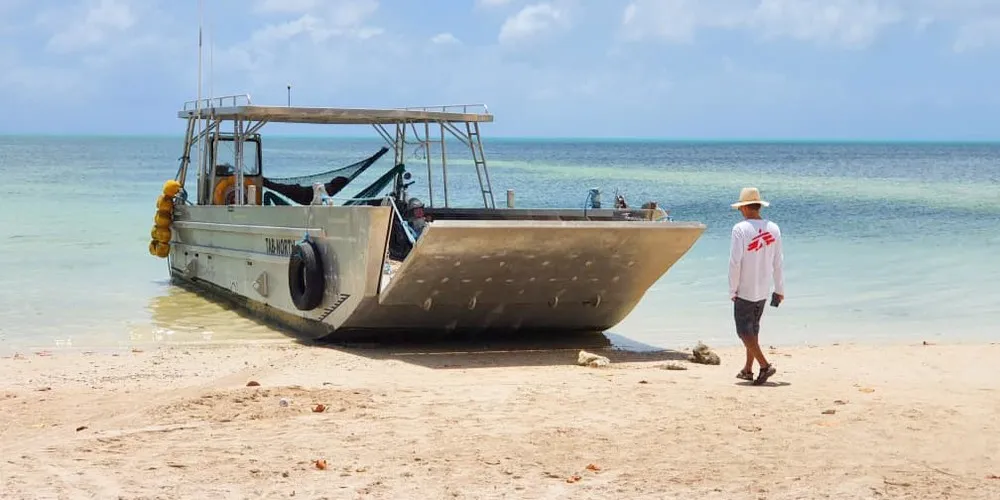
How has it been to return to Kiribati, a project you worked on before?
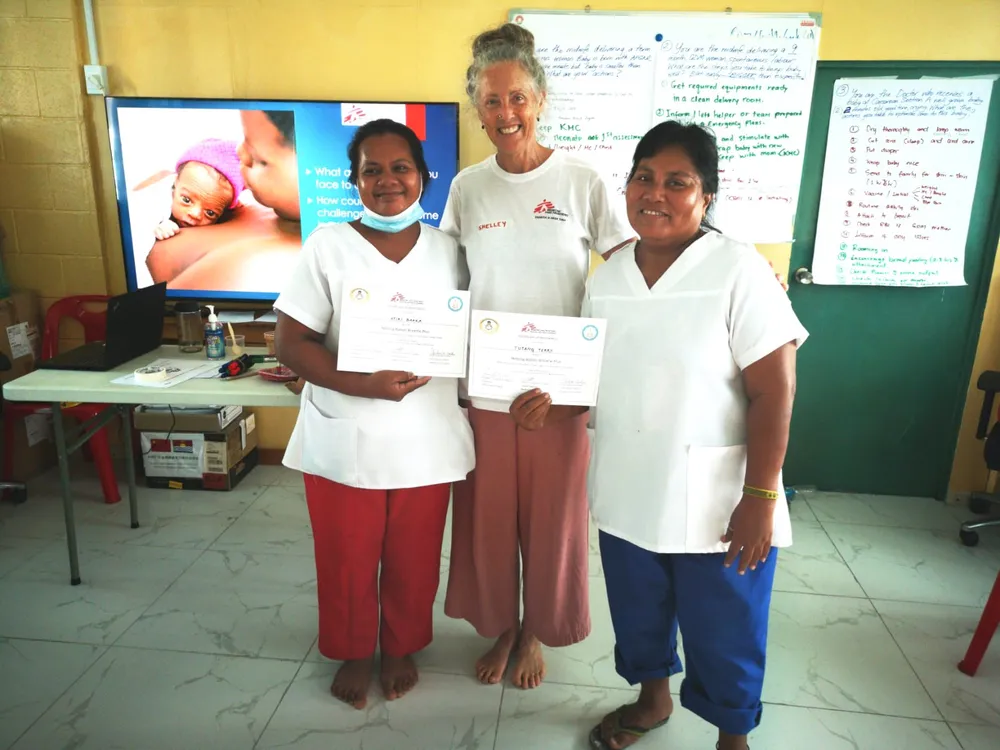
It’s been a really positive experience, being welcomed back as if I hadn’t left. It’s rare to experience a project’s progress after four years. Antenatal care is much improved. The high prevalence of diabetes, obesity and hypertension in the wider population puts women of childbearing age at higher risk for premature births, growth restriction and stillbirths. MSF’s approach – direct antenatal clinic and practitioner support, focused community engagement and health promotion, plus advocacy – has resulted in noticeably increased earlier detection of deviation from normal in pregnancy.
Kiribati’s partnerships with organisations like MSF, the World Bank and the World Health Organization has resulted in multiple effective community programs. It feels like a period of growth and progress for Kiribati, and it’s very exciting to be here again with MSF contributing to that.
What’s next?
Return home for springtime in Aotearoa, renovate my yellow van, and perhaps take a road trip to visit friends and enjoy the raw beauty Northland’s west coast before getting back to locum midwifery work in Aotearoa. All the while hoping for another MSF assignment in 2027.