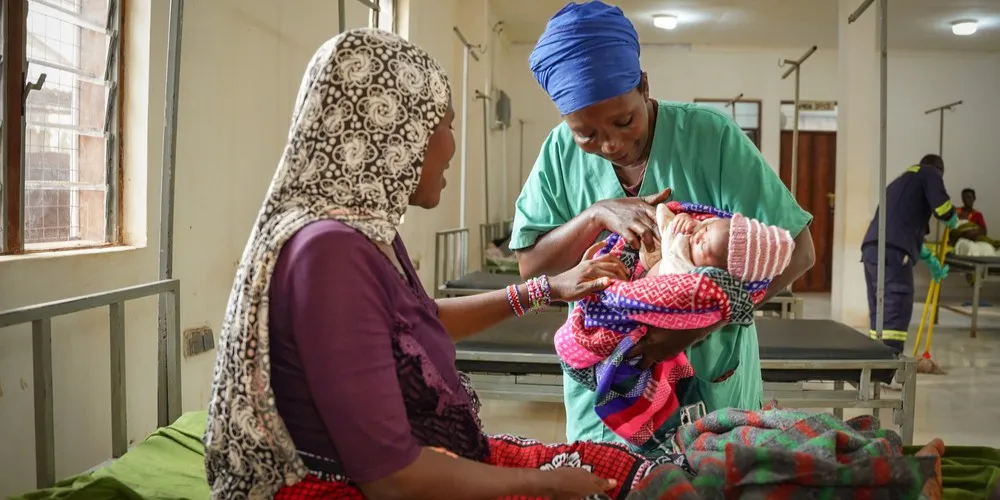

Nurses specialised in neonatal care are often scarcest in countries with high newborn mortality. To help address this deficit, MSF is expanding training programs to build theoretical knowledge, skills and confidence among MSF nursing teams and their colleagues. In August, MSF spotlighted some of its achievements at the Council of International Neonatal Nurses’ global conference, held in Australia for the first time.
Newborns are not small children
“Nurses have a unique role in the health of, and care for, populations of all ages and in all settings. And it all starts at birth,” says Melissa Hozjan-Gaudin, nursing advisor for MSF based in Sydney. Nurses are essential also to provide family-centred care and support in a nurturing role that extends beyond the fragile baby alone. But the global healthcare worker shortage is acute among nurses, disproportionately so in low-income countries. Nurses trained in neonatal care are even more rare.
“Newborns are not small children,” Melissa notes. They have distinct warning signs, but rapid deterioration in their condition can be almost imperceptible. “We know what danger signs we’re looking for, but often it’s also about the time spent with the baby and watching trends. Often, it’s very subtle – something just doesn’t seem right.”
For many babies, the crisis occurs within their first 24 hours, hence the importance of essential newborn care in a healthcare facility, integrated to safe delivery care and the immediate post-partum period. “We’re so familiar with deliveries being inside a delivery room. But sometimes the birth environment is not that. We have babies coming in who have been delivered at home, with few resources, by a mother or grandmother, or a traditional birth assistant or inexperienced healthcare professional. Everything that happens before also impacts on the babies we see – lack of antenatal care, for example,” Melissa says.
Specialised training in Pakistan
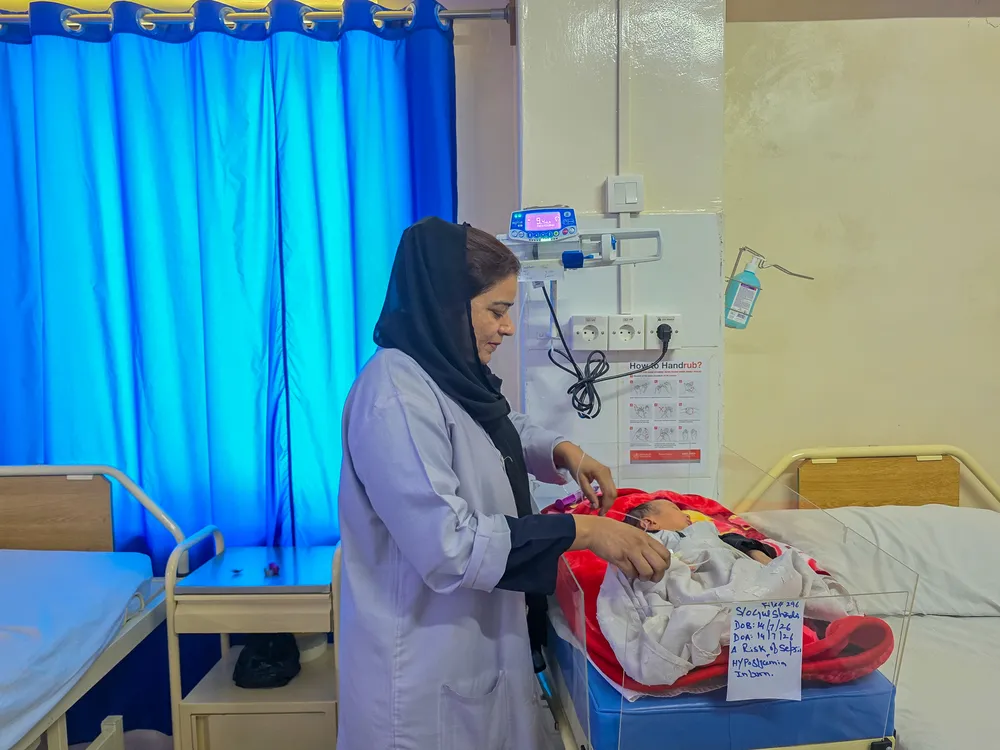
Global data from 2023 places Pakistan second worldwide for neonatal deaths (38 per 1,000 births), which is why MSF opened a newborn unit in collaboration with the Ministry of Health of Pakistan in rural Khyber Pakhtunkhwa in 2025. Newborn unit supervisor Sundas Parwez leads a team of nurses trained in neonatal care for the first time by MSF.
They have learned breathing support and neonatal resuscitation, neonatal assessment, safe medication use, how to support kangaroo mother care, and early recognition of complications. In Dogra hospital, these skills enable the nurses to provide timely and appropriate care for small and sick newborns born inside the hospital as well as outside.
One such baby was brought in by his mother after she experienced a difficult birth. He was diagnosed with aspiration pneumonia, an infection caused by inhaling a substance other than air into the lower respiratory tract, as a result of respiratory distress.
“The baby required oxygen therapy and antibiotics, along with close monitoring and supportive neonatal care,” Sundas says. “The baby and mother stayed with us for 10 days. Thanks to his clinical improvement, he could then be discharged home, with regular follow-up advised.”
Improving newborn survival in a refugee camp
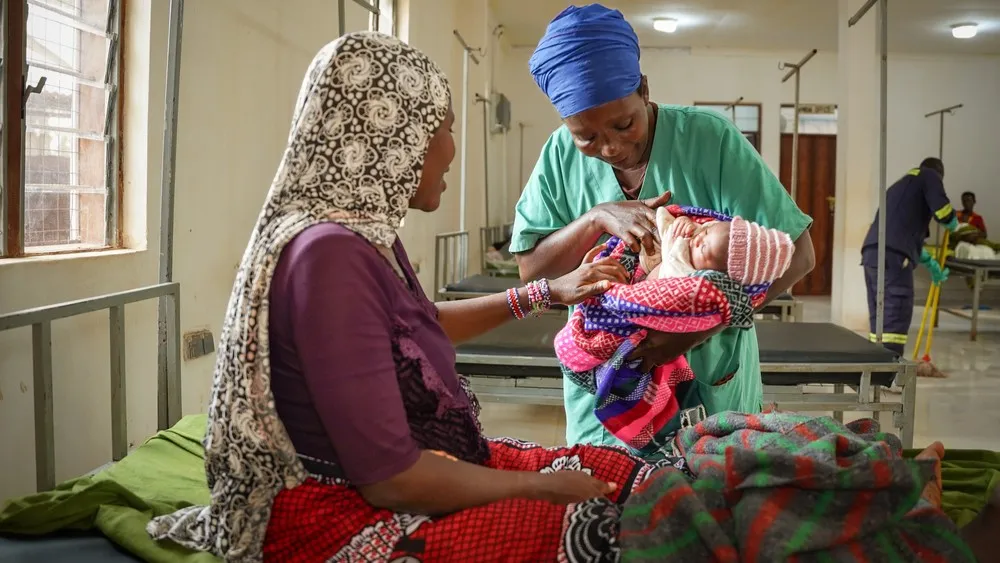
In Tanzania, MSF was providing healthcare to a large group of Burundian refugees in Nduta displacement camp until the camp’s closure earlier this year. To reduce neonatal mortality, MSF ran a 10-month training program for nurses involved in neonatal care and their midwifery colleagues. The program combined self-paced online modules, group-based case studies and discussions, and face-to-face training including simulation and bedside mentoring at Nduta Hospital.
Paskal Alto Hyera, nursing activity manager in Nduta, recalls a newborn admitted shortly after birth, with an extremely low birth weight of around 900g. “At the beginning, even the caregiver had lost hope because of the baby’s condition,” Paskal says. But the team paid particular attention to feeding support, hygiene, close monitoring and timely medication. “The baby improved gradually, and we were eventually able to discharge it at around 1.8kgs. The family was very grateful, and we continued outpatient follow-up until the baby reached around 5kgs.”
Advanced technology saves lives, but simple acts like warmth, hygiene, and skin-to-skin care are equally essential.
Paskal explains that after the training program, they had improved the hospital’s staffing situation because the nursing team was sometimes too busy to give enough attention to the feeding process. “I feel that proper feeding support was one of the key factors that helped save this very small, at-risk newborn.”
“Newborn care reveals that human life is incredibly fragile, yet amazingly resilient,” says Dogra unit supervisor Sundas, “requiring a perfect blend of high-tech precision and basic human connection. Every drop of fluid and milligram of medicine matters, leaving zero room for error. Advanced technology saves lives, but simple acts like warmth, hygiene, and skin-to-skin care are equally essential. But as I’ve also learned, true healing extends beyond the baby, to include educating and supporting the families as crucial partners in care.”