

Building an Ebola treatment centre from scratch illustrates what it means to work in a complex humanitarian crisis.
Responding to an emergency is never about executing a perfect plan. It is about having a good plan, and having the people, the relationships and the insight to make the right adjustments. What keeps it together is trust. That was a big lesson from my recent time in the Democratic Republic of Congo (DRC), where I went in June to help set up an Ebola treatment centre.
Going to DRC was not in my plans. I had a trip scheduled from Sydney to MSF’s Paris headquarters. But with the Ebola outbreak accelerating in eastern DRC, I emailed the Paris Emergency Unit to say I could be available for a few weeks if they needed someone.
To my surprise, they jumped at the offer. So I changed my plans.
When I landed in Paris, I dropped my passport at the MSF office right away to get my visa sorted. In a matter of days, I was on a plane to Kigali, Rwanda, then on the road to Butembo in North Kivu province, DRC, as medical referent for a new MSF project, alongside four colleagues.
I was there because of my expertise in public health and my experience in emergencies like this one – going back to the West Africa Ebola outbreak of 2014–15 – but the next month was full of challenges. For one thing, the Bundibugyo virus driving the outbreak, one of several viruses that cause Ebola disease, had no vaccine or therapeutic treatment, making it harder to contain than the more common Ebola (or Zaire) virus.
For another, this region of DRC has been at the centre of armed conflict for decades, with armed groups, displacement and insecurity shaping everyday life. It is an extremely fragile context, with political tensions, economic vulnerability, and communities too well acquainted with emergencies.
A one-size-fits-all approach wasn’t possible. We needed to respond to an evolving situation.
A crisis within a crisis
Butembo, a city of around 2 million people, is a trading hub with links to Uganda and the wider Great Lakes region. People move constantly in and out of the city, which matters in an epidemic.
By the end of May, the outbreak had travelled from the epicentre in neighbouring Ituri province, around 300 km to the north. The health authorities were quickly becoming overwhelmed. A short MSF exploratory mission had found that our presence in Butembo could be useful. The usual international response machinery was slow, and the situation was moving fast. We were among the first to get there. And we found ourselves in a crisis within a crisis.
The conditions were far from safe, with minimal infection prevention and control (IPC) in the places we were living and working. Our first batch of tests showed two positive cases in a health centre across the road from our hotel. The outbreak wasn’t somewhere else – it was all around us.
There was also a lingering memory of the previous Ebola response in Butembo. During the 2018–19 outbreak, MSF suspended operations here after violent attacks on two treatment centres. A history of incidents linked to humanitarian actors had eroded people’s trust.
“There is no Ebola here”
The situation was urgent. Within days of our arrival, cases spiked. The death rate rose. People were getting to health centres late, often close to dying. Healthcare workers were getting infected.
We needed a treatment centre to begin caring for patients. We needed to support the surveillance in place to detect and monitor the virus and stop its spread. We needed a strategy for working in this highly challenging context. And above all, we needed community engagement. “There is no Ebola here” was something we kept hearing.
Our program coordinator Marie-Laure Duclos spent her time meeting people, introducing MSF, listening and trying to understand how the city worked. That meant talking with motorcycle taxi drivers, community leaders, religious communities, the police, health workers and many others.
If people don’t believe Ebola exists, they might avoid isolating and testing. If they don’t trust healthcare workers, they might avoid treatment or disappear after a positive result. Trust was crucial. Containing the outbreak depended on people understanding how the virus is transmitted, and how they can stop it.
Preparing in a whirlwind
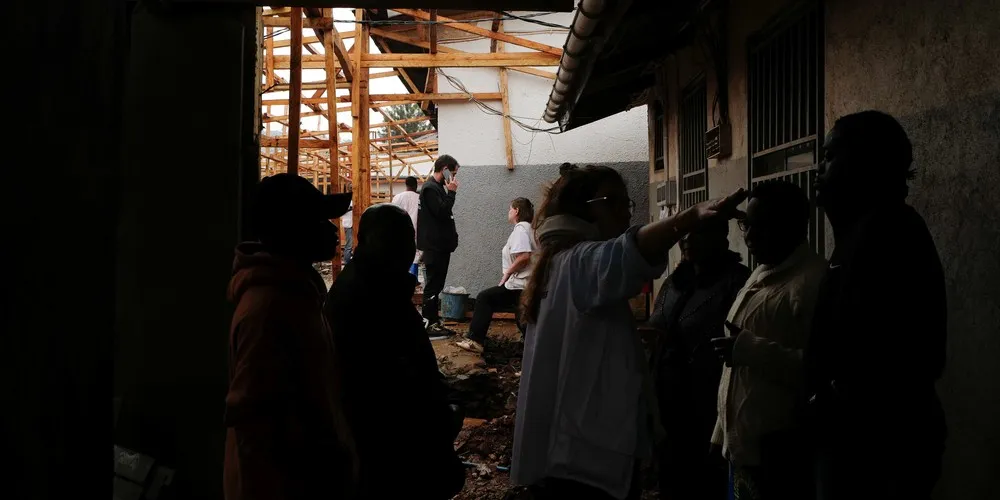
While our program coordinator was out building acceptance, the water and sanitation team and I got the treatment centre ready. We designed the layout, studied IPC requirements, negotiated use of the site, and started recruitment and training – 150 staff for a 35-bed centre.
Priorities fluctuated. Meetings with the Butembo Health Zone team became an essential part of my day, because they kept MSF inside the local response, rather than creating a separate one – a mistake made the last time.
Meanwhile, our logistics team leader, Ludovic Levadoux, also from MSF Australia, made sure the team could function. We were nine when I arrived. Three weeks later, we were around 45. We needed accommodation, offices, warehouses, a pharmacy, cars, drivers, guards – a whole ecosystem from scratch.
And there was another reality impossible to ignore: the absence of other humanitarian organisations, the fallout of the funding collapse. In an emergency like this, there would normally be many NGOs present, bringing expertise in specialised sectors (health, water and sanitation, shelter, logistics, etc.) and coordinating with others. Those on hand had to fill the gaps, taking on tasks usually shared across a much larger humanitarian presence.
Day one
After weeks of plans, construction, recruitment, training, surveillance support, negotiations and countless discussions, the centre was ready to receive its first patients in a safer environment, with trained staff and the systems in place to provide appropriate care. And that was the day I left Butembo.
But the work was only beginning. That’s the reality of an emergency in a complex environment: you don’t arrive in one crisis, with a clear beginning, a clear plan and a clear end. You arrive in the middle of something already happening. Your job is to understand it, build the relationships that allow you to work within it, adapt your response to what you find, and keep going. Trust is what holds it together.
Justine De Rouck
Head of the Medical Unit, MSF Australia