
Acknowledgement of Country

We acknowledge the Traditional Custodians of the land upon which we create and meet, the Gadigal of the Eora Nation. We pay our respect to their Elders past and present, and extend that respect to all Aboriginal and Torres Strait Islander peoples today.

Always was, always will be, Aboriginal land.

The long journey to care for Aweil’s women

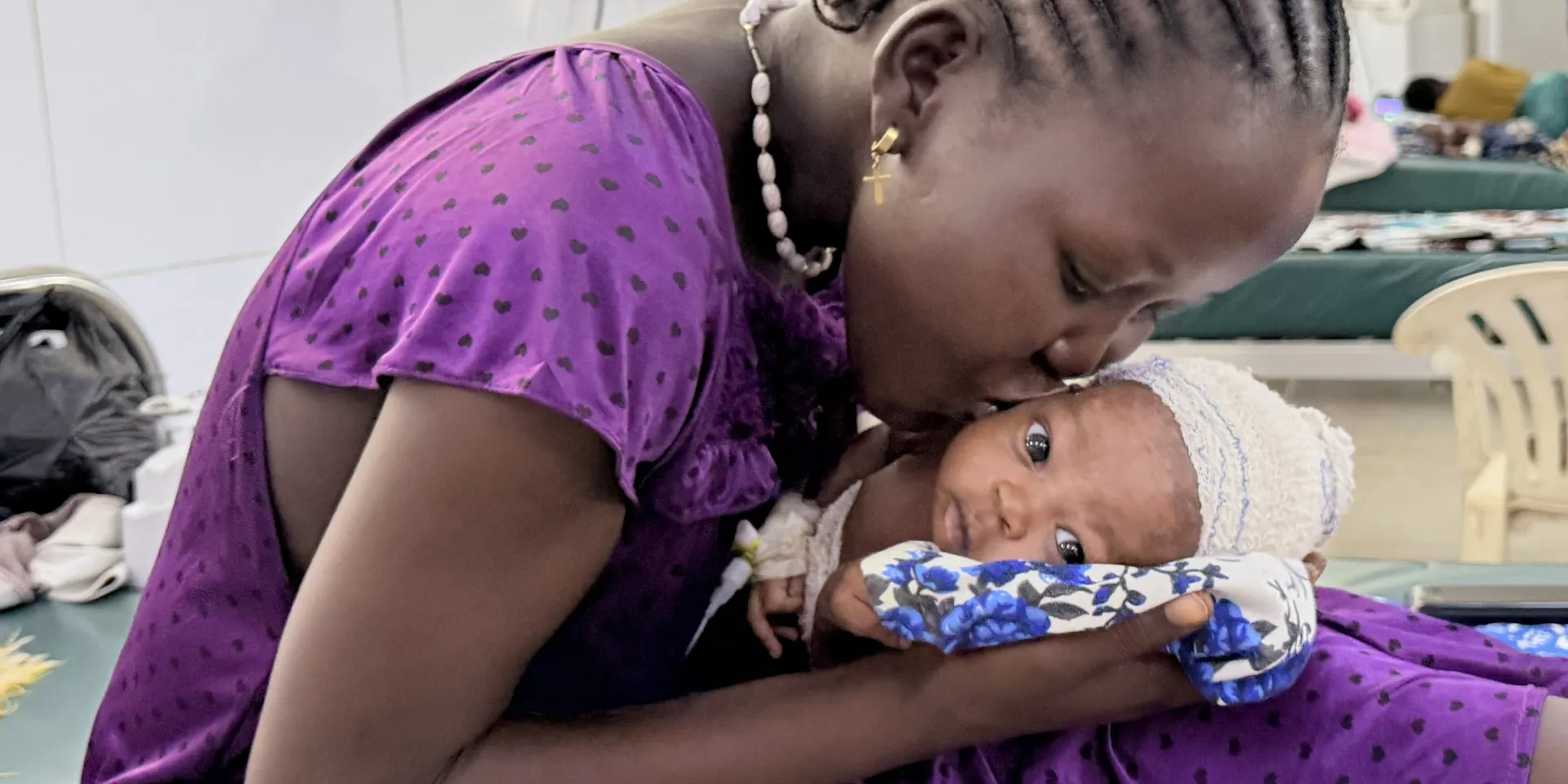
Abuk kisses her newborn son
Photo Essay

Following global funding cuts, two-thirds of primary healthcare facilities in South Sudan's Northern Bahr el Ghazal State have closed, leaving 1.4 million people without access to care close to home. Without primary healthcare, people cannot access antenatal care, vaccinations, medicines and nutrition support for their children, assistance for complicated births, referrals for specialist care, or other essential services.

Women travel great distances to reach the MSF-supported secondary hospital in Aweil, the only place for specialist care in the state. Some of the women who made it there share their stories.

Photos shared with storyholders’ permission. All photos © Joanne Lillie/MSF unless otherwise acknowledged. 
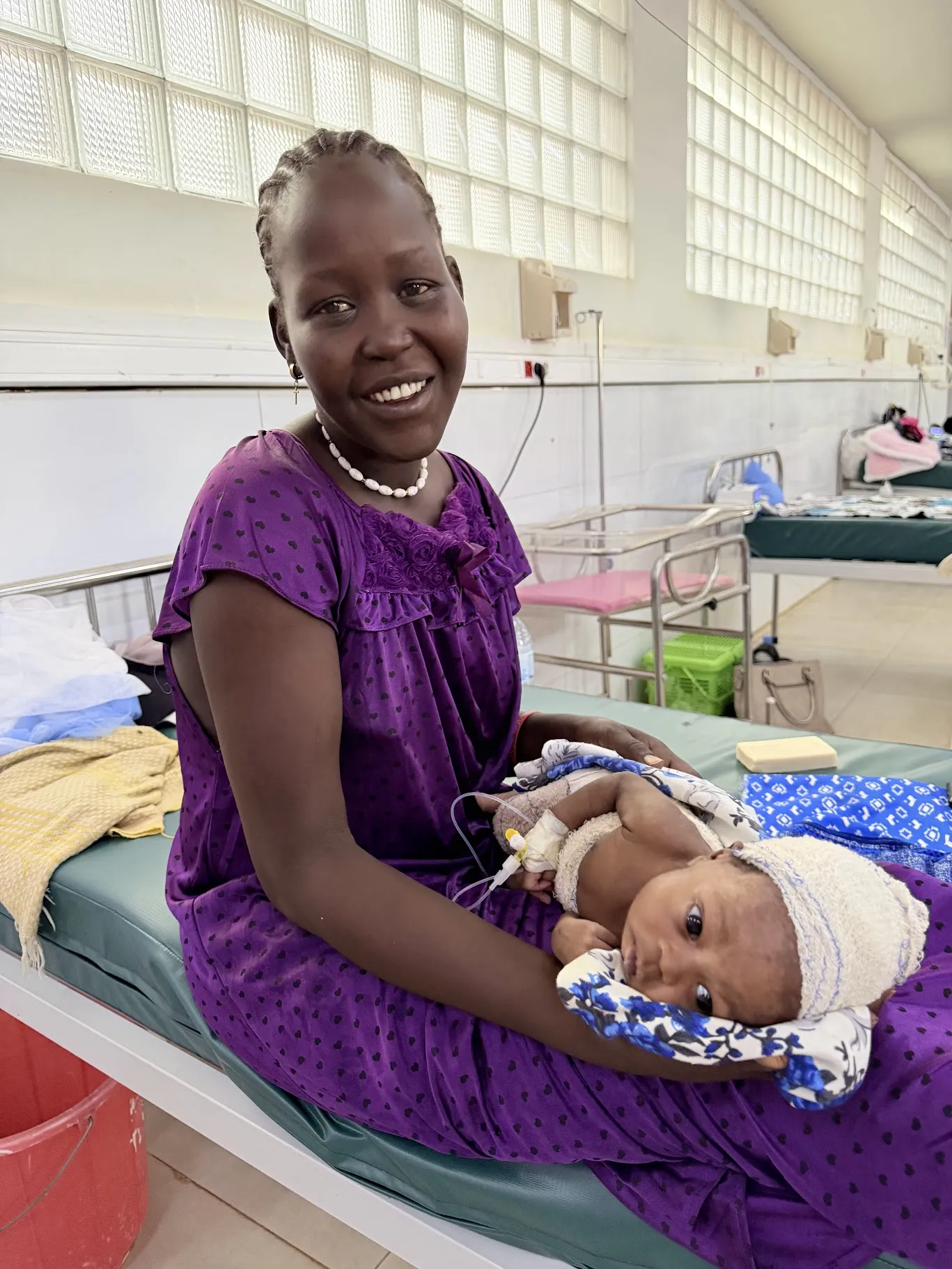
Abuk and her son Rou
Abuk Thiek Malek travelled for almost eight hours on two motorbike taxi trips to bring her newborn son, Rou, to the neonatal intensive care unit at Aweil State Hospital. There were no medicines at her local primary healthcare unit. Rou is receiving treatment for a rare life-threatening bacterial infection. “I am happy because now he is eating well and getting better,” she says. The family had to go into debt to fund the A$140 journey.
Doctors attend to a young woman who lost her baby
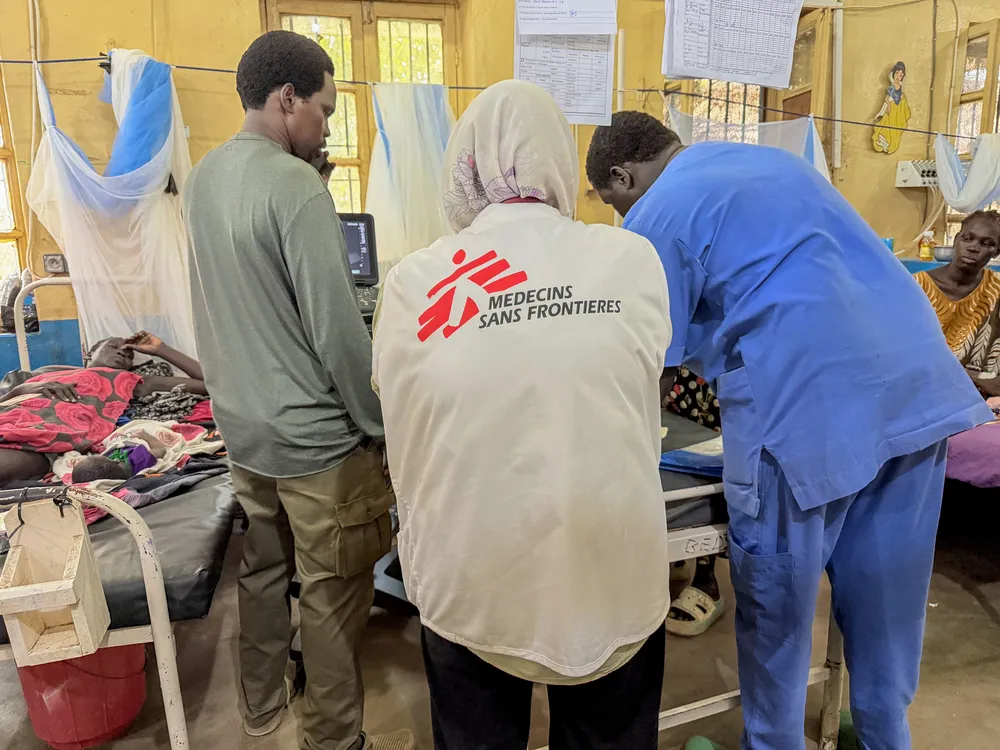
Dr Daniel Garang (left), obstetrician-gynaecologist Dr Harizah Hamiet (middle) and nurse aid, John Deng Kiir (right), attend to a young woman who lost her baby after a prolonged and obstructed labour. She was in labour for two days and fully dilated for five hours before she reached care. “The journey was very far and difficult,” said her mother. “The outcome would likely have been very different if antenatal and birthing support had been available closer to home,” says Harizah.
Akok Wol Manyuol with her twins
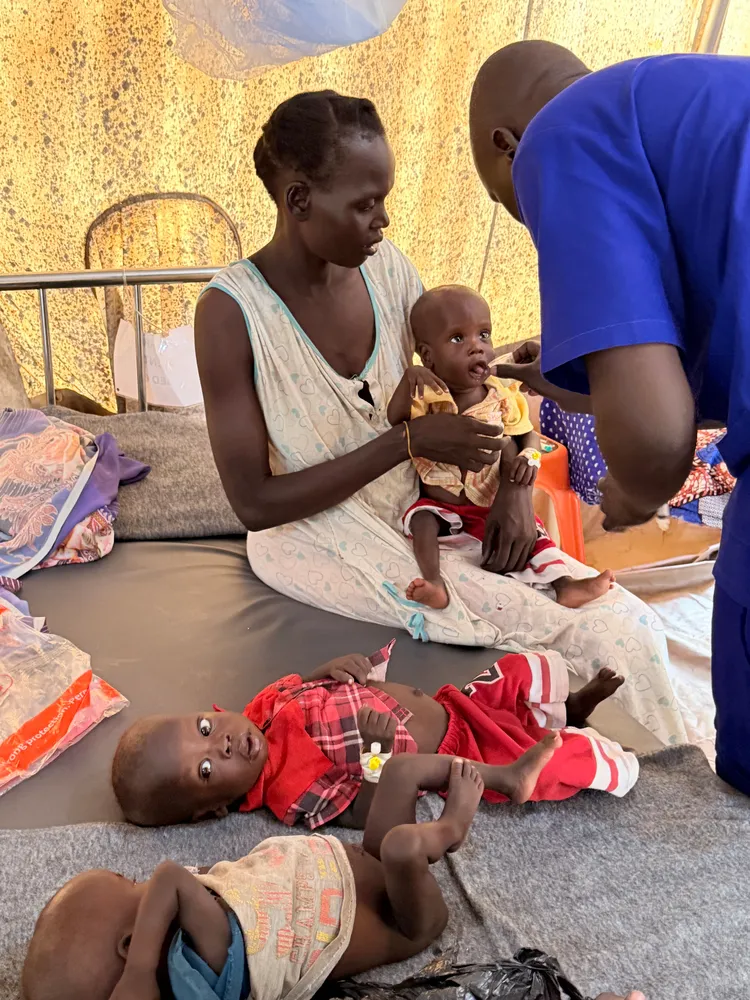
Akok Wol Manyuol brought her babies Akok (left) and Abuk - her second set of twins - to hospital from their village on foot, a journey that took her six hours. When the twin girls developed vomiting and diarrhoea, Akok first went to her local primary healthcare unit, but found it closed. When untreated, common conditions like diarrhoea can lead to a rapid deterioration in a child’s health, and severe acute malnutrition.
Akon with her triplets
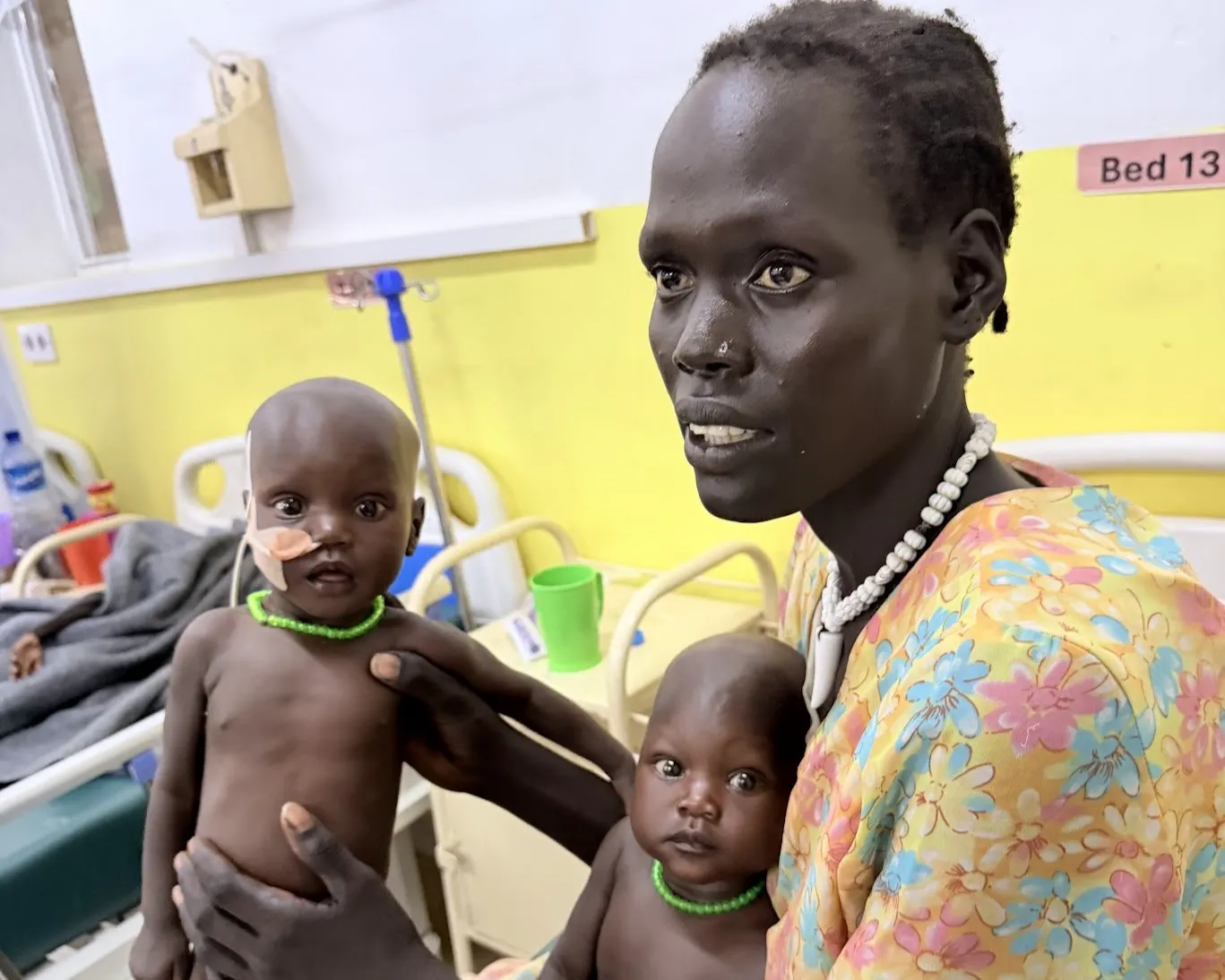
Akon Akol Deng holds Ngor, one of her triplets, while nurse Aken Peter Aken feeds him with a specialised cup in the phase-two inpatient therapeutic feeding centre. Both boys, Ngor and Chan, receive therapeutic food and milk to treat severe acute malnutrition, while their sister, Anger, who is well at the moment, keeps them company. Due to reduced humanitarian funding, there is nowhere to go for follow-up care after leaving Aweil State Hospital.
Dr David Kahindi
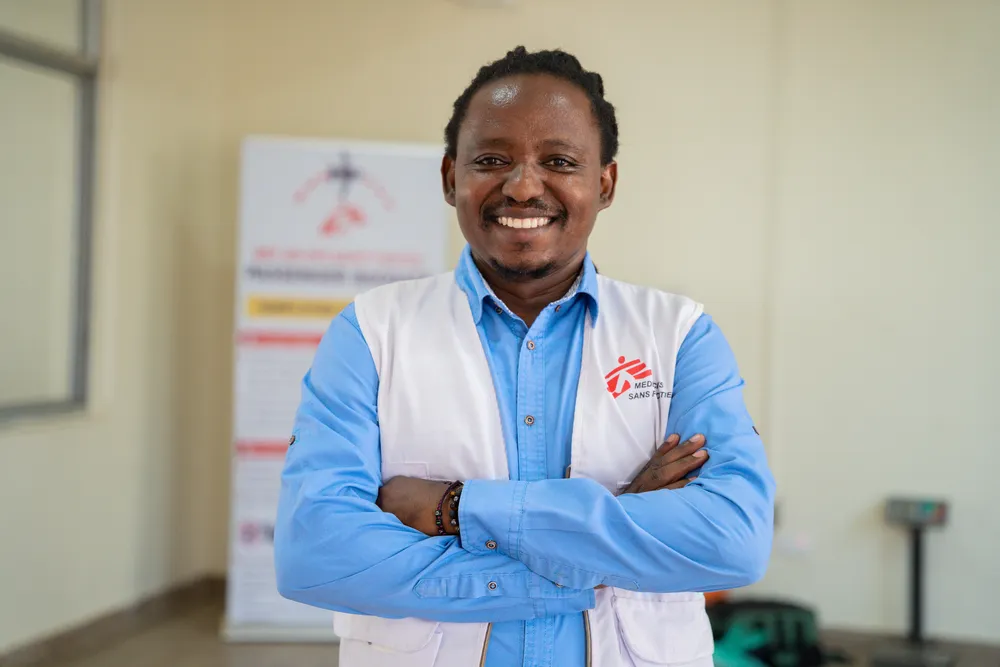
Medical data from Aweil State Hospital shows increases of 30 per cent for neonatal admissions; 36 per cent for complicated births; and 90 per cent for new admissions to inpatient therapeutic feeding centres in the first half of 2026, compared to the same periods last year. This is “a sign that primary healthcare is not functional,” says Dr David Kahindi, MSF medical coordinator. “People are dying because of this gap in healthcare,” he says. ©Isaac Buay/MSF
Nyirol Dut Anjit with her baby, Angong
Nyirol Dut Anjit travelled for two hours to bring her baby, Angong, to the hospital. He had difficulty breathing, high fevers and was frequently ill. By the time he came into MSF’s care, Angong had been coughing for one month and was losing weight. After he was screened at the inpatient therapeutic feeding centre, he was diagnosed with a chronic condition and malnutrition. With a medication regimen and nutritional support, his condition is improving at last.

Joanne Lillie of MSF Australia/MSF New Zealand discusses the situation in South Sudan and her recent experience on assignment there: