
Rethinking solidarity in a changing humanitarian landscape
In the face of increasing challenges, the global humanitarian system needs a new approach.

Throughout 2025, the troubled state of the global humanitarian system was plain to see. Cuts in foreign aid spending by the US, Germany, France, the UK and other big donors signalled a shift away from long-standing commitments to support overseas development and humanitarian assistance – despite prolonged crises in Palestine, Sudan, Syria, Ukraine and elsewhere, which have driven needs to unprecedented levels.
The impact has been rapid and tragically evident, shown by increased deaths and disruption to health and education programs. Humanitarian organisations have cut programs and staff, and critical supplies of food and medicine have shrunk. The World Food Programme estimated that more than 16 million people could be cut off from food assistance in 2025 due to funding cuts, a 21 per cent drop from the nearly 80 million people it reached in 2024. Emergency response efforts are in serious jeopardy, with the aid sector forced to “hyper-prioritise” its objectives to compensate for financial shortfalls.
This situation is part of a recent shift called the ‘changing humanitarian landscape’. The term describes prolonged conflicts, unrestrained outbreaks, malnutrition spirals, climate-fuelled disasters, large-scale displacement, and a world that is burning through the last of its empathy.
Continuing to get humanitarian assistance where it’s needed is intensely challenging under such conditions. MSF supporters in Australia and New Zealand have shown their incredible commitment to meeting this challenge, with donations in 2025 greater than ever. That support is vital for an organisation that doesn’t take government funding, and a real strength as governments abandon the aid sector.
Speaking up is only half the work. Listening is the other half.
However, trying to do more of the same is not enough to take on this changing landscape. What’s needed is a willingness to reimagine how we act in solidarity with the people most affected by crises.
The concept of témoignage – bearing witness – is fundamental to MSF. It represents the responsibility to communicate the realities of patients’ lives when safety and dignity have been ripped away by disasters, disease, violence, starvation, or genocide. It means not accepting a status quo that surrenders the fate of the vulnerable to the edicts of the powerful.
But humanitarianism sits on a foundation shaped by colonial hierarchies – by who has the power to define whose suffering is visible and whose voice is credible. The modern aid system inherited this attitude of saviourism and charity. Decolonising humanitarian action isn’t about disowning our past, it’s about dismantling the reflexes that keep reproducing it and replacing them with practices of co-creation, trust and shared authorship.
What I’ve learned during my advocacy career is that speaking up is only half the work. Listening is the other half. Through listening we practise solidarity – not as posture, but as method.
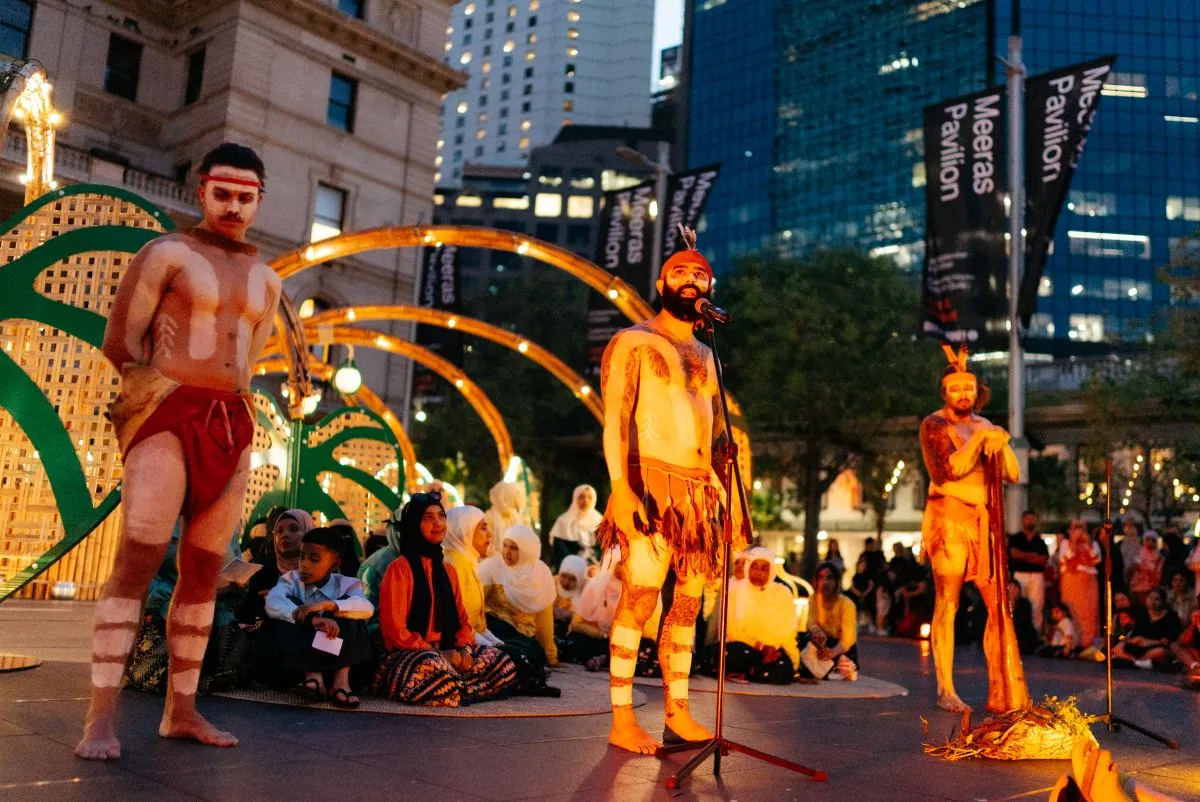
For 10 days this past September and October, the Meeras Pavilion – a handcrafted bamboo structure breathing with sound, light and Rohingya stories – stood in the heart of Sydney. In Rohingya, meeras means heritage, and that’s what the space embodied: a living archive of memory and resistance.
Inside, refugees, artists, humanitarians, students and strangers stood together as co-owners of a shared moment. There was no field and no headquarters, just people in partnership in a humanitarian space without hierarchy.
Solidarity is not a limited resource. It is an infinite one. And it’s what will sustain us.
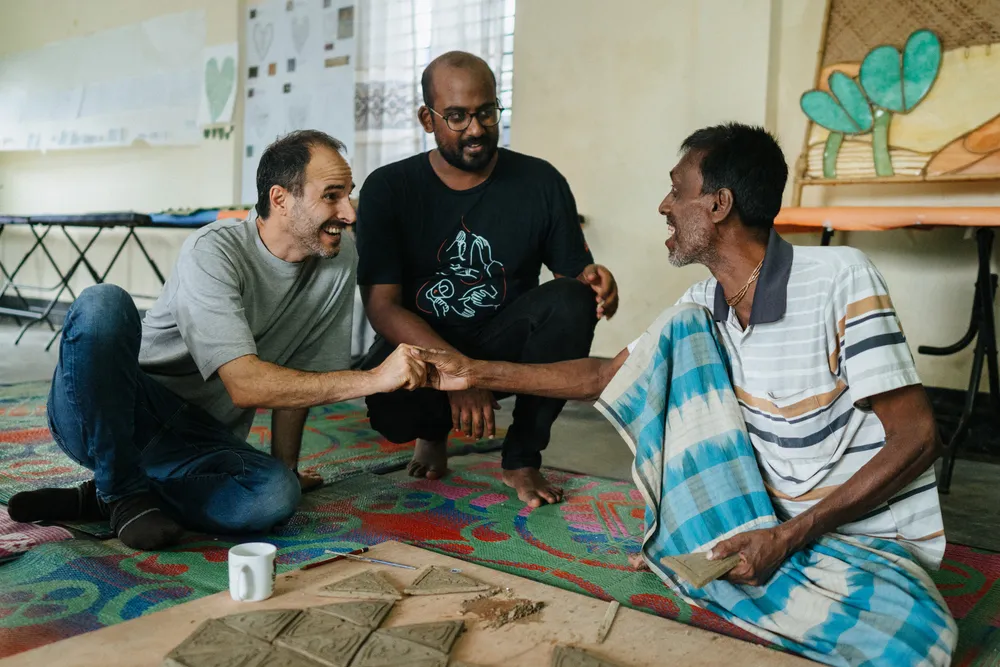
The moment began four years ago in small workshops in Sydney, Kuala Lumpur, and Cox’s Bazar, Bangladesh, where Rohingya and their allies shared stories of loss and belonging.
From those conversations, the taro leaf emerged as a simple but powerful symbol. Over time, the team created a space that would bring together hundreds of people, dozens of organisations, and a 10-day program that wove pedagogy, art and advocacy into one living experience.
In truth, the pavilion was as much a process of giving up as it was of building up. It required MSF and its partners to relinquish authorship and to follow the lead of those whose stories defined the work. That, to me, is what solidarity looks like – not representation, but redistribution.
The outcome: an advocacy tool that continues to resonate far beyond the clinics of MSF – shifting conversations, challenging narratives and creating new spaces for belonging and political voice. The taro leaf left more than 14 million impressions on social media. More than 35,000 Sydneysiders visited the Pavilion. The symbol appeared in student rallies in Dhaka, and even reached the UN, held up by the interim Prime Minister of Bangladesh, alongside other ministers and diplomats.
The crisis in the humanitarian system might seem overwhelming. The lesson of Meeras is that transformation begins when we work with, not for. Solidarity is not a limited resource. It is an infinite one. And it’s what will sustain us through the next humanitarian landscape.
Arunn Jegan
Humanitarian affairs lead, MSF Australia