Gaza: Israeli authorities intentionally denying water to Palestinians
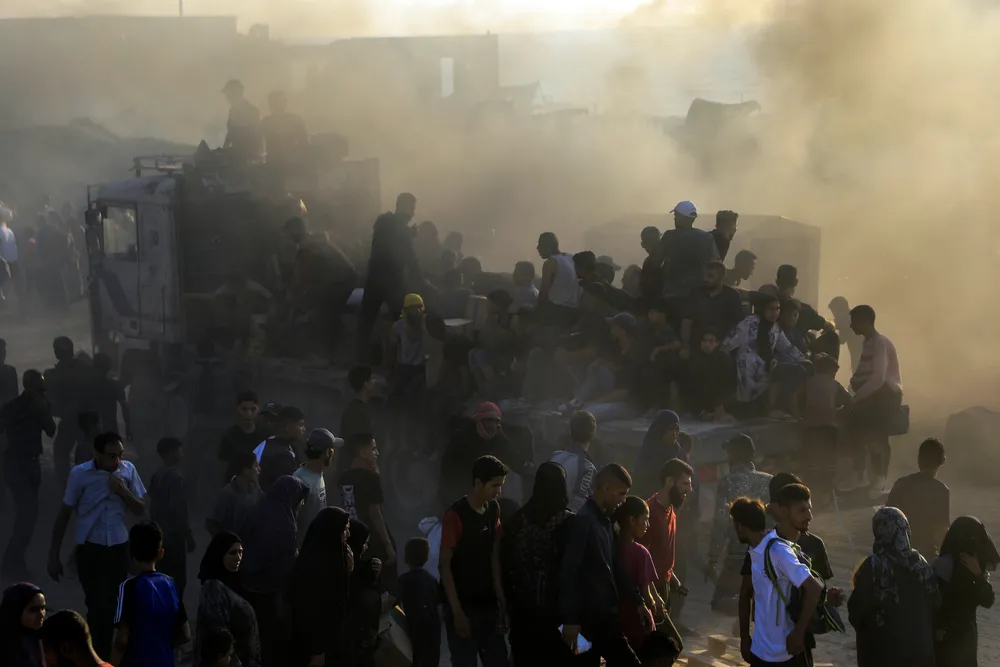
Israel is deliberately depriving people of water in Gaza as part of its genocidal campaign, denying Palestinians of life’s necessities, including food, water and healthcare.
After 22 months of Israel destroying and restricting access to critical water infrastructure, the amount of water available in Gaza is wholly insufficient.
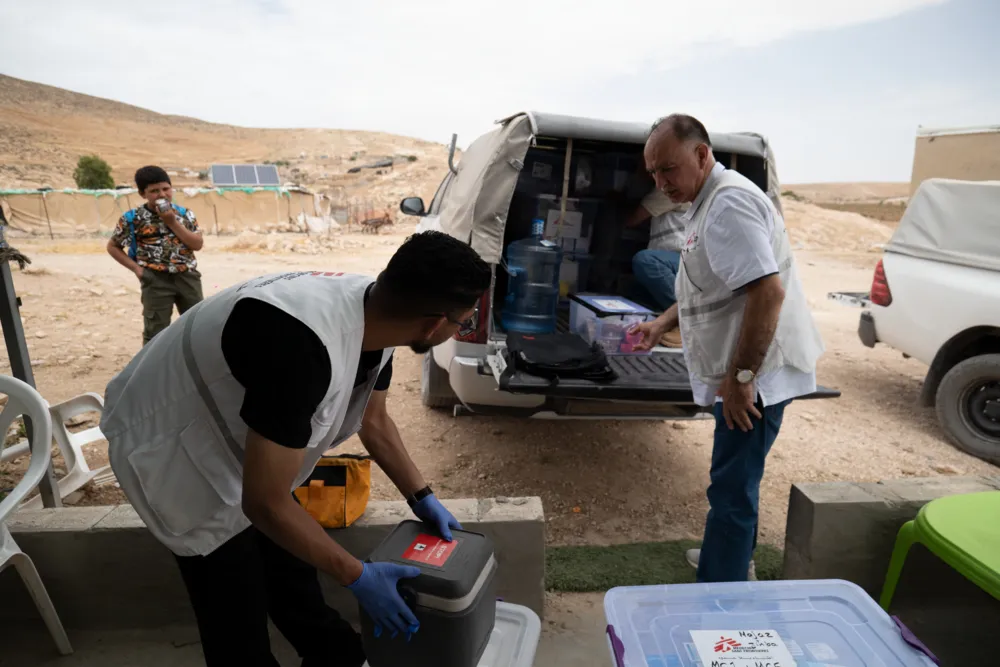
Organisations like MSF would be able to increase the amount of safe water in the Strip, however, Israel is blocking imports of critical water treatment items. Since June 2024, for every 10 import requests of items for water desalination, MSF has had only one approved.
Israel must begin allowing the importation of critical equipment for water supply and distribution, at scale. The Israeli military must stop its destruction of water infrastructure and allow the immediate repair of water systems that have been damaged to ensure people have life-sustaining access to water. Water and other necessities of life must not be used as weapons of war.
Not only is there insufficient water overall for people in Gaza, but the reliance on water trucking means they do not have predictable methods to obtain what is available. Eighty six percent of Gaza is under forced displacement order by the Israeli military, making it unsafe for water trucks to attempt to reach people in those areas. The lack of adequate storage methods in households compounds the problems people face.
The reduction of clean water in Gaza has resulted in an increase of disease, with MSF medical teams conducting over 1,000 consultations for acute watery diarrhoea a week for the past month. Without sufficient water for hygiene, people have been suffering from skin conditions, such as scabies.
Clean water is also essential for hospitals; to reduce the spread of infection and to keep patients hydrated so their bodies can heal from their injuries and illnesses.
“There’s too little water for too many people,” says Mohammed Nsier, a water and sanitation officer for MSF in Gaza. “The amount we can provide is very small compared to the need, and conditions are extremely difficult.”
You see how people are struggling, everyone is desperate for water. Honestly, it’s very, very hard to get water, even walking a little bit is very difficult. I don’t know what to tell you—it’s torture.
Israel has repeatedly damaged two out of the three water pipelines into Gaza since October 2023. It is estimated that 70 per cent of the water that goes through these pipes is lost because of leaks in the broader pipeline network, from the damage caused by bombardment. As a result, water must be distributed by water trucking, coming from desalination plants. Of the 196 desalination plants that are publicly- and NGO-run, over 60 per cent are non-functional because of their location or damage.
Humanitarian organisations are willing to repair the damaged pipes and plants of the water infrastructure that existed before October 2023, but Israel has repeatedly hindered these efforts by denying access to these sites. For locations that are reachable, repair efforts use “Frankenstein” techniques, salvaging parts from one generator or broken sites to fix another, and desperate attempts to source parts locally. Such actions are necessary as the supplies required to repair this infrastructure are impeded from entering Gaza by Israel. When items do come in, they arrive months late because of deliberate blockages.
Seven MSF water treatment units produce enough water for 65,000 people to receive 7.5 litres per day, a fraction of what is needed. For months, MSF has been trying to get nine new treatment units into Gaza—which would significantly increase MSF’s water production capacity—but these efforts have remained unsuccessful as Israel has not issued approvals or allowed the units to enter Gaza.
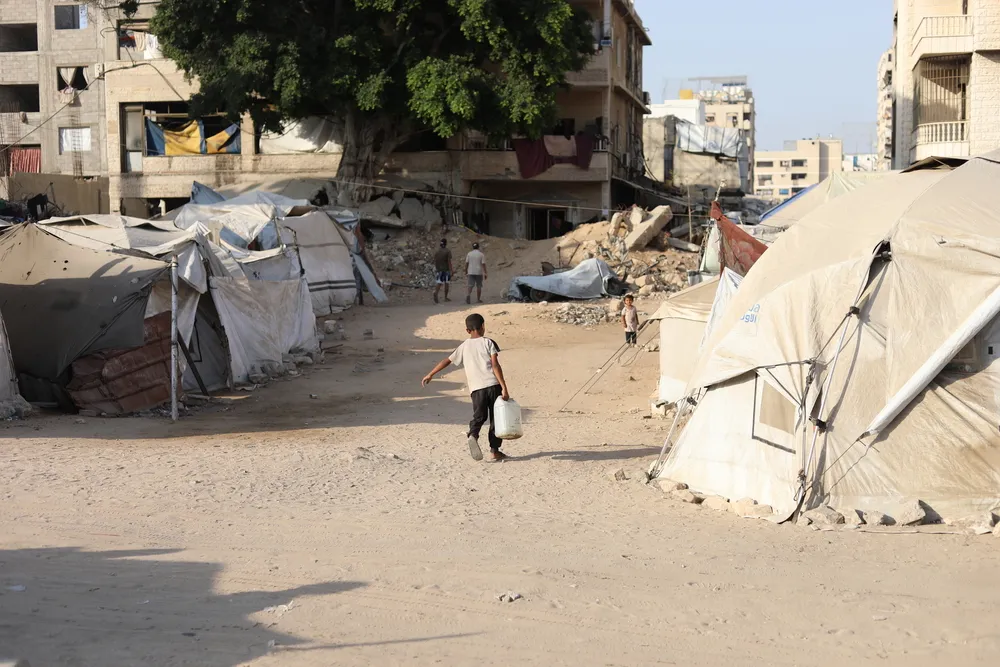
When water trucks can reach desalination plants, the next step of distributing it to people also means contending with major obstacles. Reaching people safely is near impossible, as the expansion of military activities and bombardments in so-called safe zones mean distribution points have to be continually re-located. In 2025, MSF has had to stop providing water at at least 137 water distribution points.
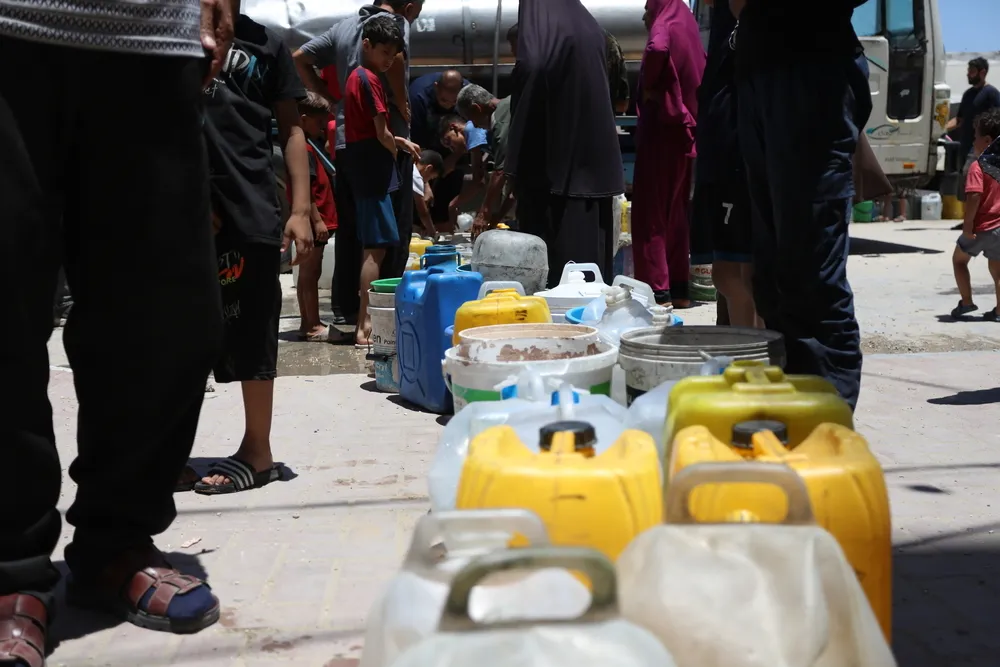
To reach distributions, people must walk long distances carrying their heavy jerry cans.
“You see how people are struggling, everyone is desperate for water,” says a woman waiting for an MSF distribution in Gaza city. “Honestly, [it’s] very, very hard to get water, even walking a little bit is very difficult. I don’t know what to tell you—it’s torture.”
The dangers of collecting water are compounded by its limitation, with the scarcity creating tension at distributions. People have told MSF staff that they fear collecting water. Our teams see children who get lost after a distribution site has been forced to move by a displacement order or an airstrike, or because extensive damage has made their surroundings unrecognisable.
“As with food, supplies, and healthcare, the Israeli military is restricting access to water to minimal levels,” says Ozan Agbas, MSF emergency manager. “By refraining from cutting off water entirely, they allow plausible deniability while choking Palestinians of their means of survival.”
Will you support us?
As an independent, impartial and neutral medical humanitarian organisation, Médecins Sans Frontières can respond rapidly to emergency situations and deliver urgent medical treatment to people in need, no matter where they are.
By making a donation, you can help ensure that MSF staff can provide medical assistance during times of crises where it is needed most—in Gaza, in Sudan, and around the world.