

Sam Bradpiece spent six months working as a communications manager for MSF in eastern Democratic Republic of Congo in 2025, a year when violence spiked once again. Communities across the region were continually displaced and injured, with MSF medical teams treating more than 3,600 people for injuries in the first six months alone.
In the same period, MSF teams also treated nearly 28,000 survivors of sexual violence.
In this video, Sam recalls the experience of some of the MSF patients he met during his assignment, and explains the complicated dynamics affecting their lives, using photographs captured by him and other MSF staff as his guide.
Transcript
ON SCREEN TEXT: Rutshuru, Democratic Republic of Congo (DRC), August 2025
Sam Bradpiece, field communications manager, MSF
“I took this photo at Rutshuru General Reference Hospital.
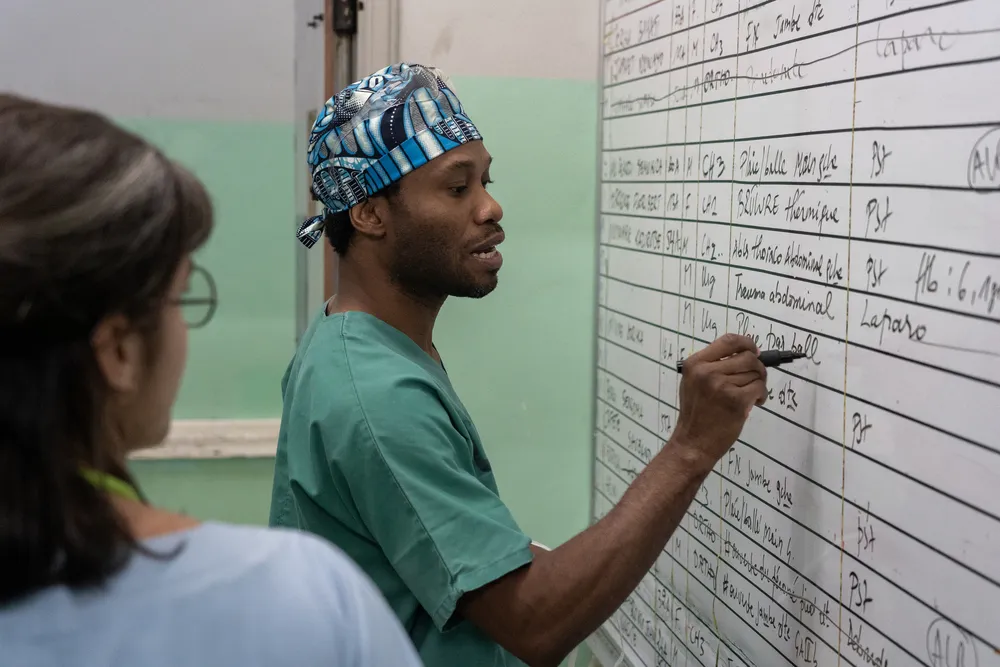
“At the time I visited, you can see from the whiteboard that a lot of the surgical procedures were aimed at treating ballistic injuries. In other words, injuries caused by weapons, specifically gunshots and explosions.
“Among the patients treated, at least during my visit, for gunshot wounds, the vast majority were civilians and people who had been caught in the crossfire while working in fields in the surrounding area.”
ON SCREEN TEXT: For three decades, eastern DRC—particularly Ituri, North and South Kivu provinces—has endured persistent armed conflict. More than a hundred armed groups operate in the region, including AFC/M23, which seized control of Goma in late January 2025.
“2025 saw a major evolution in the fighting when the M23 armed group took control of the cities of Goma and Bukavu in a lightning offensive, which caused quite a substantial loss of life. M23 is an armed group which has existed for a long time, but 2025 really saw them expand their territorial reach, notably in North and South Kivu. They are effectively the governing authority in that part of the country.
“2025 has seen a spike in violence in eastern DRC, with MSF teams treating more than 3,600 cases in the first six months of the year alone. And that shows no signs of decreasing any time soon.
“In some MSF facilities, civilians account for up to 80 per cent of those treated for violent injury. Those violent injuries can very often be bullet wounds. I've seen a number of very young patients suffering from bullet wounds, often coupled with other health problems like malnutrition or even malaria, but also attacks with bladed weapons. There are some people who were whipped, tortured, and bombed.
“I took this photo at the General Reference Hospital in Masisi.

“All of the patients here are recovering after surgery. The young man in the foreground of the photo was among the many patients in the ward that day who were recovering from bullet wounds. Masisi has one of the highest caseloads of violent injury of any MSF project in eastern DRC.
“A lot of those cases in 2025 were recorded early on in the year, as M23 made their lightning offensive on the town, bringing lots of collateral damage along the way.”
ON SCREEN TEXT: Masisi, a territory in North Kivu, was one of the first new areas captured by M23 in early 2025.
“This photo was taken by one of the MSF staff working at the Masisi General Reference Hospital at the beginning of the year. The territory itself has been contested for years, and at the start of the year, there really was quite heavy fighting.

“The project coordinator counted at one point more than 10,000 rounds being fired every single hour. Amid this intense fighting, much of the population of Masisi town fled and sought refuge in the hospital and at the MSF base. As you can see, there were people everywhere. Unfortunately, one MSF radio operator was killed by a stray bullet while another MSF staff member was killed at his house during fighting in Masisi.
“This is a photo I took while I was in Masisi. This was many months after the taking of the town itself, but it remains incredibly close to the frontline.

“That building you can see in the middle is the Masisi General Reference Hospital. In the background you can see hills, and on these hills, there are armed groups known as the catch-all term, Wazalendo [patriots].
“These Wazalendo groups are essentially armed groups which have coalesced together to fight against M23. During the week I spent in Masisi, there was frequent fighting between the two groups. The MSF base and the hospital you can see in this photo are positioned basically in the middle of a valley, which means that we are underneath the line of fire from one hillside to another. The shooting is so constant in the evening and often in the early morning that people on the Masisi project and even some residents describe the gunfire as music. They say, ‘Oh, the music has started again.’ ”
ON SCREEN TEXT: Civilians are often caught in the crossfire, but they are also directly targeted by armed groups. In Binza, Rutshuru territory, hundreds of people were killed in July 2025.
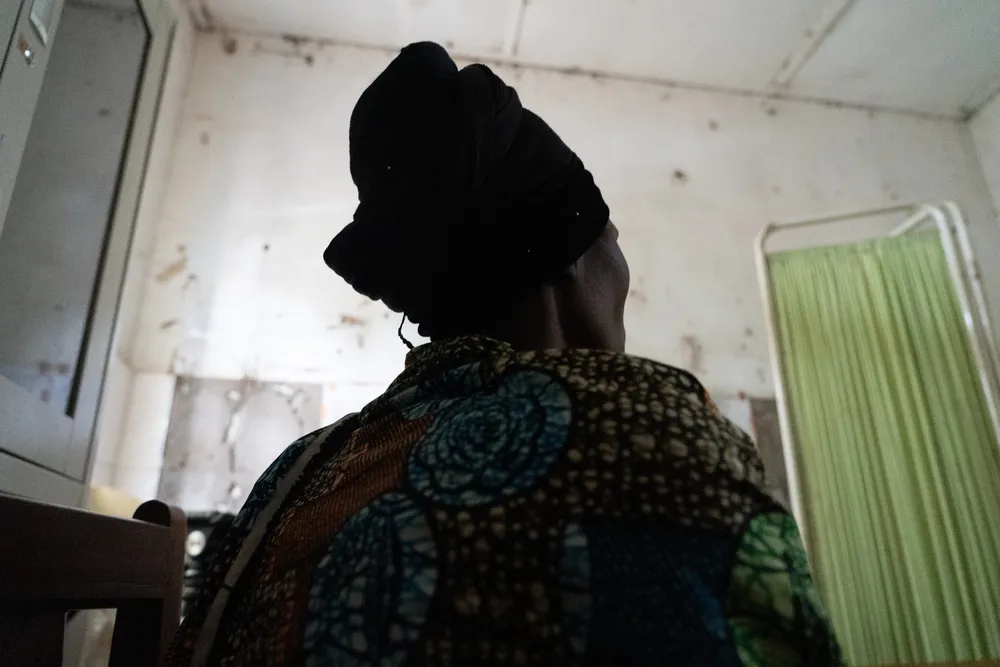
“This woman is a survivor of these massacres. The picture that emerged from various patient testimonies is that in July, and to a lesser extent in August, armed men—some cited these armed men as M23—arrived in the fields and shot hundreds of people. The men who were shot were subsequently decapitated, while the women and children, for the most part, were rounded up and taken to the side of a river where they were shot.
“There were a number of survivors, mostly people who jumped into the river before they could be shot and managed to make it to the other side. Some of those survivors then explained how they were raped.
“There were many people who were unable even to go into the fields and collect the bodies of their loved ones. And this woman was among the survivors who said that she's now scared to go back to the fields to work. This fear of returning to lands where you're used to cultivating and producing food to survive is playing into the malnutrition crisis currently being seen across large parts of eastern DRC.”
ON SCREEN TEXT: In the first half of 2025, MSF treated nearly 28,000 survivors of sexual violence in eastern DRC.
“One of the findings, in Goma at least, is that really nowhere in the city or the surrounding areas is safe for women—whether at home, whether at work, whether in the fields collecting food or looking for firewood. Women frequently fall victim to sexual violence and survivors have told our teams that in most cases the perpetrators are weapon-carrying men.
“And the circulation of arms and the widespread context of insecurity are both factors that play into the sheer scale of sexual violence in eastern DRC.
“MSF does a certain amount of work through its community engagement networks to try and overcome some of this stigma faced by survivors of sexual violence. But there definitely is still a stigma. Some survivors have told us that their husbands left them, for example, after they suffered these abuses.
“Many people who suffer choose not to tell their loved ones or their families because of their fear of the impact this might have on their honour or on their reputation.
“MSF teams provide mental health services. Among the most commonly cited pathologies are things like PTSD [post-traumatic stress disorder], which is often recorded by our teams, depression, and anxiety. And one of the challenges of treating mental health in eastern DRC is that you can hold a therapy session or prescribe some medication, but ultimately when people leave the clinics they're returning to a context of instability in every sense, which is not conducive to positive mental health.
“Talking to your family, talking to your loved ones, talking to your neighbours about mental illness is perhaps not taboo, but it's just not really done. The reason for this is that everyone is suffering.
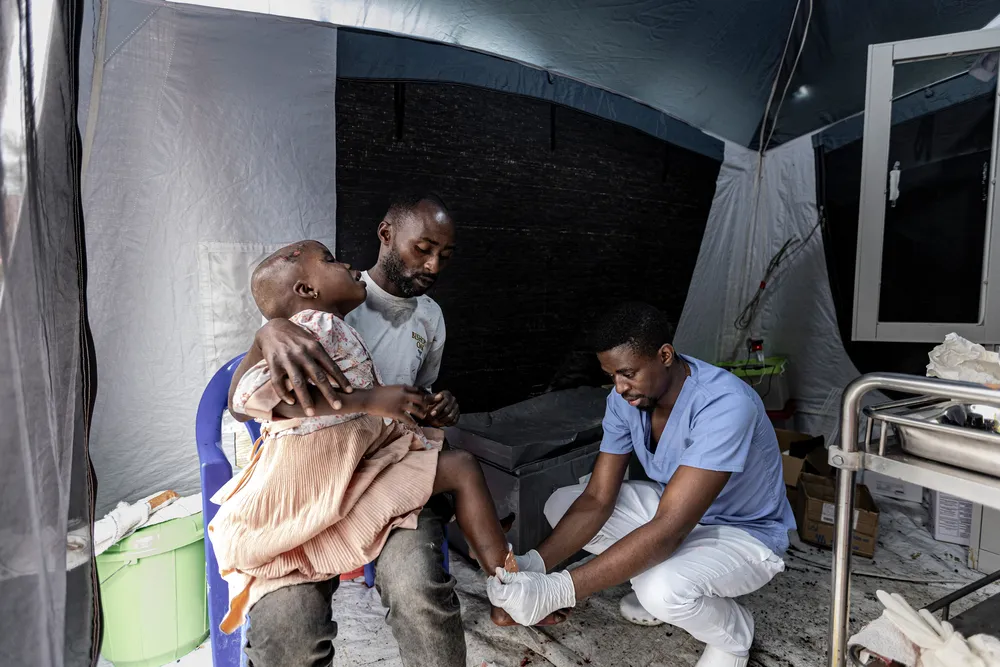
“Considering that this part of the world has been really wrapped up in conflict for the last 30 years, this is sadly not a new phenomenon. I saw young children, some as young as three, in the hospital wounded by shrapnel or bullets, and it really is quite disheartening to see. They're born into war. All they've ever known is war. Often when I was visiting medical facilities, I would ask, ‘Do you see an end to the violence here?’ And many people would just say, ‘Well, it's all I've ever known.’ “
Join our team!
Our teams of medical and non-medical professionals provide healthcare to millions of people caught in crises in more than 70 countries around the world. Learn more about working with MSF and how to apply today.