In response to people’s growing needs since the start of the escalation, MSF has donated medicines and medical supplies to the Iranian Red Crescent Society for distribution and use. These include paediatric care kits for 6,000 patients, surgical kits for 2,500 patients, burns kits for 40 patients, emergency room kits for 1,500 patients, and outpatient care kits for 10,000 patients. We have also donated essential relief items, including 13,000 blankets and hygiene kits for 5,000 people.
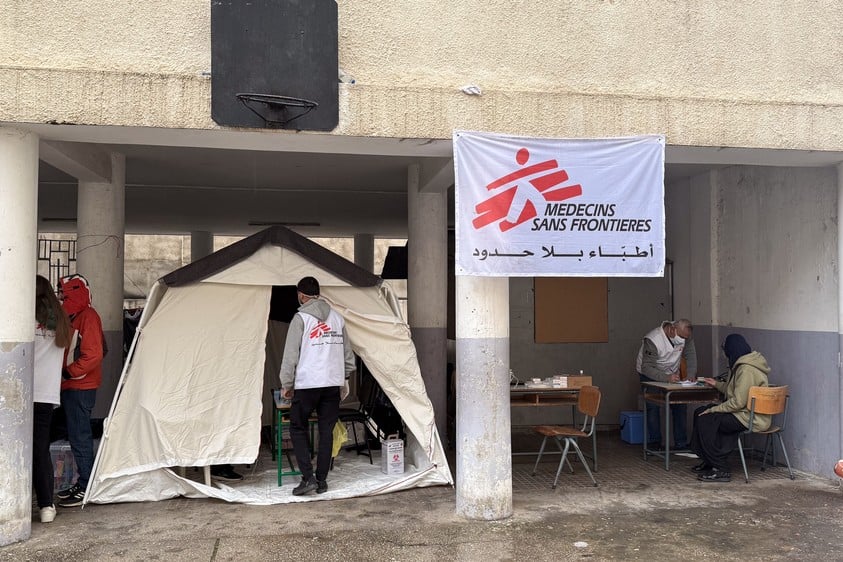
While other care providers have focused on trauma, MSF teams have scaled up activities to address the ‘hidden needs’ that continue during war. Our general healthcare teams are providing sexual and reproductive healthcare, treatment for infectious diseases, chronic disease management, referrals to specialised care, and mental health support. Teams are also seeing a deterioration in people’s mental health, as they are living through weeks of war, displacement, and uncertainty.
At the height of the violence, intense bombing forced us to temporarily suspend activities at our clinic in South Tehran. The clinic has since reopened, and MSF has received authorisation to operate it as an advanced medical post, which means we are able to receive wounded patients and stabilise those in critical condition, if needed. Since the ceasefire, consultations at the clinic have doubled, with around 250 patients now treated each day. Our clinic focuses on providing general healthcare services to people who face difficulties accessing care, such as Afghan refugees, and we have now also expanded services to all Iranians.
We have recently opened a second clinic in South Tehran to further expand access to general healthcare. The clinic welcomed its first patients on 2 May. At this clinic we currently see around 100 patients per day.
MSF’s general healthcare activities in Kerman and Mashhad continue. These services remain particularly important for Afghan refugees, many of whom face serious barriers to accessing healthcare. In both Kerman and Mashhad, MSF sees around 150 patients each day.
In case of re-escalation, we remain ready to adapt and further scale up activities to respond to evolving medical needs, in collaboration with the authorities.