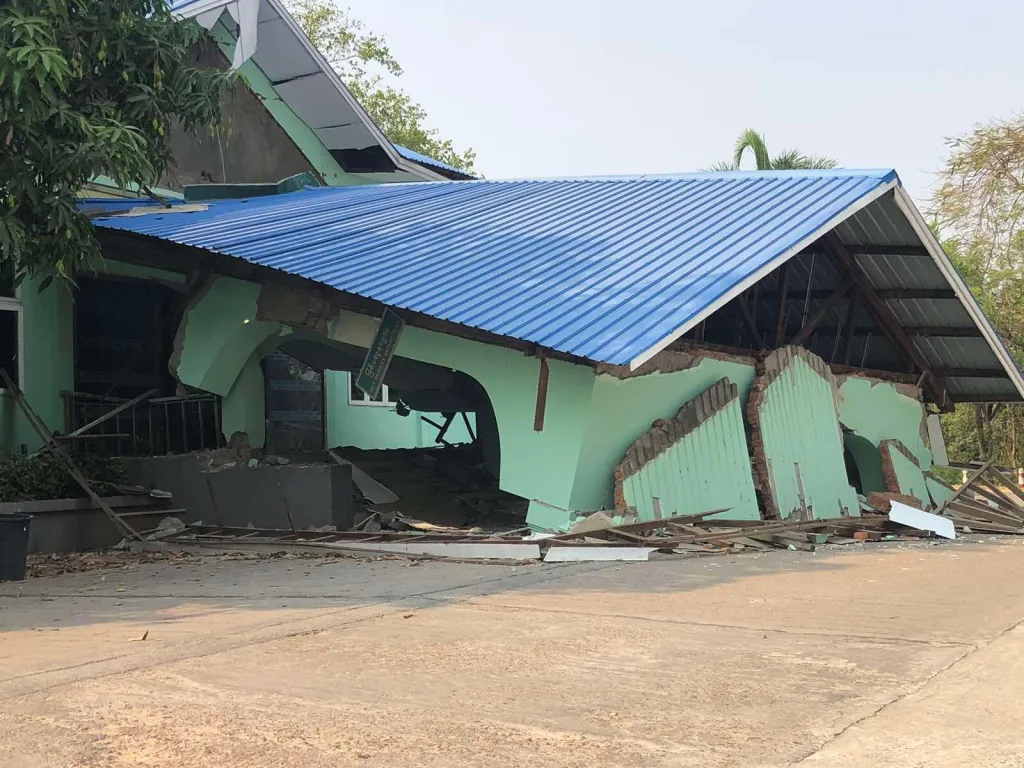
More than a month after the major earthquake, the people of scenic Inle Lake in the Shan Hills of Myanmar are still grappling with its devastating aftermath.
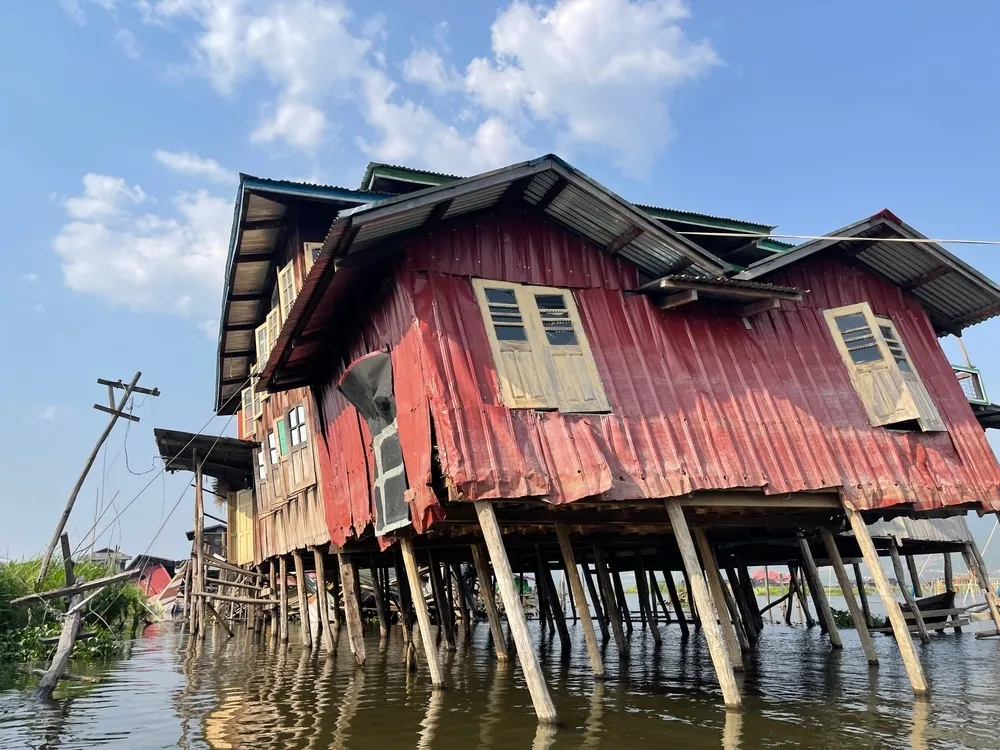
For generations, communities have lived on the water in wood and bamboo stilt houses. But, in some villages, the earthquake damaged or destroyed up to 90 per cent of these traditional dwellings. Boats were also damaged, affecting people’s livelihoods and mobility. Drinking water supplies have been disrupted and reconstruction efforts complicated by on-water access and building material price rises. Floods, particularly during the rainy season, are the next risk.
Since the earthquake, many of those forced from their homes now live in overcrowded houses, tents and makeshift shelters on patches of dry land. Médecins Sans Frontières/Doctors Without Borders teams are responding in four villages, restoring drinking water supplies and providing building materials and relief items.
Residents such as Daw May Lwin* had terrifying escapes when their houses collapsed around them. This is her story.
“In my 49 years of life, I’ve never experienced an earthquake this intense. Even my 89-year-old mother has never witnessed anything like it.
“We have five people in our family. On the day the earthquake struck, only my mother and I were at home. I’d been washing clothes at the water tower when the water began trembling. Moments later, the tower collapsed, throwing me into the water.
“I struggled to stay afloat as the water became thick with mud and debris. The more I fought, the deeper I sank. Broken bamboo from the tower floated in my direction. I grabbed onto it. The wooden hat I’d been wearing became a burden underwater—I was gasping for air. So, I took the hat off to breathe more freely, though my nose, mouth and ears were filled with mud. Luckily, I found something solid beneath me. I stepped on it and, holding myself up, got out of the water.
“My mother can’t move without assistance—she has been paralysed from the waist down for 13 years. The shock caused her to faint. I had to wake her up. My husband had been helping others repair their houses. When he returned, we carried my mother to safety. What a blessing nothing serious happened to her. She was downstairs.
The uncertainty of the future and trauma of the earthquake have been overwhelming.
“Our house has two floors. During the flood [of September 2024], we stayed on the second floor. But during the earthquake this floor collapsed, along with the ladder. In Inle tradition, a family’s fortune is tied to the condition of the ladder. If the ladder is damaged, it’s a sign progress or prosperity will be blocked. If a ladder is repaired, a ritual must be performed.
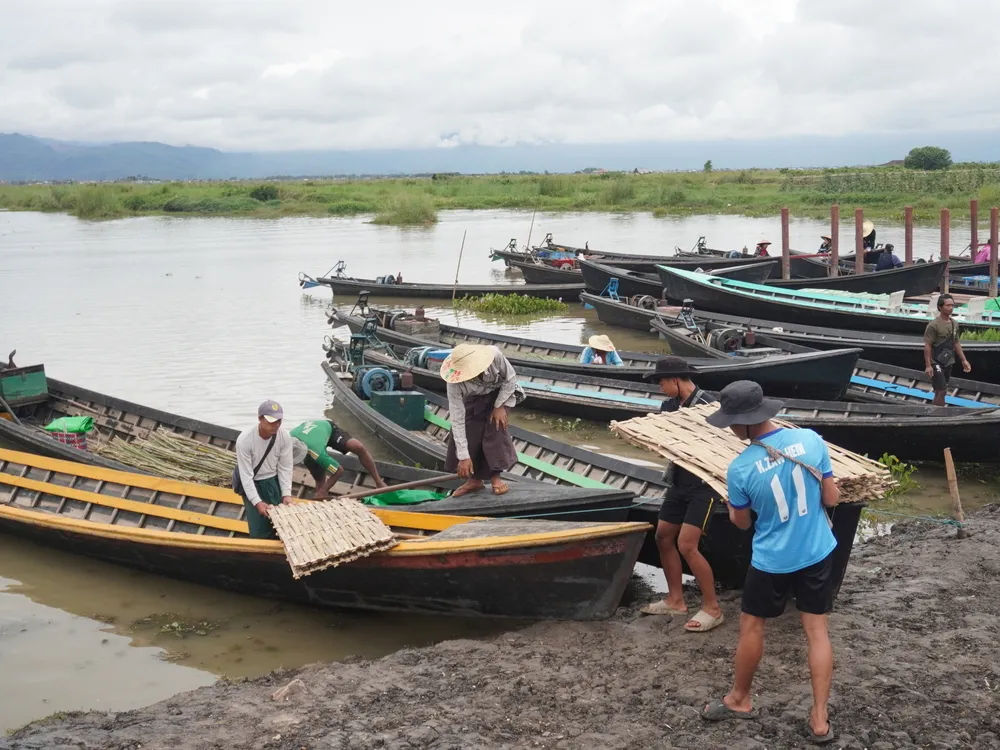
“We lost our floating farm and two boats. The boats had been docked at the harbour but were crushed when a nearby house collapsed. On our farm, we grow tomatoes and aubergines in alternating seasons. Before the earthquake, we’d planted aubergines and they were bearing fruit. But the earthquake caused everything to fall and tore apart the farm—about 200 acres were damaged.
“We’re now living in my uncle’s house. It’s also tilted but has been repaired by adding extra support. I’m worried the house might collapse if the wind picks up. We’ve also borrowed a boat from a neighbor. The boat’s fine for short trips but we don’t feel comfortable using it for the whole day.
“All items on the second floor of the house are still there. The house is too unstable to safely go up, so the workers won’t risk collecting the items. And they don’t have the proper equipment.
“I feel drained, unable to do anything. I constantly experience a racing or skipping heartbeat. And I feel unsteady, so I can’t walk properly. For 20 days, I struggled to speak properly—my speech became slurred—and I had no appetite. I couldn’t sleep well, either.
“The uncertainty of the future and the trauma of the experience have been overwhelming. Our floating farm was our livelihood, and now it’s gone. We’re deeply grateful to donors—their support has covered nearly half our expenses. This is a huge relief, as we can’t manage the rebuilding on our own.
“To make do, we’ve been using salvaged materials from the house. So far, we haven’t restarted anything at the farm because I can’t leave my mother alone. My husband is helping others dismantle their houses with the hope they’ll return the favour. I’m hoping to be resettled, but we need wood, and it’s currently out of stock. With the monsoon approaching, I want to repair our house as quickly as possible.”
* Name changed on request
Help us bring crisis care
As an independent, impartial and neutral medical humanitarian organisation, Médecins Sans Frontières/Doctors Without Borders responds rapidly to emergencies, delivering urgent treatment to people in need no matter where they are.
Your donation will ensure our teams can continue providing crisis care where it is needed most—in Myanmar and around the world.