Photo Timeline: The evolution of a genocide
Over three years, Israel’s military campaign has devastated Gaza’s health system, while Palestinians have faced mass displacement, starvation, repeated attacks, growing restrictions and the destruction of essential infrastructure and access to healthcare.
These images document the widespread suffering of Palestinians in Gaza, and how the conditions for providing and receiving healthcare have progressively deteriorated.
7 October 2023
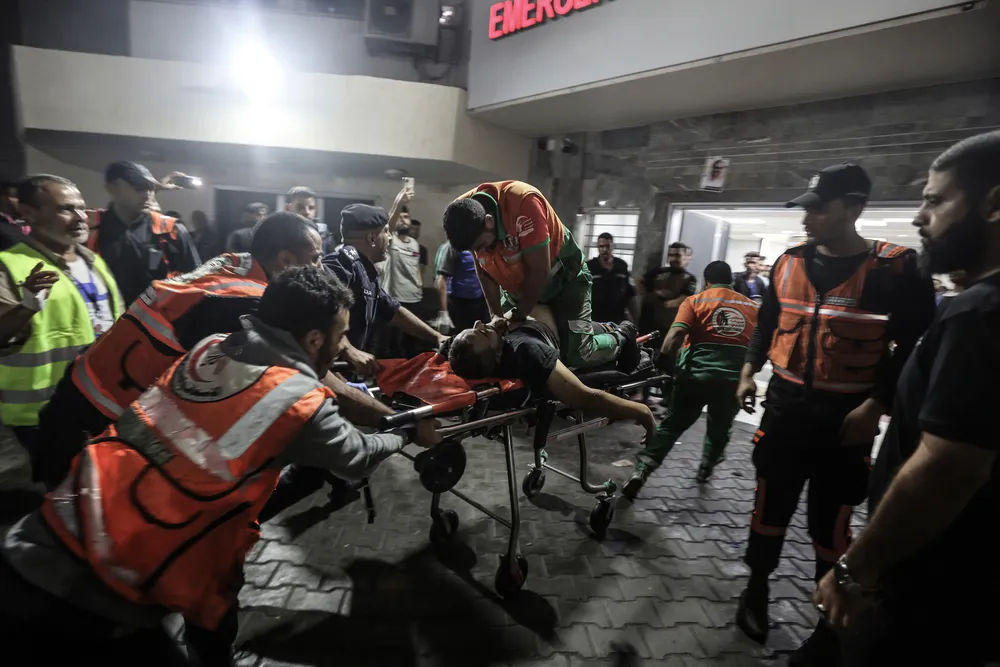
Following Hamas’ attacks on 7 October 2023, Israel launched a massive military offensive across the Gaza Strip, causing widespread and systematic destruction of essential civilian infrastructure. Three years later, more than 73,000 Palestinians have been killed and over 173,000 wounded, according to the Gaza Ministry of Health. The cumulative physical toll and mental trauma caused by extreme violence, the loss of family members, homes and memories, repeated forced displacement, and inhumane living conditions will scar generations.
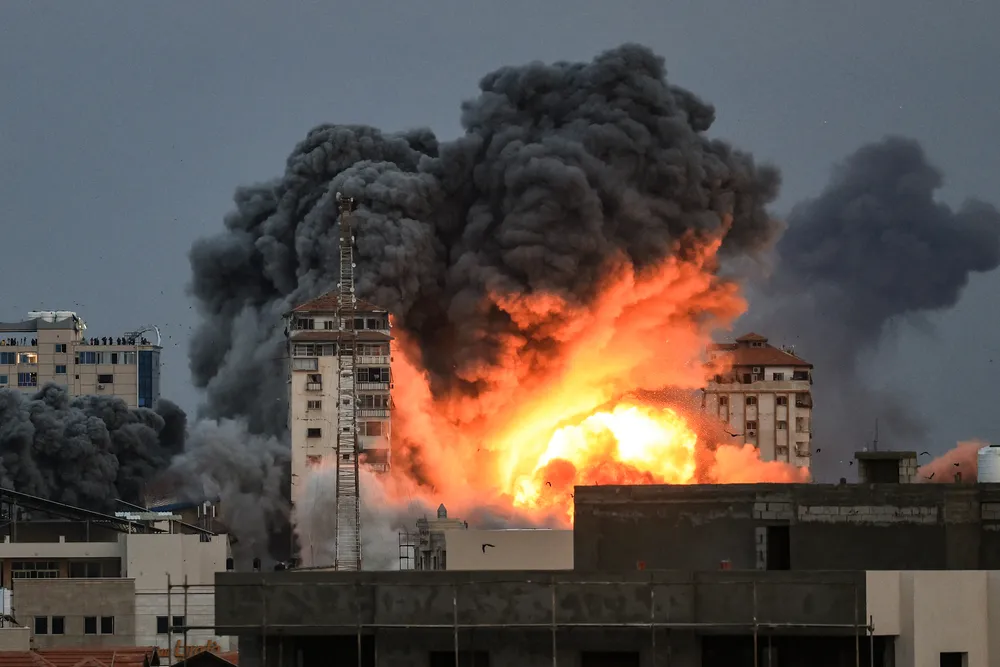
19 October 2023
Over the past three years, MSF teams have provided Palestinians with surgical care, wound and burn care, malnutrition screening and treatment, maternal and paediatric care, and other vital services at a time of urgent need. MSF currently runs or supports four hospitals, while supporting four general healthcare centres and working in five clinics and four medical points, both in the northern and southern part of the Strip.
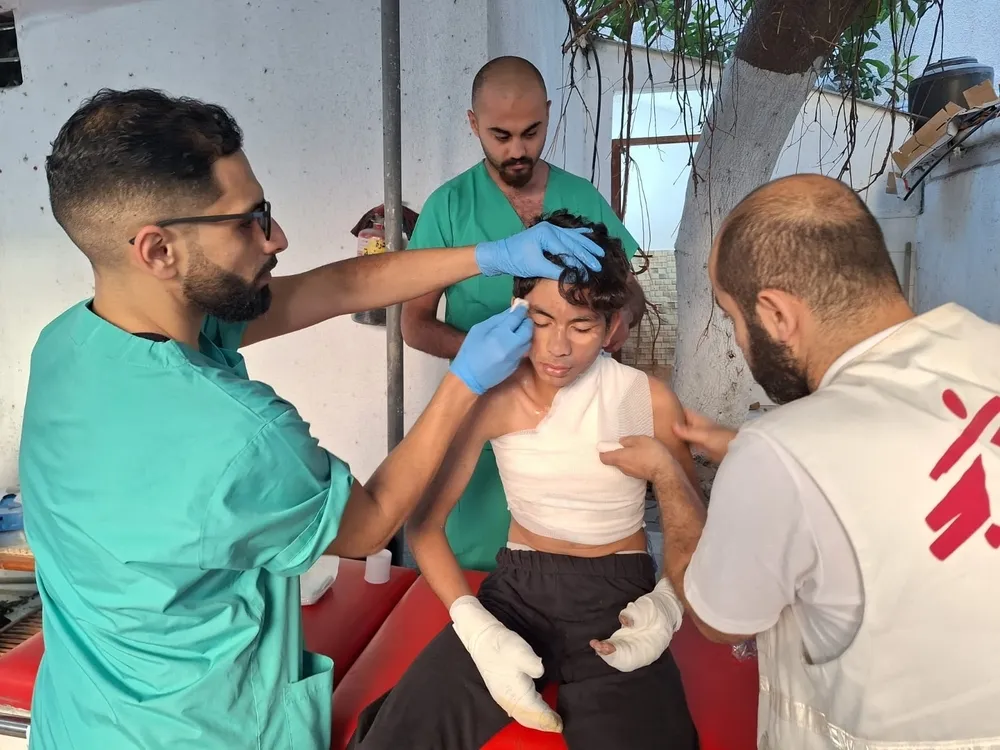
20 November 2023
Three years later, attacks on healthcare facilities and restrictions on the entry of vital supplies have severely constrained the provision of medical care. Hospital generators, ambulances, water pumps and water trucks depend on engine oil and spare parts to keep running. Yet Israeli authorities continue to block their entry into Gaza, disrupting services that people rely on to survive.
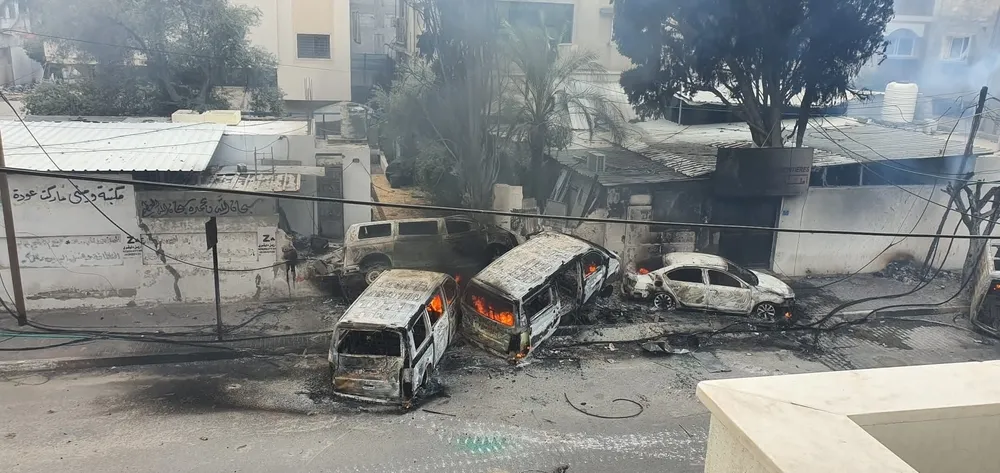
21 November 2023
Nearly 2,300 health and humanitarian workers have been killed since 7 October 2023, including 15 of our MSF colleagues.
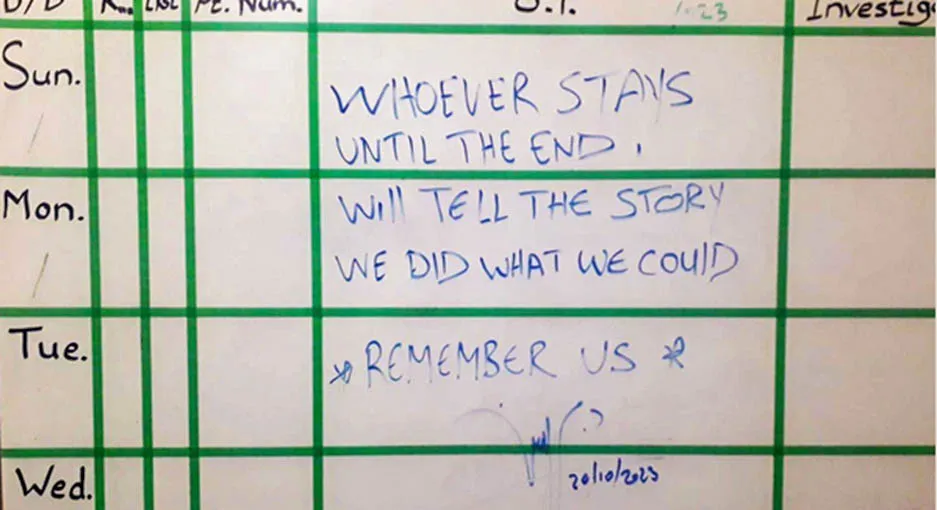
12 December 2023
Nasser had become one of the few remaining hospitals able to provide emergency surgical care in southern Gaza. Hospitals and health facilities came under extreme pressure, as wounded patients arrived in unprecedented numbers while thousands found shelter inside and around them.
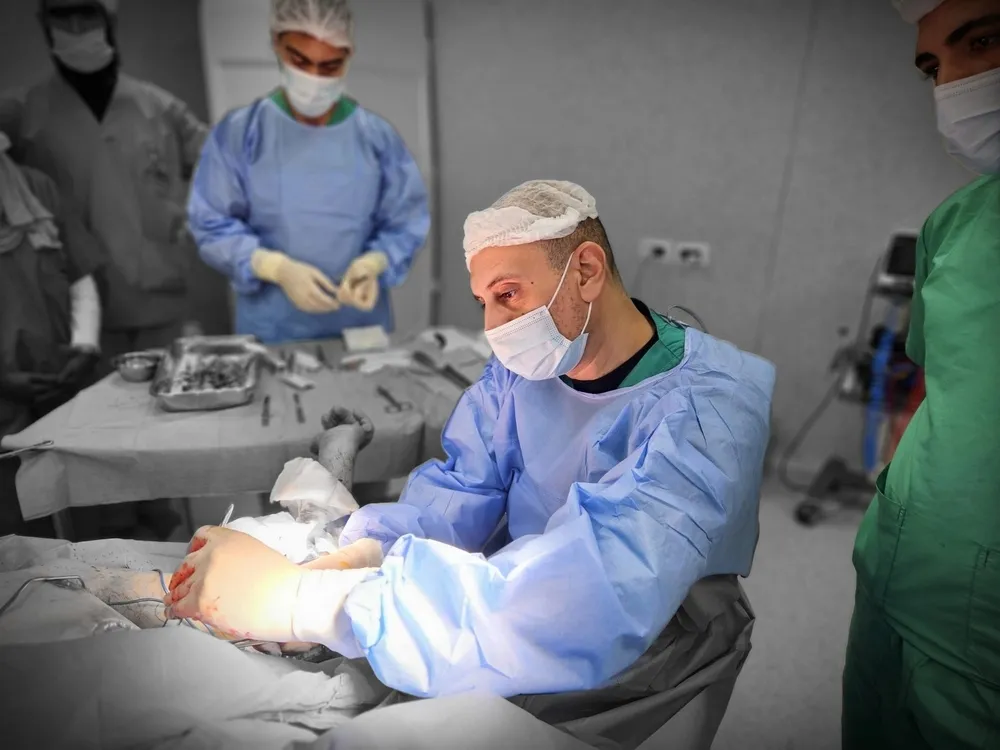
13 March 2024
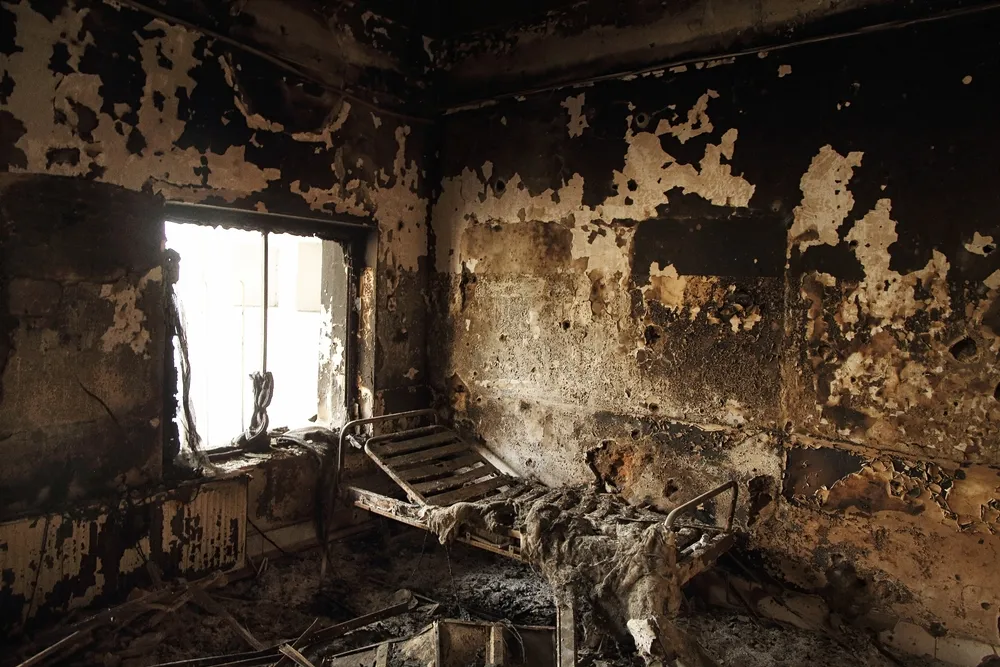
Three years on, the World Health Organization (WHO) reported that 94 per cent of hospitals in Gaza had been damaged or destroyed, with only 19 of the Strip’s 36 hospitals still operational, many providing only limited services.
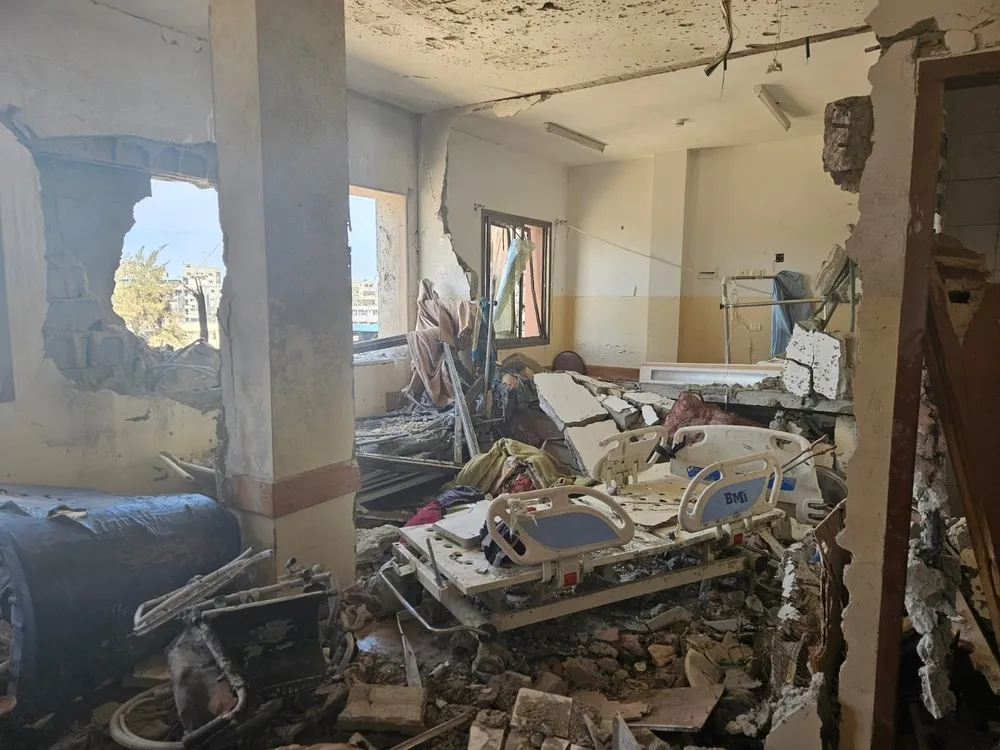
13 May 2024
During the first months of the Israeli military offensive many families were displaced repeatedly, particularly from the northern and middle areas of the Strip. In early 2024 Rafah was already hosting about 1.5 million people who had sought refuge there. Subsequently the Israeli forces heavily destroyed also Rafah.
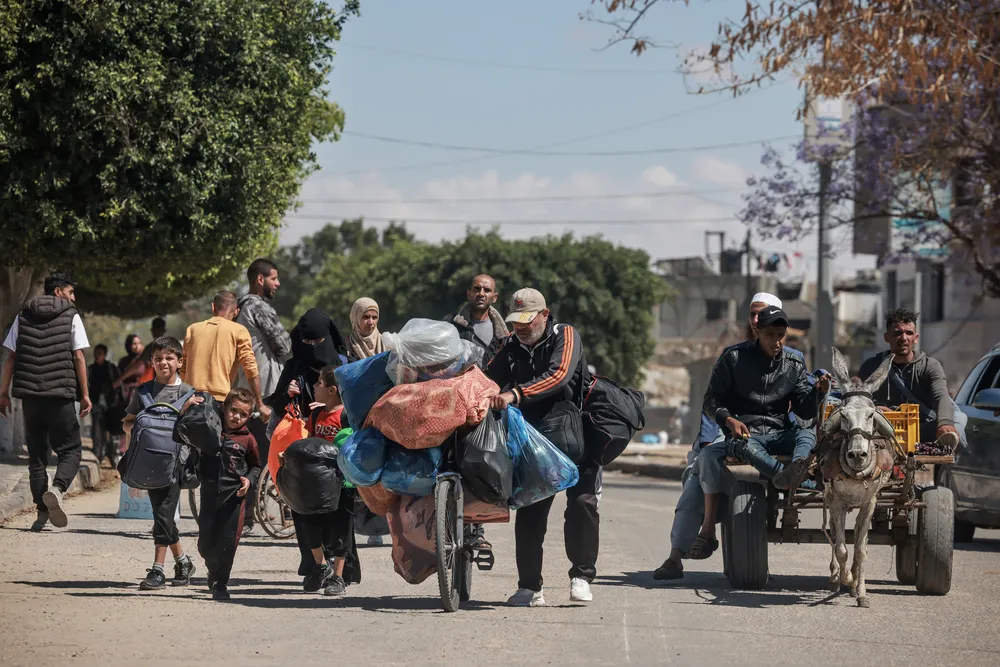
27 August 2024
Medical evacuations from Gaza remain extremely limited. The WHO estimates that 18,500 patients need specialised medical care that is unavailable there but are not allowed to leave. More than 900 patients have already died while waiting to be evacuated for treatment.
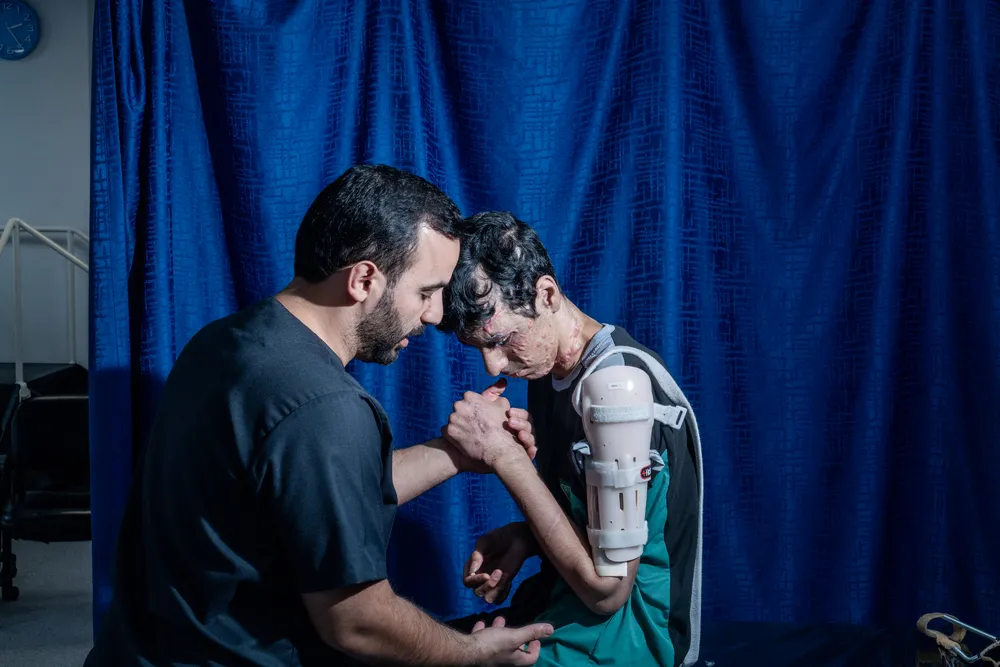
7 November 2024
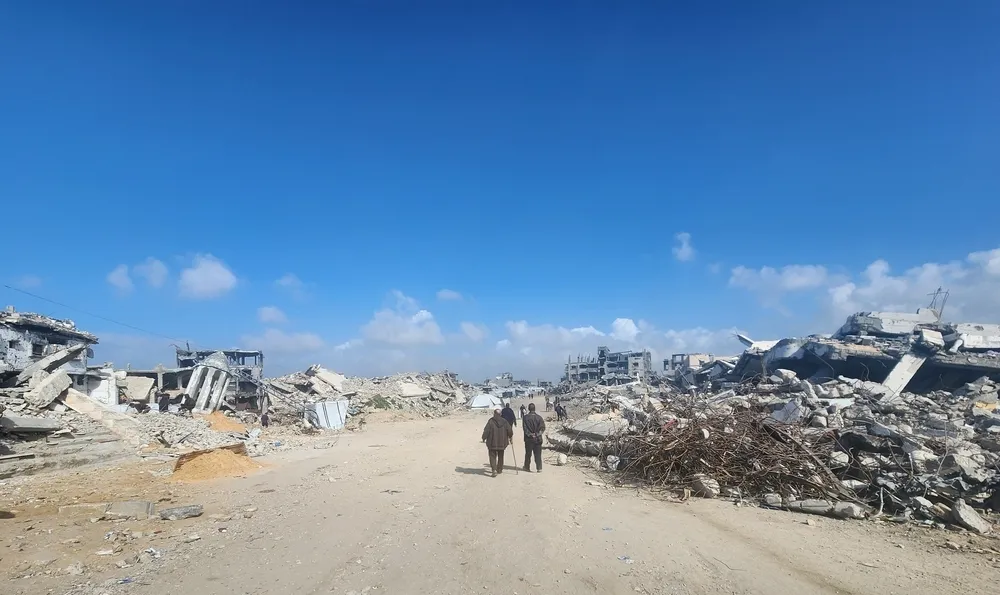
Since 7 October, 82 per cent of structures in Gaza have been damaged, with two thirds of them destroyed according to the United Nations Relief and Works Agency for Palestine Refugees in the Near East (UNRWA). Thousands are forced to live in dangerous conditions with limited access to clean water and toilets. Nearly 90 per cent of Gaza’s water and sanitation infrastructure has been damaged or destroyed, including desalination plants, boreholes, pipelines and sewage systems.
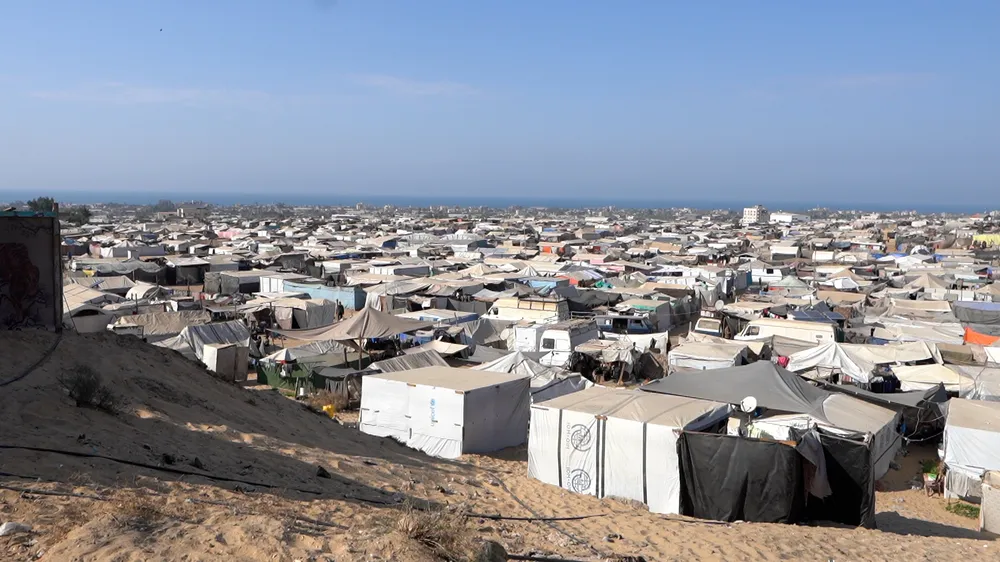
1 February 2025
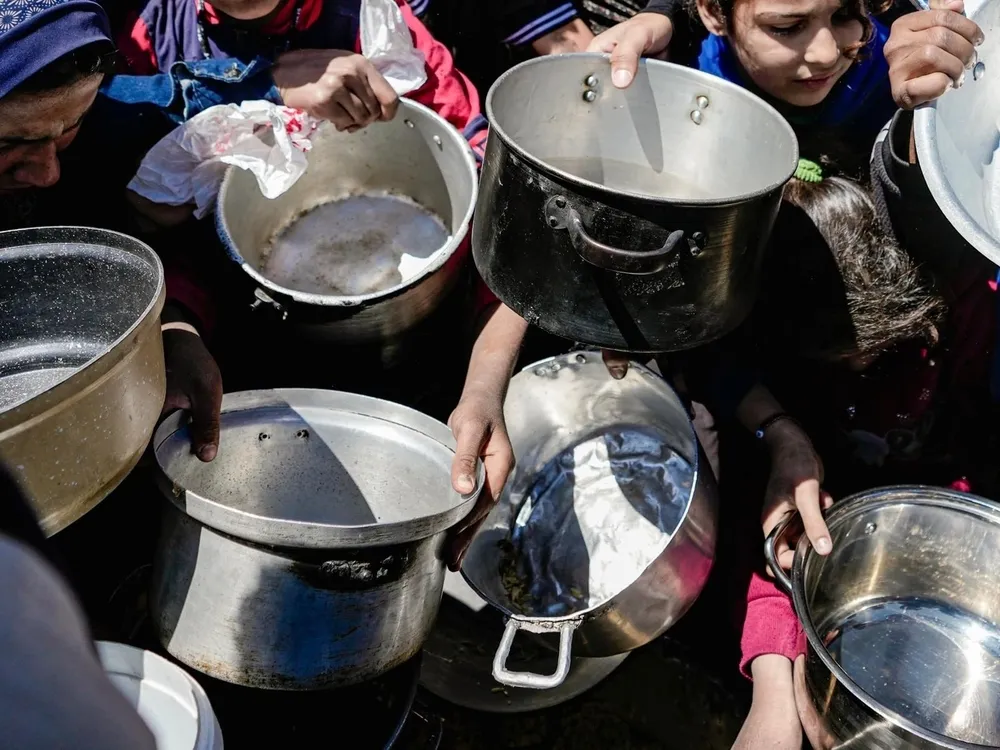
After months of the Israeli government’s siege and restrictions on food and aid, the Integrated Food Security Phase Classification (IPC) formally confirmed famine in Gaza on 22 August 2025. MSF teams identified the first cases of child malnutrition in January 2024.
Between then and March 2026, MSF admitted 4,950 children under 15 for acute malnutrition, 98 per cent of whom were under five, while 3,482 pregnant and breastfeeding women were enrolled in outpatient nutrition programs.
Three years on, malnutrition has relatively stabilised amid the so-called ceasefire, but the situation remains extremely fragile, with people facing restricted access to food and essential supplies.
25 July 2025
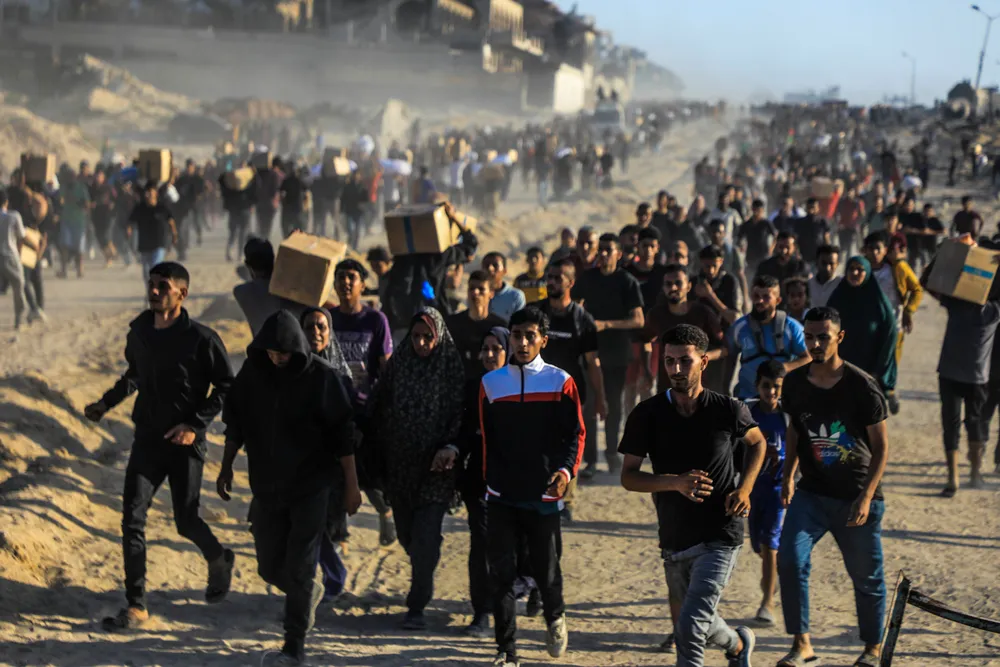
Israeli authorities dismantled the UN-led humanitarian aid distribution system and replaced it by Gaza Humanitarian Foundation (GHF) in areas under Israeli military control and “secured” by private American armed contractors. Between 7 June and 24 July 2025, MSF health centres near GHF sites received 1,380 injured people, including 28 dead bodies, and treated 174 people with gunshot wounds. One year on, MSF still treats people that received life-changing injuries and trauma at GFH sites.
9 October 2025
The UN’s Office for the Coordination of Humanitarian Affairs (OCHA) estimates that 90 per cent of Gaza’s population has been displaced multiple times. Since October 2025, Gaza became increasingly fragmented by an unclearly marked and constantly shifting military-controlled “yellow line”, which divided areas under different levels of Israeli military control. The Israeli military is estimated to fully control 58.9 per cent of the Strip, severely restricting movement and access for civilians and humanitarian actors. When the unmarked buffer zone, known as the “orange line”, is also taken into account, the area affected rises to an estimated 64.9 per cent of Gaza.
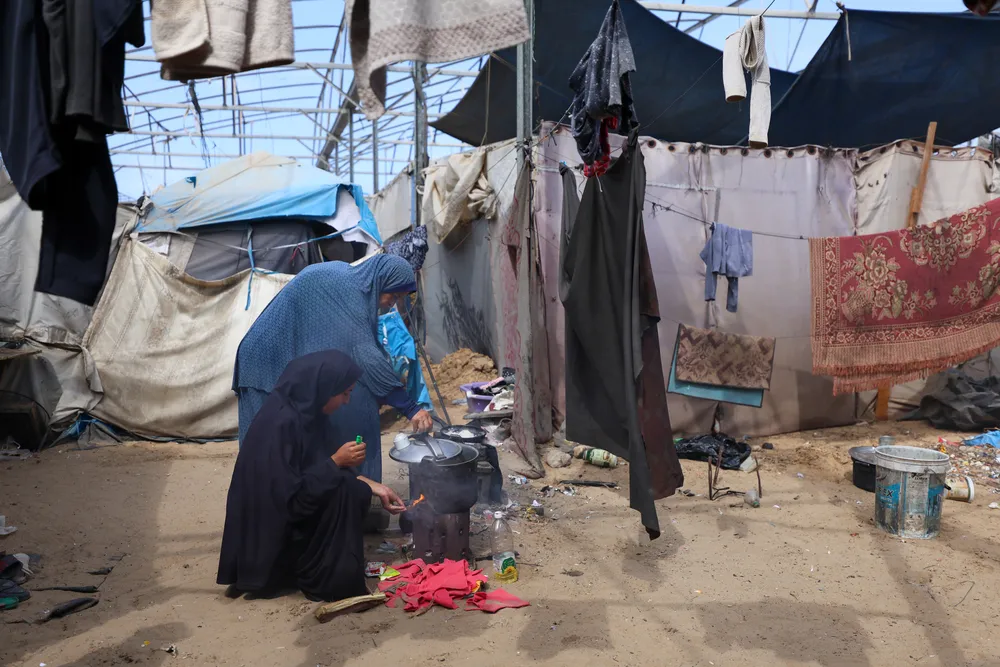
23 March 2026
Since 1 January 2026, MSF’s registration in Israel has been withdrawn, preventing international MSF staff from entering Gaza and blocking MSF supplies from entering the territory. All international staff were required to leave by the end of February. The Israeli authorities had ordered 37 aid organisations, including MSF, to cease operations in Gaza and the West Bank by 31 March. MSF has continued its work through 1,500 Palestinian staff registered with the Palestinian Authority, with international staff supporting the response remotely from Amman, Jordan.
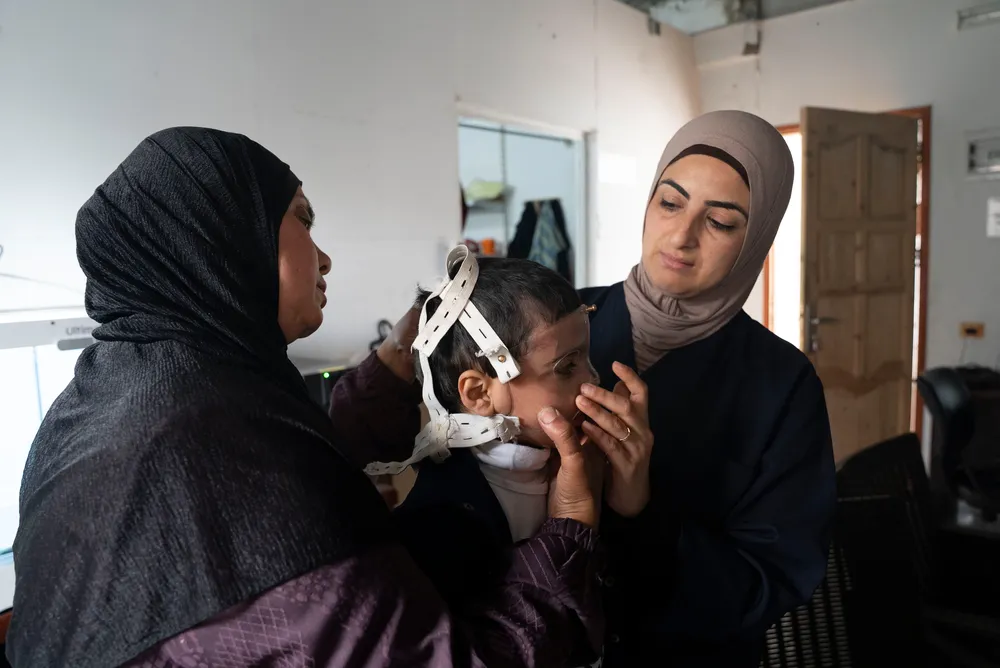
20 April 2026
Between late 2024 and early 2026, during a period of severe restrictions on food and humanitarian aid, an analysis of MSF medical data found higher rates of prematurity and mortality among babies born to mothers affected by malnutrition during pregnancy, as well as high rates of miscarriage.
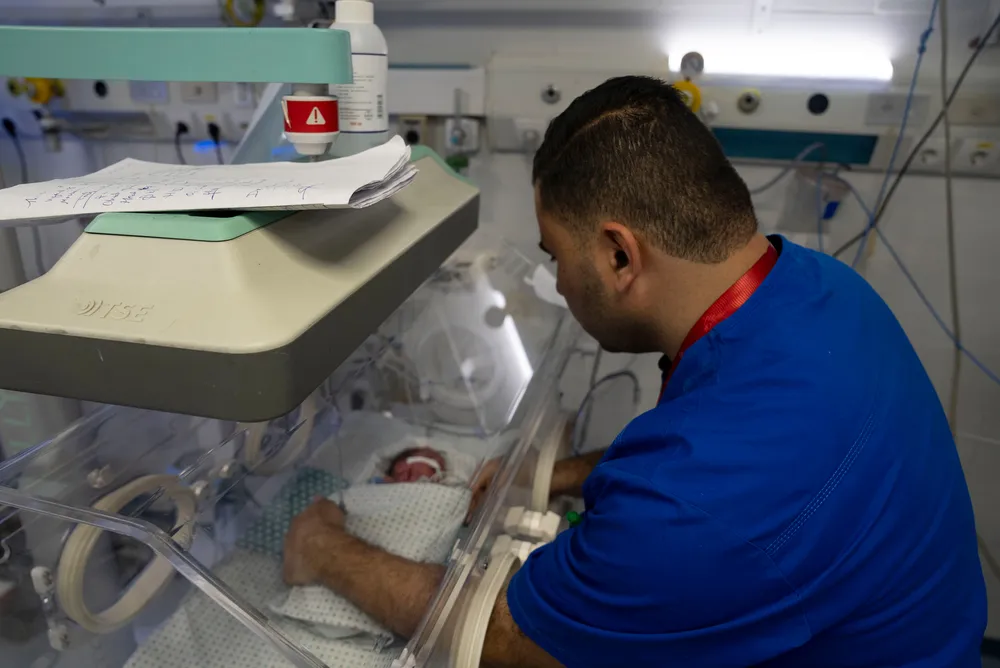
2 June 2026
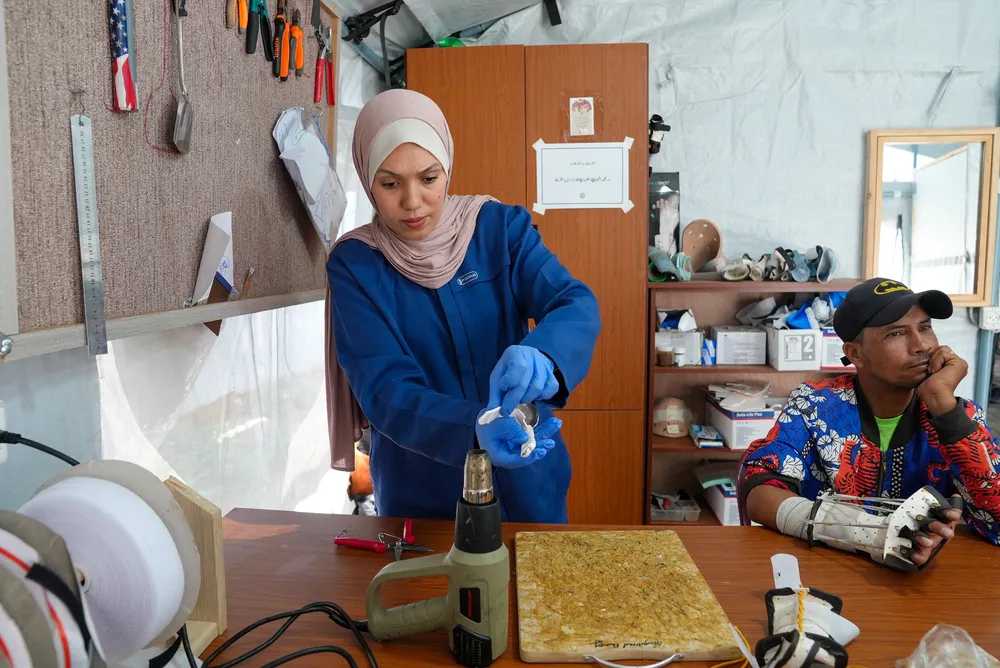
Despite the so-called ceasefire, Palestinians continue to face daily violence and injuries. Israel’s genocidal campaign in Gaza has left an estimated 43,000 people with life-changing injuries, with more than 50,000 requiring long-term rehabilitation. The Ministry of Health has documented approximately 6,000 amputations, including 1,500 children. Rehabilitation services are severely overstretched, while specialised equipment remains extremely difficult to obtain.