Why are we there?
- Healthcare exclusion
Latest links
- Kyrgyzstan: Neutrality of medical care must be respected
- Kyrgyzstan: Emergency aid increased
- Kyrgyzstan: Refugee numbers soar to 75,000
Our work
This is an extract from our latest Activity Report, looking back on our work in the previous year.
2013
Médecins Sans Frontières (MSF) estimates the incidence of tuberculosis (TB) among prisoners in Kyrgyzstan to be 20 to 30 times higher than in the general population, with mortality rates as much as 60 times higher.
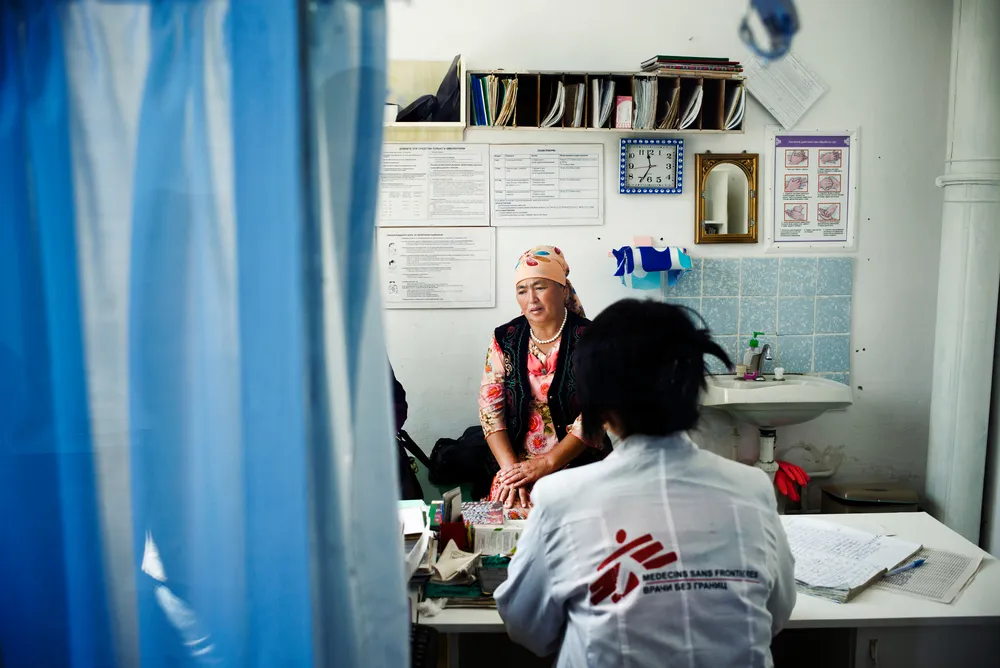
MSF continued to offer TB care to prisoners in the penitentiary system in Bishkek, the country’s capital, which holds up to 9,000 inmates. In the institutions where prisoners are detained until sentencing, teams provided full health screening and put identified TB patients on treatment straightaway. Staff also diagnosed and treated inmates with multidrug-resistant TB (MDR-TB).
Using a comprehensive approach to TB patient management, MSF also supported treatment for co-occurring illnesses, and offered screening and vaccination for hepatitis B. Uninterrupted completion of treatment is crucial in order for it to be successful, and the team ensured follow-ups once individuals were released from prison.
Having helped establish protocols, increased infection control and improved access to care, MSF plans to hand over the penitentiary project by the end of 2014.
MSF has also actively supported the development of a newly constructed national reference laboratory in Bishkek.
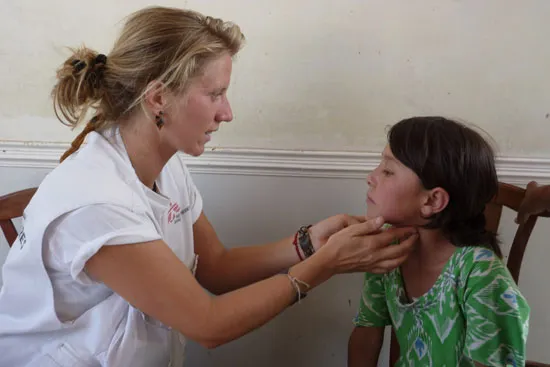
An MSF nurse carries out a consultation with a returning refugee in Suratosh, a village on the border with Uzbekistan. © Sonia Peyrassol/MSF
Promoting ambulatory care for TB
In Kara-Suu district, Osh province, where rates of TB are among the highest in the country, MSF supported the Kara-Suu hospital, which has 80 beds for TB and DR-TB patients.
This project aims to become a model for effective walk-in treatment. Whenever possible, patients receive care through the community-based healthcare system, with ambulatory or home-based treatment, rather than being hospitalised. Psychosocial counselling for patients and their families, and social packages (nutritional support, hygiene kits and transport money) are provided to help patients adhere to treatment.
Rehabilitation of the hospital and basic health facilities was supported by MSF to ensure optimal infection control and better sanitary conditions for the patients. Teams also worked with health centre staff to improve clinical case management, and the detection of people suffering from TB, DR-TB and HIV–TB co-infection in the district. Comprehensive care was provided to people with drug-resistant forms of TB, and those with certain co-occurring illnesses.
Advocacy work has resulted in policy change and acceptance of the community-based treatment model by the Ministry of Health as the future strategy for TB care in the country.
At the end of 2013, MSF had 130 staff in Kyrgyzstan. MSF has been working in the country since 2005.
Patient story:
Mukhtar
I still remember the day in the TB centre when my MSF doctors told me that I was cured and could stop the treatment. I had a strange feeling of happiness, which I really cannot find any words to describe. I still can’t believe that the treatment has finished. I have conquered death. I want to thank you all and to say that good people can save the world.
OUR COVID-19 RESPONSE IN KYRGYZSTAN
In Kyrgyzstan, we are working closely with the Ministry of Health, and offering our support for COVID-19 preparedness planning, with a specific focus on our areas of operation in Kadamjay Rayon and Batken Oblast. Today, we provided the Ministry of Health with personal protective gears including N-95 masks and gloves, thermometers, chlorine tablets and alcohol pads.
Can you make a donation to support our COVID-19 response?
Right now, Médecins Sans Frontières is providing much needed support and medical care in over 30 countries to counter the COVID-19 pandemic.
Our teams are also gearing up to confront potential outbreaks in the hundreds of areas we were already working before the pandemic struck. We are deploying medical staff, sending supplies and applying nearly 50 years of experience fighting epidemics to protect the most vulnerable and save lives.
Can you help increase our capacity to respond by making a donation to our COVID-19 Crisis Appeal?
One of the poorest nations in the Central Asian region, Kyrgyzstan has an inadequate healthcare system, experiencing frequent shortages, and today, many people struggle to access free treatment for drug-resistant tuberculosis (DR-TB).
The country became independent in 1991 following the breakup of the Soviet Union. Ethnic Kyrgyz, most of whom are Turkic-speaking Muslims, make up the majority of the country's 5.6 million population.
MSF first worked in Kyrgyzstan in 2005, providing healthcare for people who would otherwise go without.
Tuberculosis Treatment
Tuberculosis (TB) is one of the 10 leading causes of death globally, the bulk of mortality rates occur in low- and middle-income countries. Kyrgyzstan is one of 30 countries with the highest rates of the disease. In Kara Suu, the largest region in Kyrgyzstan, MSF continues to work with the Ministry of Health in the fight against DR-TB. MSF mentors staff, and runs projects that aim to limit the amount of time patients have to spend in hospital.
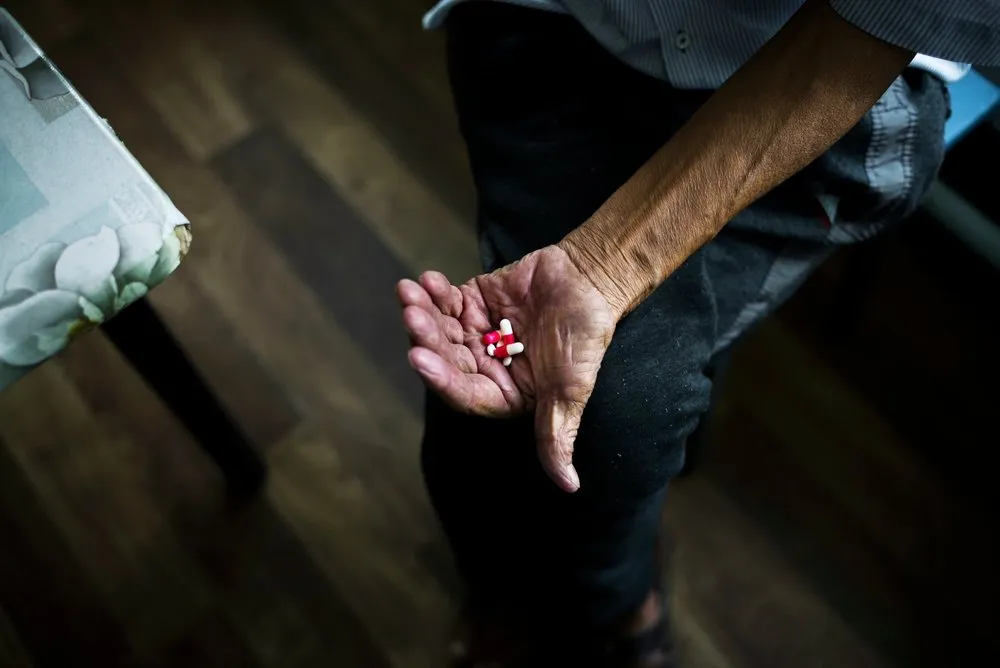
Patients receive comprehensive care, including treatment for side effects of the medication, care for any conditions linked to their TB, as well as psycho-social support. Daily observed treatment is provided at smaller clinics, and patients attend monthly medical consultations one of three TB clinics supported by MSF.
In Aidarken, Batken oblast (province), MSF is supporting the Ministry of Health to deliver better care for non-communicable diseases, as well as helping improve mother and child healthcare. In parallel, MSF is assessing the possible impact of heavy metal pollution on public health.